Cauldron Films’ “Conquest” booklet review
Written by Matt Long
A review of the booklet included as part of Cauldron Films’ 4K-UHD/ Blu-ray release of Lucio Fulci’s Conquest (1983), which was originally released in 2026. Cauldron Films includes the printed materials, such as this booklet, only with the limited editions of their releases (to the best of my knowledge).
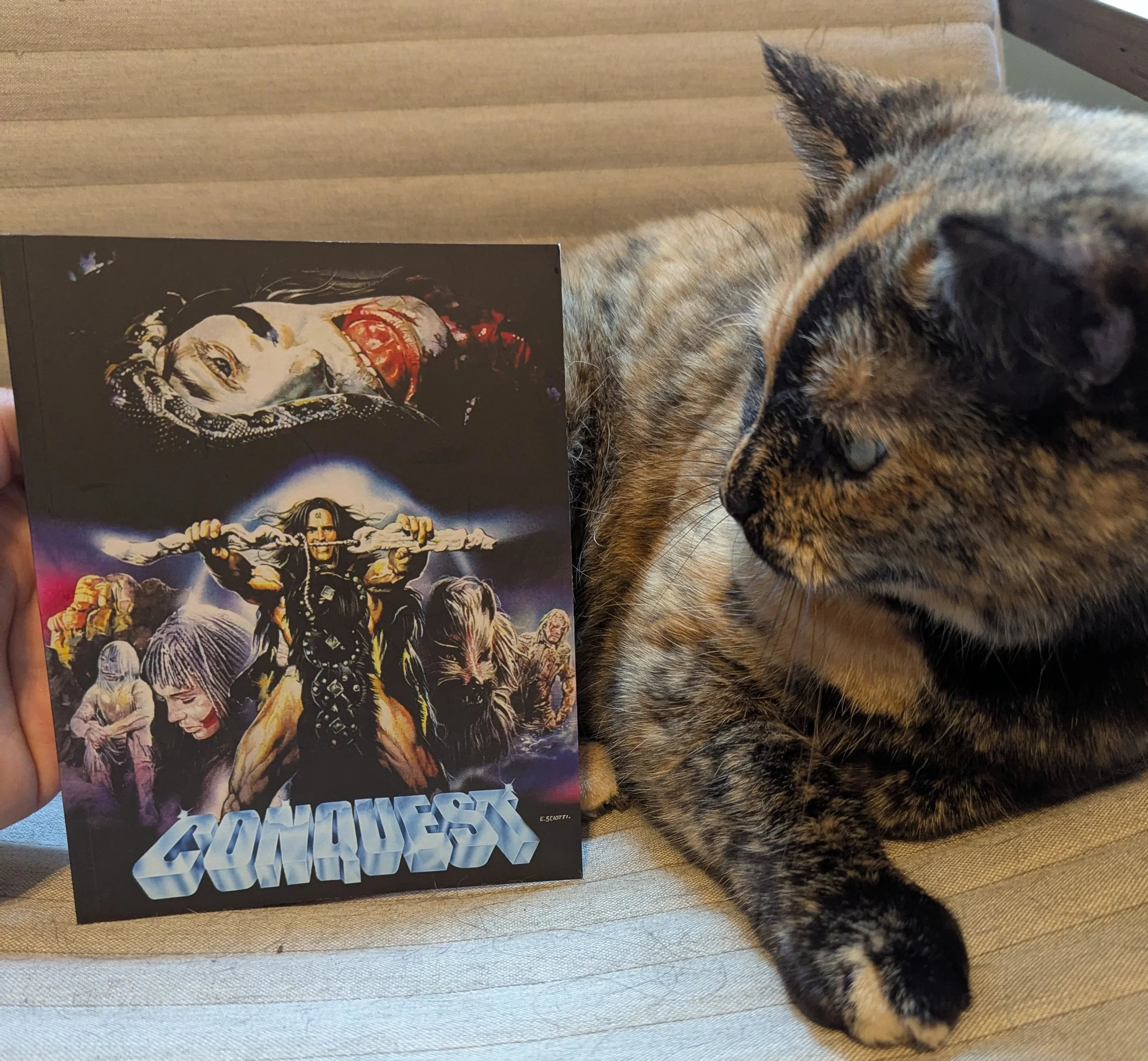
The front cover of the booklet for Conquest, Lucio Fulci’s fantasy film, released by the boutique label Cauldron Films.
Professionalism and production quality
This is a 48-page perfect bound booklet. The look of the booklet is immediately appealing, featuring iconography from the film on the front and back covers. After numerous readings and reviews of this booklet, its shape and integrity has held up.
The font size is perhaps a point too big, but I would rather lean that way to ensure it’s accessible. There are plenty of pictures and posters throughout the booklet, all of which are reproduced clearly or as clearly as screenshots of this film allow.
The only draw back were some grammar issues that resulted in some of the text being unclear. It did not detract severely, but given I enjoyed the essays as supplements to the film, I would have liked to know what was trying to be said.
Grade: B+
Text-to-image ratio
I like the clean and slightly unusual layout Cauldron used for this book. The two essays are in the first half of the booklet, leaving the second half to serve as an image gallery. A little more than half of the booklet consists of images, which is not my preferred balance, but admittedly, the images chosen are interesting and effective.
Grade: B
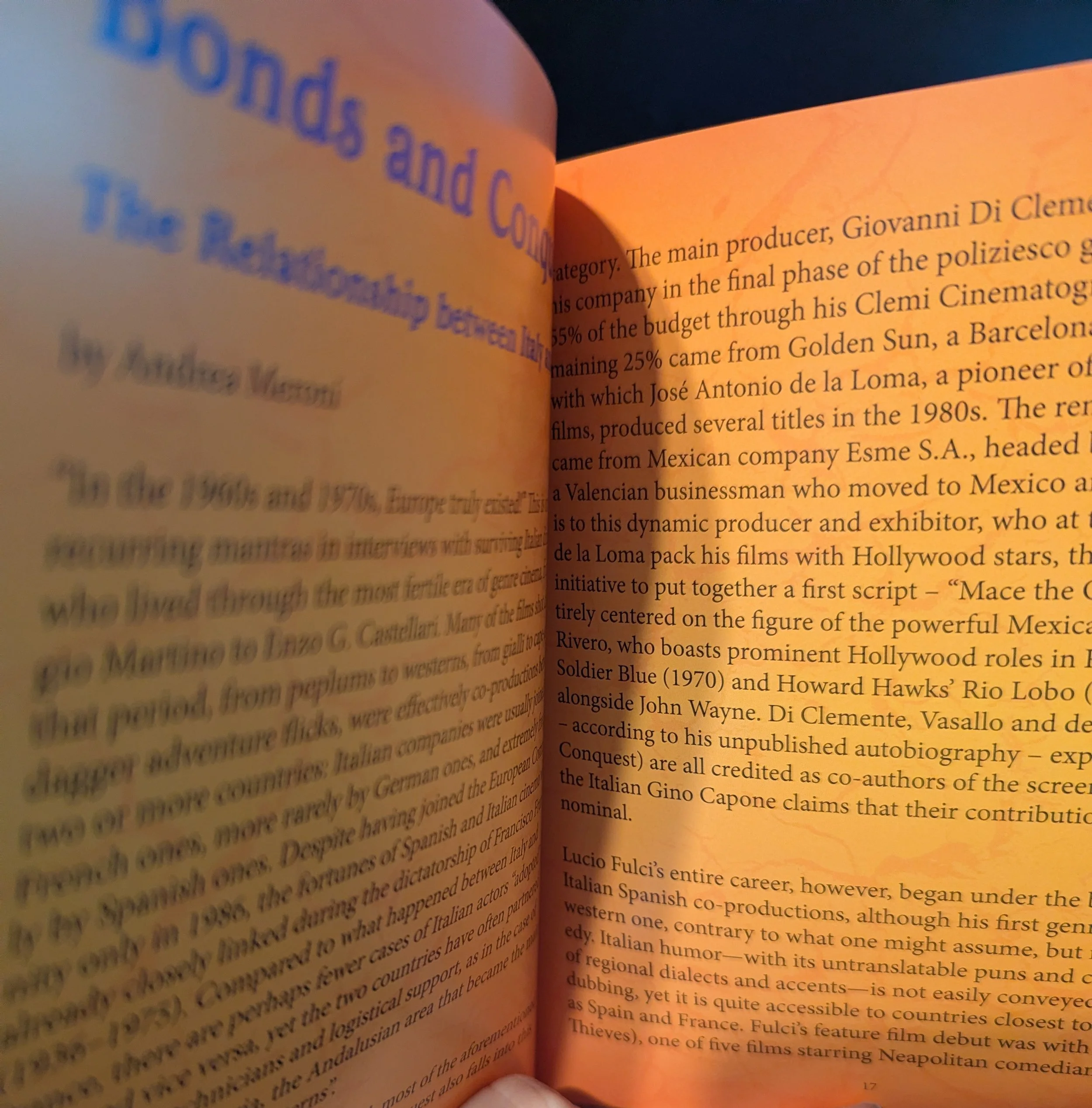
A preview of the book layout.
Content
The first essay is “Lucio Fulci’s Conquest,” written by Michael A. Martinez, a Hollywood VFX artist and a B-movie scholar. This was an interesting essay that provided context on what Conquest is and why Conquest found an audience with the Gen-X generation. It’s an unusual movie from an unusual filmmaker (both uses of “unusual” being positives here), so this perspective helps with providing context into how this stylized fantasy film fits into the filmography of a filmmaker many current audiences know as a horror director. My only issue with the essay is that Martinez sometimes sounded dismissive of Conquest. It’s not most people’s favourite film, but given the context of the essay as a supplement to the film, I was surprised by the tone of certain parts of the essay. However, it’s still a good read.
The second essay is called “Bonds and Conquests: The Relationship between Italy and Spain,” written by Andrea Meroni, an Italian film historian, podcaster, and critic. The booklet had a description providing context for Martinez but did not have the equivalent paragraph for Meroni. Disc producer Eugenio Ercolani is a frequent collaborator of Meroni. This essay did one of my favourite things a supplement can do: answering a question that was in the back of my mind but hadn’t fully formed. This interesting essay explains the prominent practice of European countries co-producing films together as a rule, with many co-productions between Italy and Spain. The connections between those countries in terms of cinematic history is broken down in the essay. It also explores specifically how this contributed to the cast and crew of Conquest, including Fulci’s history with many of the collaborators. My only issue is occasionally it can feel like it’s listing the information rather than analyzing it, but this is a minor issue because it will give me a lot to dig into if I do want to better explore these connections for myself.
The third thing I will comment on is the image gallery that starts on page 28 until the end of the book, apart from an acknowledgements page at the end. Given the iconic look of the vaseline-smeared cinematography and the stunning artwork used to promote the film, I loved this part of the booklet. It made something of a funny choice of including four pages devoted to artwork created for this release, including reproductions of the stickers sent with early orders, which is only notable because typically these types of galleries include older archival material rather than preserving the current. Overall, I prefer having art cards reprinted in the booklet like they were here rather than being included as a physical supplement that I will never use.
Grade: B+
Creativity
This booklet rode the line of being innovative in some ways, like the decision to split the text and images into two distinct sections, and as mentioned above, I liked Meroni’s essay for providing a necessary piece of context about these European productions. It didn’t blow me away with anything truly innovative, but given how thorough Ercolani was with this package as a whole, it doesn’t reflect negatively on this release.
Grade: B
Grade summary
Professional and production quality grade: B+
Text-to-image ratio grade: B
Content grade: B+
Creativity grade: B
Final thoughts
This is a well-produced booklet that offered some insights into the film and the production. It might not be totally essential reading to appreciate the film, but I liked the essays and appreciate that the image gallery was kept to the booklet rather than printing art cards. Given this is a film that contains multitudes in its short run time and demands some additional thought as you revisit it, I am happy to have this booklet. Recommended reading for those who pick up the limited edition.
Overall grade: B+
The Conquest limited edition is available direct from Cauldron Films along with your favourite independent retailers.
You may be interested in my interview with Jesse Nelson, co-owner of Cauldron Films.
Check out more articles and reviews, or read interviews from the“What’s your idea” interview series.