Criterion’s “Killers of the Flower Moon” booklet review
Written by Matt Long
A review of the booklet included as part of Criterion Collection’s 4K UHD/ Blu-ray release of Martin Scorsese’s Killers of the Flower Moon (2023), which they released in 2026. Criterion includes the printed materials, such as this booklet, with every pressing of their releases.
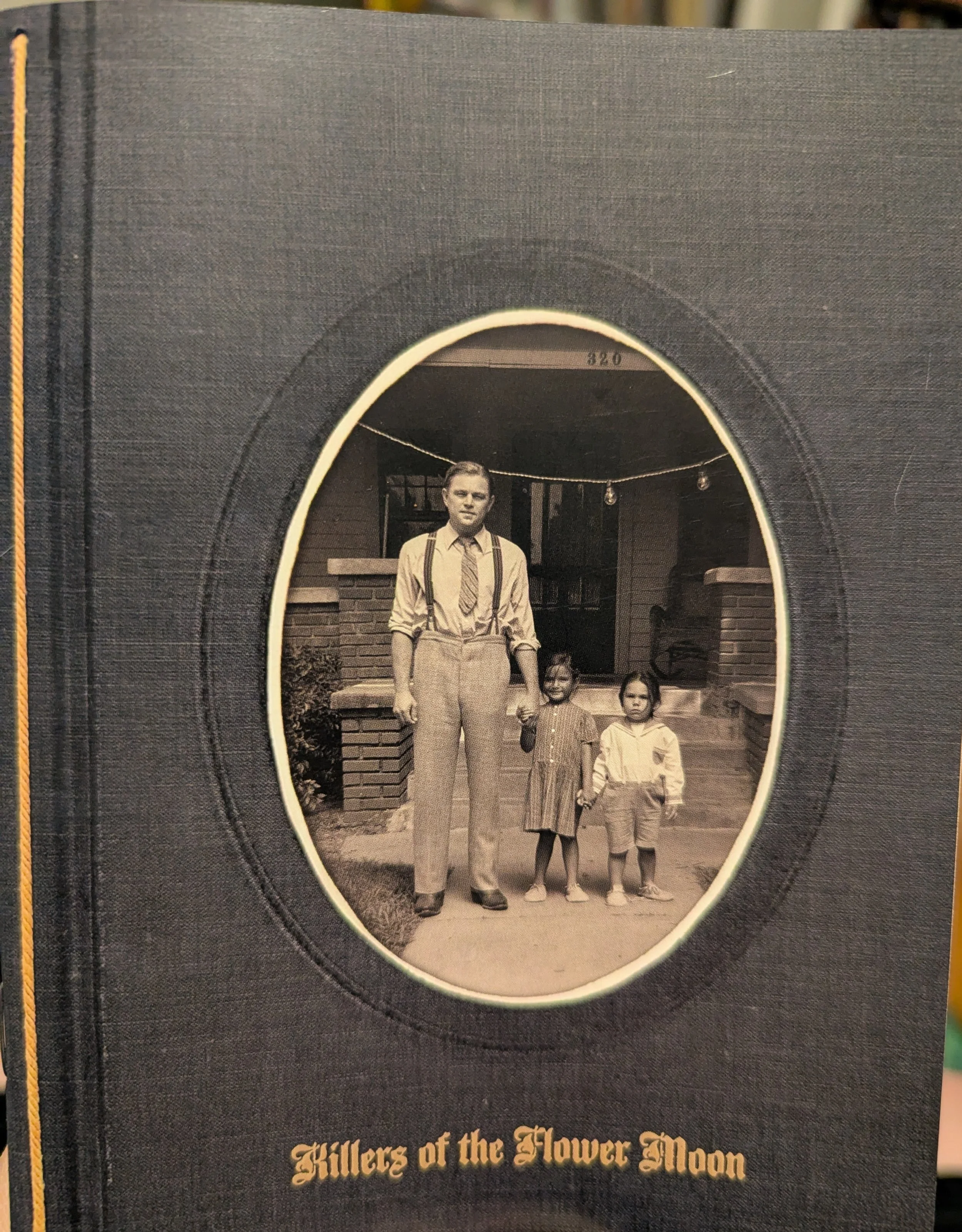
The front cover of the Criterion booklet for Killers of the Flower Moon.
Professionalism and production quality
This is a high quality 40-page booklet with saddle-stitch binding. Criterion went above and beyond with this booklet featuring beautiful images in high resolution and text written in a very readable font. Parts of the booklet effectively emulate a photo album, which pulls readers back into this story of family and corruption. The only editing error I could see was the inclusion of commas in the titles of the essays in the table of contents. This genuinely well-made booklet is a very far cry from the Criterion booklets that are essentially pamphlets.
Grade: A
Text-to-image ratio
There are 18 pages with images and 21 pages with text. Of those, only three feature both text and images on the same page (limited to the cover, the table of contents, and the credits [all functional pages]). The essays are allowed space to flow, presenting the text as particularly authoritative befitting both the style of the booklet and the film. The images are a mixture of behind the scenes photos and stills from the film representing the major characters and arcs. Like the film itself, these essays and images have a lot to say, so they deserve all the space provided.
Grade: A
Content
This booklet features two essays and an opening section that replicates an old-fashioned photo album that would have belonged to Lily Gladstone’s Mollie Kyle, complete with black-and-white photographs of Leo’s Ernest Burkhart and their children, her family, and self-portraits. It effectively sets up the tragedy inherent in this family and community, especially with the final image in this section featuring a shot of a coffin being lowered into the ground. There’s an interesting touch that the credits are superimposed over some photos underneath. What images are being covered?
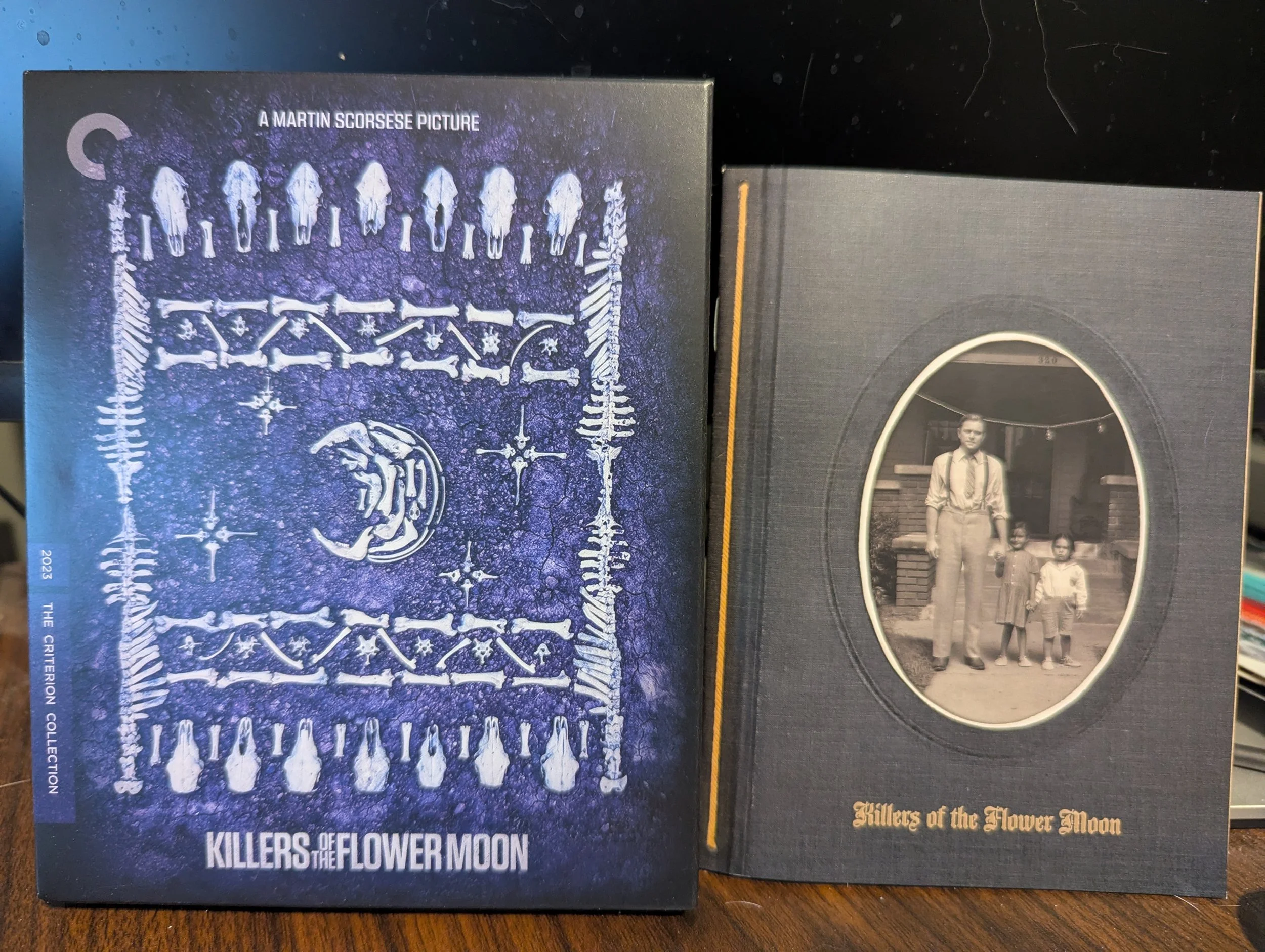
The Criterion outer case along with the booklet.
The first essay, “A Formal Feeling,” by Vinson Cunningham (who is a staff writer and critic for the New Yorker), presents a relatively high-level summary of the plot of the film, the major themes, and Scorsese’s path in adapting this from a story focused on the FBI agents investigating the crime to present it as a family drama. Cunningham does an excellent job of explaining how this film fits into Scorsese’s oeuvre and how that collection of films has continually turned inward, and earned their epic lengths, from Silence onward (to recap, that’s Silence, The Irishman, and Killers of the Flower Moon). All of the major collaborators, from Robbie Robertson’s score to Thelma Schoonmaker’s editing, are called out and highlighted for how it contributes to the film. Cunningham’s strong writing style elevates this great essay.
The second essay is “A Prayer from the Abyss” by Adam Piron, a filmmaker and programmer of Kiowa/Mohawk descent and a cofounder of COUSIN. Providing space for an Indigenous person’s voice and perspective was essential for proper context on this film. Piron offers a more personal take on the film’s journey to completion, expressing his concerns for what the film could be and how audiences would react. One favourite part of the essay is an analysis of the ending and how it continued to pull away from the reality of the story we just witnessed and how Scorsese would have needed to reckon with his place as the storyteller. In those final scenes, Piron points out how we need to linger and consider the violence that we just witnessed, but ultimately, the ending gives way to a current-day Osage drum group.
There’s not a lot more that I could have wanted from these essays. For a short booklet, they packed a lot in.
Grade: A
Creativity
As described above, I thought the extra effort to incorporate the majority of the photos as a photo album elevated the usual format of these booklets. The two essays presented strong writing with critical voices. Criterion has not transformed the format with this release, but they do go above the norm.
Grade: A-
Grade summary
Professional and production quality grade: A
Text-to-image ratio grade: A
Content grade: A
Creativity grade: A-
Final thoughts
I appreciate the care Criterion put into making this a strong, interesting booklet for one of their biggest titles of 2026. The content was thoughtfully compiled and presented in an interesting way. This is a booklet I will definitely go back to as I revisit this later-day Scorsese masterwork.
Overall grade: A
The Killers of the Flower Moon Criterion edition is available from your favourite independent retailers.
Check out more articles and reviews, or read interviews from the“What’s your idea” interview series.