There was before “Action U.S.A.”…: What’s the idea with Chris Haskell (part one)
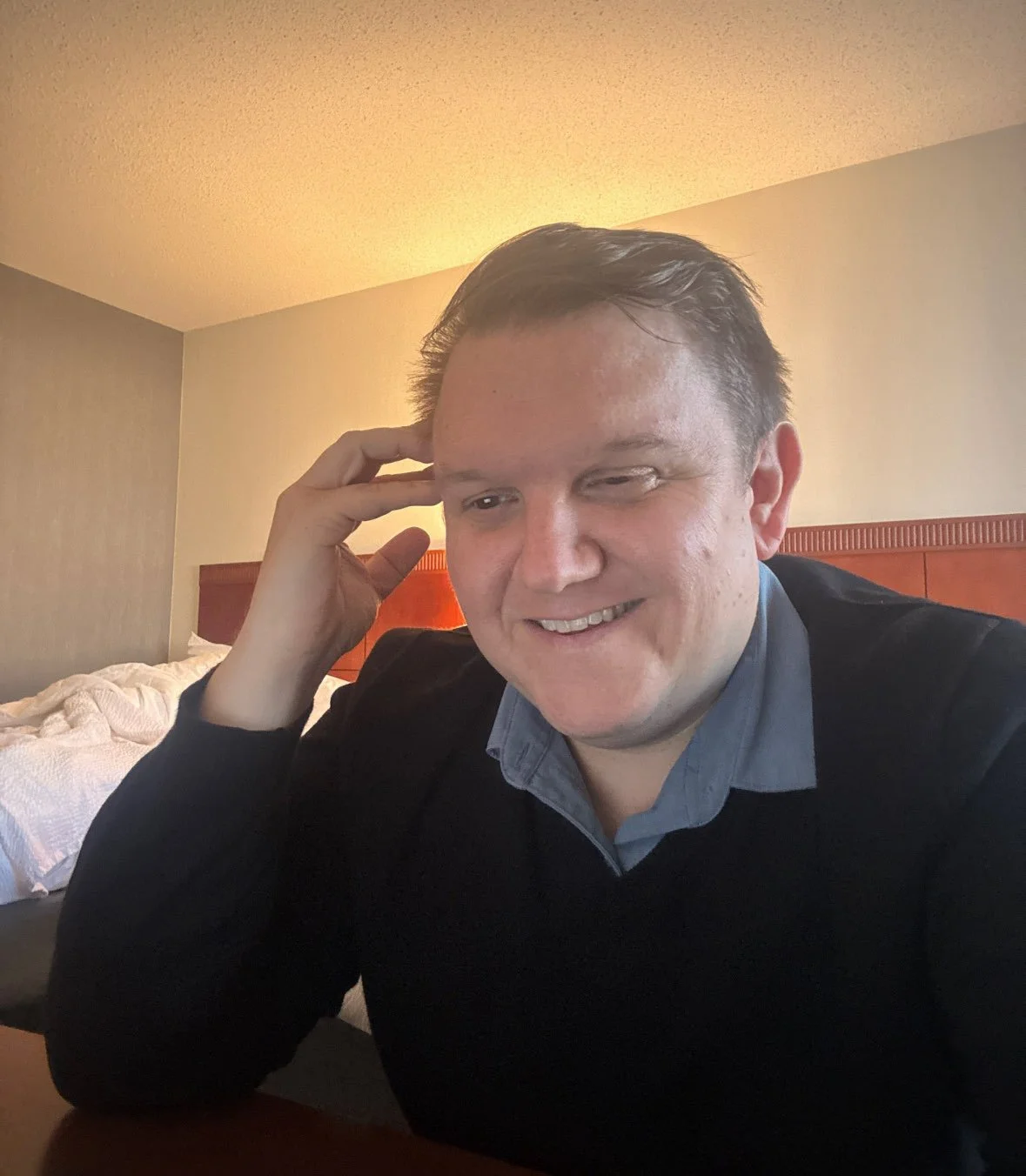
Chris Haskell (pictured above) plays a vital role in promoting the amazing films being curated by boutique Blu-ray labels like Vinegar Syndrome and Mondo Macabro with his podcasts, online reviews, and active participation social media channels like Reddit and Discord.
In the first part of my conversation with podcast host, writer, and movie enthusiast Chris Haskell, we discuss his love of obscure movies, how he found the online Blu-ray community, and his passion for writing as a creative outlet.
Thanks for meeting today.
It’s really good to talk to you.
When did you start watching movies and collecting?
We joke now that I'm older, but my mom and dad’s parenting philosophy was to throw me in front of the TV and then go do what they wanted for a few hours. I just grew up watching the screen. It was in the ’80s, so there were only a couple channels, but I was just consuming everything. I loved it all, and I was fascinated by this big tube that shot lights out and had stuff that I wanted to see. Saturday morning cartoons were a big deal in the ’80s. And then that naturally transitions, right, because you start seeing movie trailers. There were a lot of good movies in the ’80s and ’90s, especially kids movies.

A Nightmare on Elm Street was a seminal gateway into horror fandom for Chris, me, and many others.
I had a sense that I was going to be geared towards horror movies and exploitation movies because I saw A Nightmare on Elm Street when I was five and I loved it. I was laughing at it. I was having fun with it, I wasn't scared, and I was just like, I want more of this, this is fascinating. Obviously a lot of that wasn't allowed in the house, but as I got older, I started to seek it out.
I try to remember when I first got into horror movies, and it must have started with the video store and the VHS covers of horror movies.
If you talk to a lot of the people that make a career or a hobby around horror and a lot of exploitation stuff, it's kind of self-selecting. I think, no matter what, you're exposed to horror at some point in your childhood, and you're either repelled and know it’s not for you, or you're kind of drawn to it. I think we just naturally find our own, right?
Yeah, I agree. I had one professor who said that creative people tend to like horror and imagine scary things because their minds are open to more possibilities.
You take the stuff that [David] Cronenberg does or something like Society. I mean, it's so easy to watch that and be like, man, this movie's fucked up because there's all this body horror and goopy stuff. But if you can kind of just sit with it and get to the story, there's usually something really cool happening behind the gore.
Did growing up overseas influence your movie watching or even your idea of community?
That's actually a pretty insightful question because I have a personality where I make friends fast, but I don't make deep friends, and that's because of my childhood. I was moving every two years, so my way of coping with that was to be good at making new friends, so I learned how to adapt with that.
But the flip side of that is that I had a lot of time to myself because it took six to nine months every time you moved to get anybody that wanted to hang out with you. I had a lot of time to myself, so I read a ton. I was always with a book and if I wasn't with a book, I was with a movie or a TV show or something. So, that was one part of it.
The other piece is living in Asia. I went to high school in Indonesia, which most people don't understand. It's a Muslim country, so they get a bunch of perceptions of what the country is like because of the ties to Islam and Arabic cultures, but it's not an Arabic culture. It's an island, and Southeast Asian culture is full of folklore and dark demonic fascinating imagery.
They have this theory in Bali, which is part of Indonesia, where if you can make a demon figure that's in your nightmares out of paper, it'll capture the evil thoughts and the bad things that are going to happen to you and kind of protect you in a weird way, so they make these gnarly figures that are straight out of a horror movie. I was exposed to that and saw people have that be a part of regular life. They'll bring their kids to these festivals, and they're just around this horrific stuff, but it's in a more positive way. I guess it's somewhat similar to Dia de los Muertos here in the [United] States and Mexico, a similar kind of idea with just more of a comfort around death and the darker forces. It's not something that you shy away from. So that certainly influenced me very, very positively.
I wonder if our fear of death is part of why horror still has some taboo around it. We don't really want to talk about death, but if it’s being done by Freddy Krueger, we’re open to it.
There's been a lot written about the slasher genre about the knife being a phallic thing. There's tons of literature on that, but not a lot of what you just said. I would support it. I certainly think that there's a way you can have a conversation about your fears through horror.

One of the statues from Indonesia that Chris described.
I imagine Wes Craven must have been inspired by what you just shared about the practice of protecting yourself from dream demons.
I would believe it. Deaf Crocodile is doing a good job of bringing out some of this Eastern European folklore. I think we forget sometimes that most cultures are older than the US, and these old cultures have ways that they were telling religious stories before Christianity came, so there's fascinating folklore and stuff that's embedded, a thousand years old or eight hundred years old or whatever, in some Eastern European cultures.
That reliance on folklore and shared ideas has always been so fundamentally important to art.
I'm trying to think of a good example for a metaphor. Did you grow up with the one where you say Mary in the mirror three times?
Yeah, Bloody Mary.
Right. In five hundred years, there are probably going to be stories built around that. It just takes time.
I imagine figures like Batman and Superman are bound to become folk tales in five hundred years.
That’s a good point. This is American mythology, right?
But you were also influenced by these different cultures, like seeing the way that Indonesia handled folk tales and the way the culture integrated them.
“If you can imagine, walking in as a 14 or 15 year old and there were just thousands of movies bookended all the way around this store. He had everything. He had action, he had horror, he had comedies, and he had adult movies. He had everything in the store, and I was just by myself and he didn’t care what I was renting.”
There's a very specific guy that owned a video store in Jakarta, where I went to high school, and he was the coolest guy. He built his business just through hundreds of movies that he somehow fit on the back of a motorcycle, and he would drive around and deliver movies to people, and he got enough money to open up a little store.
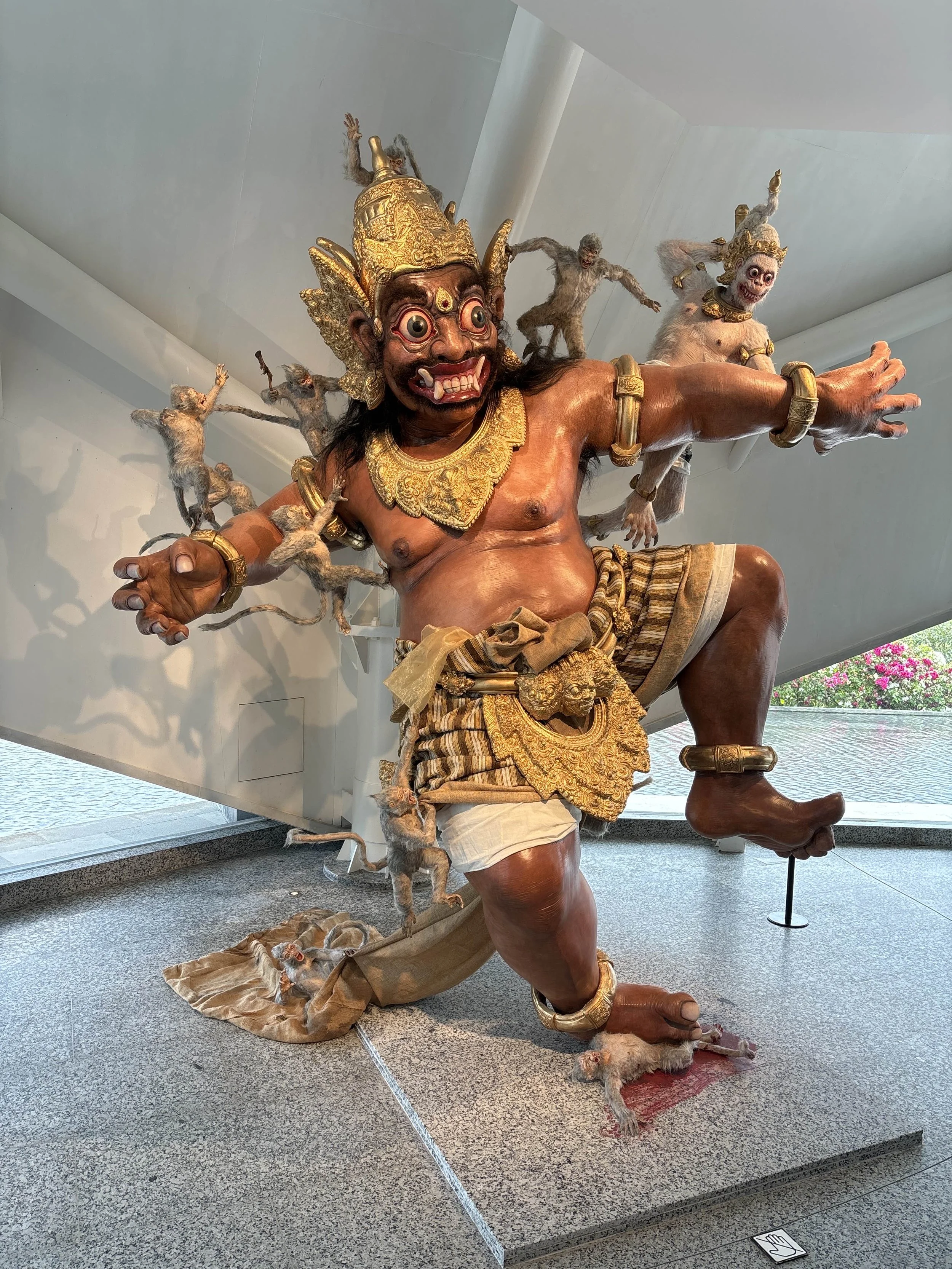
Another statue representing the demonic imagery present in Indonesian culture.
It's going to sound weird, but every family over there, if you were an expat, had a driver that the company paid for, so I had freedom in the sense that my driver and I could go anywhere, and we would go to this video store. If you can imagine, walking in as a 14 or 15 year old and there were just thousands of movies bookended all the way around this store. He had everything. He had action, he had horror, he had comedies, and he had adult movies. He had everything in the store, and I was just by myself and he didn't care what I was renting. It's just money for him, right? When you're 14, it's not the best idea to have unlimited freedom, and I just watched whatever I wanted. So, I watched a ton of pornography. I watched a ton of action movies, a ton of horror. And I watched the classics. I saw The Shawshank Redemption. I was like, “It's a good movie, but I want to see some bush.”
If you're looking at my history of what really converted me from somebody that likes movies to someone who loves movies, it was probably that video store. I would rent four or five at a time and be back before the weekend trying to get more.
I still had restrictions on what I could rent, but I remember when I moved to Ontario, where I live now, there was a video store we went to all the time that had a deal for seven movies for seven days for seven dollars. I cared the most so I probably got to pick three or four each week, and I would just constantly be trying new things.
That’s amazing; even if you had some restrictions, you still get to experience a lot with a setup like that.
Why were you moving around as a kid? What business were your parents in?
My dad was with one company his whole career, and he developed a reputation for helping turn offices around that were either struggling or had some concerns from the American headquarters that they might be dabbling in corruption. In some countries, corruption is just more accepted, but as an American publicly traded company, you can't do it. It's just a black and white, like, you can't do it. So if you had an office manager over in Jakarta, for example, and if he'd been there for 15 years, that temptation might creep in. My dad had the reputation of somebody who was kind of a boy scout and a hard worker. He would just go in and be like, here's the facts and here's what's happening. They liked that, so they moved him around to all these different posts, and Jakarta was one of them where I was lucky enough to spend four years.
At least you got to stay in one place for high school.
Yeah. Yeah. Exactly. And then back to Texas, where I went to a regional university called North Texas. I then graduated in 2005 and moved to Austin, where I slept on my buddy's couch until I got a job. And during those three months, I was watching movies. There's a video store down here called I Love Video that's kind of famous in this region for being a film lover's dream. They must have had 100,000 VHS tapes and DVDs. Amazing store, and they had a deal where you could get a free movie for every 10 movies, so I was getting a free movie once a week until I got a job. I've been in Austin ever since.
There were several times when you had access to amazing resources for movie collections, and you had the time.
Yeah, they say that the reason that Bill Gates was successful was because his high school at the time was the only one in the world that had a computer, so he had unique access and time.
I think that's certainly part of it. If you listen to Samm Deighan talk about her story, she was around this culture in Pennsylvania that was just so obsessed with movie watching. They had this drive-in, The Mahoning Drive-In, and she happened to grow up in that area, around Jesse from DiabolikDVD, and that whole crew is now the center of this boutique Blu-ray world. So yeah, sometimes you're just kind of born in the right place, right time.
Were there other movie communities that you were involved in at the time?
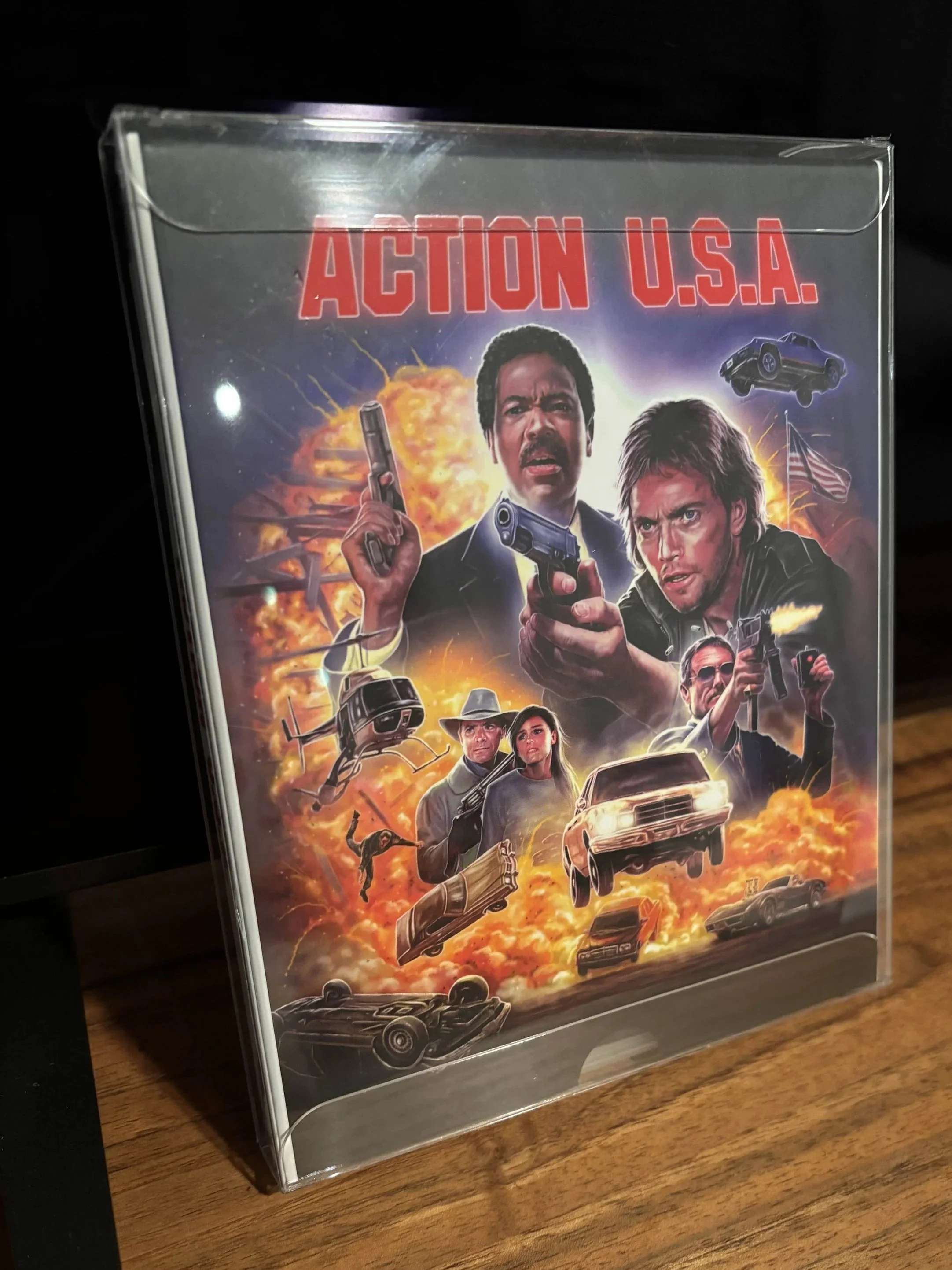
The Vinegar Syndrome Archive Blu-ray of Action U.S.A. (1989) played a pivotal role in connecting Chris with Vinegar Syndrome.
When I moved to college, it was a creative university. It had the number one jazz program in the country, over Juilliard, and all the best jazz musicians played at University of North Texas. I wasn't in the jazz program, I was in the business program. I got a finance degree, which the school was not highly rated for, which is why I was unemployed for three months.
But I loved the college, and as you can imagine, with a music community there was naturally somewhat of a film community. I found a cadre of fellow nerds, and I worked at a Blockbuster Video for three years. The combination of working there with film majors and having friends outside of work that wanted to drive down and see all the new releases that were coming out—the independent new releases, not the Hollywood ones; that was my snobby phase, we were super snobby back then—was powerful.
At one point, Dallas had 25 or 26 independent screens. It was some insane number of screens playing independent and foreign movies, so every single Friday, it was this glut of options. Like, do you want to see the new Takashi Miike, or do you want to see the new Claude Chabrol movie, or do you want to see blah blah blah? There were just incredible options, so it was really lucky for me to be there at that time too.
You’ve spoken before about the Troma section at the Blockbuster you worked at. Were there any other big discoveries from that time?
It was an interesting Blockbuster, even as a franchise, because it was somewhere in the top 10 busiest Blockbusters in the country, so we had maybe 18 people on staff;in any given shift, we would have six or seven people in the store, and with maybe one or two exceptions, everybody was a film major.
Because it was a franchise, the store owner was just a movie fanatic. He built up a whole Troma section, and on top of that, there was a really good art house section with tons of foreign movies, which I don't talk as much about, but that was cool as well. He was really big into ’90s movies, so even just the standard sections Blockbuster used to have, like comedy or drama, were really built out.
We would just constantly challenge each other. I didn't have anything to say for a while, because they had all the background, but after a year or two, I kind of formed my own interests and I would push them, and we'd all kind of push each other. It was like this Petri dish for two or three years of not showering, playing Smash Brothers, and then watching movies. It was super fun.
“There was a time in my life where I had not seen “Action U.S.A,” and then I had, and I was a different and better person because of it. I’ve also been on a quest to find as many of those types of movies as I can.”
You’re more well-known for your love of the wild cinema curated by companies like Vinegar Syndrome and Mondo Macabro, so it’s interesting to hear that you love filmmakers like Federico Fellini and Ernst Lubitsch as much.
If I were to be independently wealthy and could do anything I wanted, I used to joke about becoming a monk. I don't know if I would actually do it, but I love spirituality. I love philosophy. I'm fascinated by discussions on what motivates or drives people, but not to be successful. I mean, that's somewhat interesting, but I'm really motivated by why, at that very core, fundamental level, people take that next step and don't just give up, and there aren’t a lot of horror movies that tackle those topics. Some do. There are certainly some philosophers within horror, but for the most part, that's happening in Swedish movies, Danish movies, French movies, Italian movies. That's where most of that discussion sits, so I was really drawn into the European classic canonical filmmakers for that reason.
I remember being bored by Bergman movies when I first discovered them, but thinking about them afterwards. And then a lot of Dreyer's movies are these polemics against religion, but he's so comfortable with religion that he's making fun of it almost in the way that South Park does now,but maybe slightly less incendiary. For sure, there were less fart jokes and dick jokes, but they're similar in their approach. They know the topic first, and then they make fun of it.
And then there’s the fun part, the lizard brain. I saw Action U.S.A when I was in college, and it was just one of these foundational moments where there was a time in my life where I had not seen Action U.S.A, and then I had, and I was a different and better person because of it. I've also been on a quest to find as many of those types of movies as I can.
Was Vinegar Syndrome’s release of Action U.S.A how you discovered Vinegar Syndrome?
It was through Action U.S.A. I was collecting a lot from 2000 to 2008, 2009, and then my career was chaotic. I learned a lot but I didn't have control, which was my main stressor, so I stopped collecting for a while. And then around 2019, I started again. That break was exactly when Vinegar Syndrome grew from just a porn company to Vinegar Syndrome. They put out Action U.S.A in 2021, and it just took a very quick dive into the company to realize I was in love pretty fast.
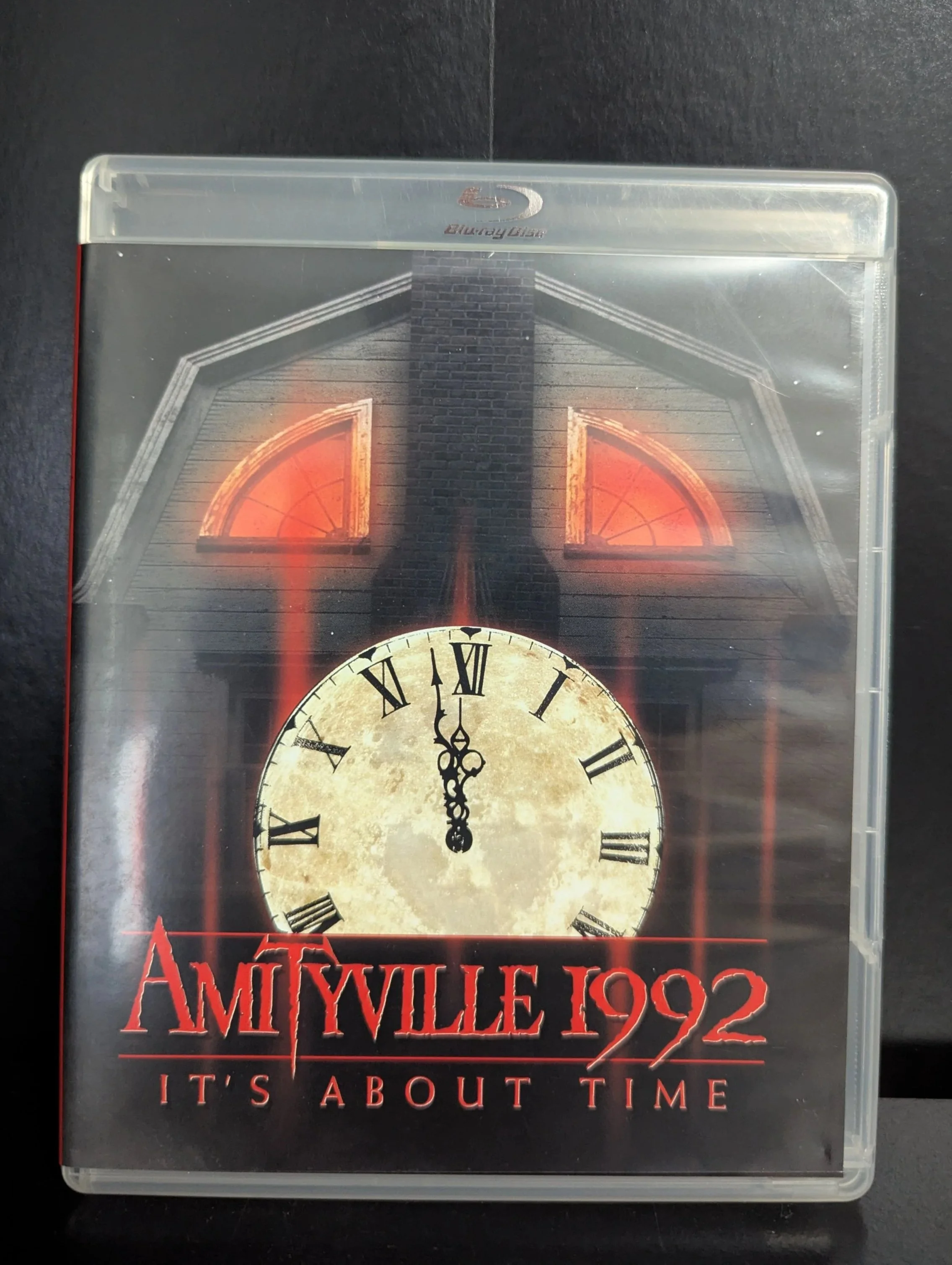
In the Amityville Horror sequels released by Vinegar Syndrome, various objects from the haunted house end up doing the haunting, including a clock in Amityville 1992: It’s About Time.
I discovered them around November 2023, so the last two years or so have been a lot of fun discovering the catalog.
What movies stand out to you that you've seen from them?
There are so many, but the ones that really hooked me in was the Amityville sequels collection.
Hell yeah.
I loved that the haunted objects were objects like a dollhouse or a clock. The images were so simple that it allowed them to just be fun. There weren’t huge stakes, and they weren’t particularly gory.
Amityville 1992 is the one where it's about time and, at the end of the movie, they say, “it's about time,” and with that, I was fully in.
Exactly. I watched those quickly over a weekend, loved them, and kept going from there.
You've been talking about creative people, and there was an interesting moment I had watching the Taboo box set, because that writer, in a really interesting way, took the topic of incest and made it from a singular incident to a global pandemic over four movies. The way they did it like a horror movie was fascinating. It started off as this one incident, and then the friends heard about it, they tried it and liked it, and then by the third movie, it's like, everybody's into incest. There's radio shows about it and stuff. I was watching this and I was like, man, there’s actually quite a bit of thought that went into this movie. Those movies actually had quite a storyline throughout the four movies, which was cool.
When did you start writing movie reviews and what made you start doing that?
Back in the old days, I used to write directly on IMDB. The very specific reason I did it was because it's about a 45 minute drive from Denton, where I went to college, to Dallas, and there was this video store—shout out to Premiere Video. I hope they're still around and thriving—and I sort of got a job there. The guy got to know me, and I was always watching these obscure Japanese movies or Korean movies or whatever. So one day, I was like, “Man, I'd love to just work with you, not get paid, but just work with you for free rentals.”
He thought about it, and then I came back two weeks later and he's like, “Look, I'll make a deal with you. I get all these movies from Asia mostly, some from Europe, and there's no English on the cases. So, if you can help me put an English translation of what the movie's about onto the back of the DVD cover, I'll let you rent my VHS tapes for free.”
I looked up, and picture this: it was like a typical bookstore,where they have those shelves that are maybe seven or eight shelves high, but it was like that shelf was on top of the video store. So they had the typical DVD section, and then on top, built into the wall, was this incredible bookshelf circling around the whole store, bookended all with VHS tapes. I have no idea how big his collection was. 10,000, 20,000 easily. I was like, “Done.”
So I went and bought a VCR, and I was like, how do you even break into this? I didn't know what to do, so I just started working left to right, and I was like, I’ve got to chronicle this, because some of these movies don’t have more than 10 people who have seen them. I just started writing little things on IMDb. I like writing, and I tend to write like I speak, which I think is horrible from a critical writing perspective, but it's okay. I'm not trying to make any money out of it.
“For some movies, like some of these from Vinegar Syndrome, Severin, or especially when you start getting into Saturn’s Core, some of these will have 80 people that have seen them, so then it’s more about just creating exposure than writing a synopsis about what this movie’s about.”
I started doing that, and then I discovered Reddit when I came back to collecting, and then Letterboxd, and I was like, “Hell yeah.”
I discovered Reddit first and started posting just nonsense on the Boutique Blu-ray subreddit and the Criterion subreddit. Those were the two big ones at first, and then I realized that nobody really wanted to talk about movies, so I started my own subreddit, which I know is random, but that is the place to journal. And then from there, I eventually moved to Letterboxd.
It's cool that you're controlling the conversation and moving it away from the physical product back to the actual movies. It’s great to read your informal takes on these movies, especially given your wide variety of watches.
What do I have to say about The Seventh Seal? There's real writing on that, so I'm just kind of saying what my experience with it is. For some movies, like some of these from Vinegar Syndrome, Severin, or especially when you start getting into Saturn's Core, some of these will have 80 people that have seen them, so then it's more about just creating exposure than writing a synopsis about what this movie’s about.
It’s such a valuable resource to have a review from someone whose taste you know, so you can try to figure out if you align with the reviewer’s opinions.
Yeah, exactly. My job is not creative, so I just have to have an outlet to be creative. I don't really have any illusions of making money at this. I just need to get it out. So if people get something from it, that’s great. And if people hate my take on Vertigo, because I don't like it that much, that's okay. I'm not trying to win anybody over. I just think the guy's an asshole, and I don't enjoy watching the beautiful movie. It just doesn't resonate with me.
Part two of my conversation with Chris Haskell is available here.
Hear more from Chris Haskell on They Live By Film, Punk Vacation, and Wild Side: The Official Mondo Macabro Podcast, and follow his subreddit r/personalhistoryoffilm to keep the conversation going.
The interview was recorded using Google Meet in August 2025.
The transcript was edited by Matt Long, with additional copy editing by Anthony Nijssen of APT Editing.
All photos are the property of Chris Haskell unless otherwise noted.