“Man, should we start a Blu-ray company?”: Ryan Verrill shares the origin story of Antenna Releasing (part one)
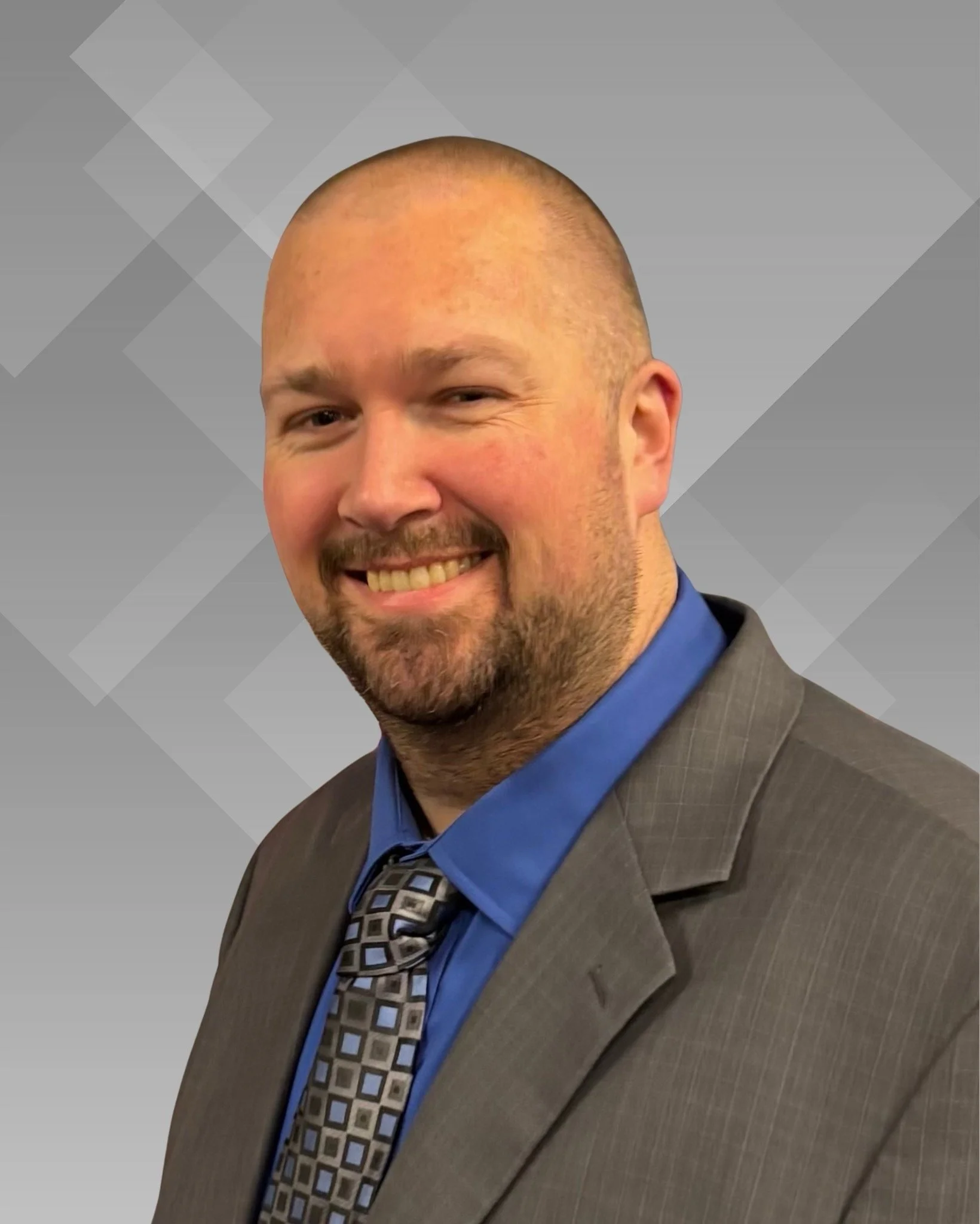
Ryan Verrill (pictured above) is the co-founder (along with Billy Ray Brewton and Francis Galluppi) of Antenna Releasing, a distribution label with the goal of disrupting the current models by being filmmaker-focused.
Ryan Verrill, the founder of The Disc-Connected and Someone’s Favorite Productions, has launched Antenna Releasing, which is “a full service boutique distribution company specializing in curated theatrical engagements, and robust, filmmaker-forward physical media releases.”
In part one of the conversation, we discuss how this company came to be and why it needed to happen.
It’s exciting to hear you're launching a film distribution company called Antenna. What inspired you to start this company?
One of the biggest things about physical media that I've always been attempting to champion is that, for many of these films, they quite literally disappear without this. For a lot of people, they assume that to mean films from pre-1960 or even earlier than that. But the reality is there's lost media from 2025 already. There's no way to see it. There's no way for anybody to go back and find it in an archive. It might be written about, but to verify what is included in the content is already impossible for many things, and that includes proper good films, not just things like shaky YouTube videos or something.
“There are many projects out there that are just simply gone to the ether. I have always felt this internal desire to help bring as many of those out as I possibly can.”
Discovering how many films play the film festival circuit and don't get distribution, or they launched in 2019 and fell into the black hole of COVID-19, or it was associated with somebody shitty back in the day and, because of that, it's been buried in some way. That is not a focus of this necessarily, but there are so many projects over the years that have been lost or are gone when they should be readily available. Readily available just means there is a way for you to see it.
Lost media has taken many forms throughout the years. Many of the original film reels are gone. But in a more common sense nowadays, there can be no streaming option available, it’s not on YouTube, and it’s not available on VOD. You can't go to the library and find a copy, and it is not on home video. Based on that, there are many projects out there that are just simply gone to the ether. I have always felt this internal desire to help bring as many of those out as I possibly can.
There’s a lot of catharsis in this finally being public. In 2024, I interviewed Francis Galluppi. Fran is just the best. He directed the film The Last Stop in Yuma County, which I adored. I saw it and fell in love with it immediately. It stars Jim Cummings and is this masterfully directed, almost borderline epic. The storyline takes place mostly in just a small diner, and it is harrowing and beautiful storytelling. I love it through and through.
I interviewed Fran, and he is a huge lover of physical media. We're into this hour-long conversation, and two thirds of the way through, Fran jokingly says, “Man, should we start a Blu-ray company?” I laughed. I was like, “Haha, yeah, that'd be fun.” We get to the end of the conversation in the recorded interview—you can still go back and watch it—and actually say, “All right, let's hook up again to talk about our Blu-ray company someday,” just as a joke.
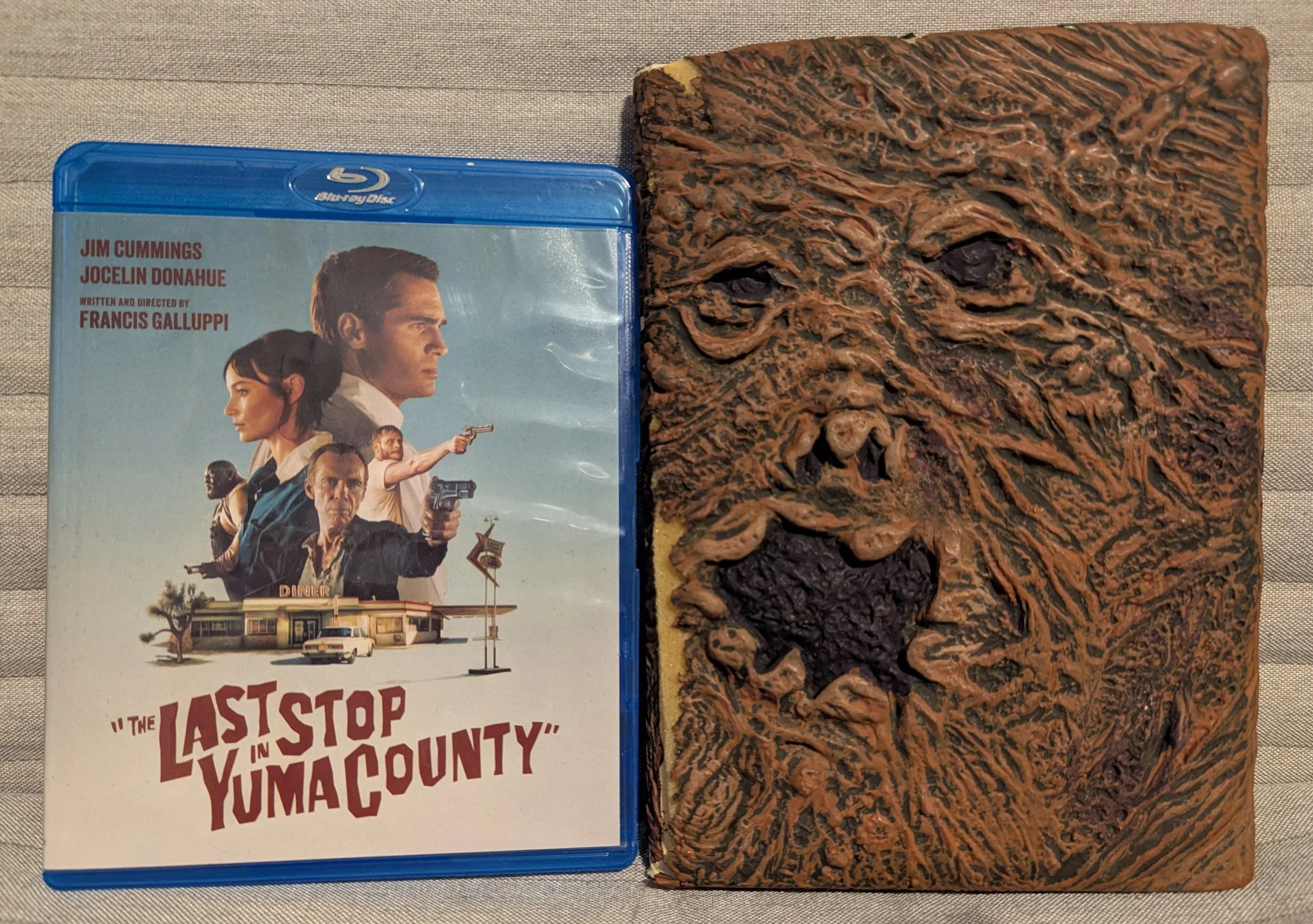
One of the co-founder, Francis Galluppi, is set to follow his feature The Last Stop in Yuma County with an installment of The Evil Dead franchise, currently set for release in 2027.
I pressed the button to stop recording and I say, “Okay, should we really talk about this?” He had to go, so we didn't have a lot of time that day, but we mentioned it. A couple months later, I had a trip planned to go to Los Angeles for a handful of different things. On one of my last days, me and a couple others drove out to Fran's home. We went into his writing shed—if you watch my interview with him, he’s in this little area—and we sat down in there, and I pitched him my entire idea for a company. Fran immediately fell in love not only with the story itself, but with the two of us working together.
I am still pinching myself that somebody that is currently directing one of the two upcoming Evil Dead films is running a company with me. So yeah, Fran Galluppi is a partner in the company. He is dedicated to this as much as I am. He has a huge passion and heart for good art, so that is probably the most important part of this whole process for him.
Following that, I hooked up with another partner that I've been working with for the last five or so years. His name is Billy Ray Brewton. He founded a couple film festivals throughout the years, the biggest being the Make Believe Film Festival in Seattle. Billy Ray and I have produced and hosted podcasts together, and I have helped with a couple other random projects.
I went after him because when you work in the festival world, you meet all kinds of people. You get some of the most important contacts in modern film. Not just filmmakers, but also programmers for theatres across the country and the world, all these people that you're trying to do things with and collaborate with to enrich the community. His rolodex and my rolodex kind of feels like a “with all our powers combined” moment. The reality is if you throw a giant name like Francis Galluppi on top of that, it's like adding gasoline to an already large fire.
The three of us were excited to be working together. I had a few other people that I wanted to bring to the project. The reality is I'm driven. I want to see a project through from the very beginning, and some other people couldn't quite keep up with that and couldn't get their portions taken care of in a timely manner. The calamity of the United States system in 2025 lit a fire under my butt, and I said, “I don't really have time to just kind of play around with this anymore. Let's make this real.”
I asked everybody's permission, saying, “Would it offend you if I just take this and run? Are you okay with that?” Everybody said yes. A week later, we were about 10,000 steps beyond where we were. I've not dropped it since then. It has gone to places that I never would have imagined. Giant filmmakers have already agreed to work with us. I’m just immensely proud and honoured to be able to give something back to this community that I've taken from for decades myself.
Congratulations on being able to make this happen. Meeting the right people at the right time who share your vision is so important.
Thank you. It's unreal to see it finally fully realized. And by the time this comes out, people will actually be able to talk about it and discuss it. Keeping this secret for literally the last almost two years has been wild. The amount of people that have already been laughing and saying, “How do you keep up with everything you're doing?” Every time, I'm like, “If you only knew what I'm actually doing.…” It's been a wild ride.
“Antenna itself is out to disrupt a few different markets. Right now, this entire system is built to take advantage of people, and we’re tired of it... we got together and said, “We’re only going to do this if we can be honest, operate with integrity, be filmmaker-friendly, and find a way to craft this that disrupts things.”
Can you tell me more about the structure of Antenna and what each of you are doing?
I am going to be doing a lot of acquisitions and overseeing the entire home video side of things. Billy Ray is handling the modern acquisitions, like films that are either off of the very recent film festival circuits, or if we all love a film from one of his filmmaker friends, we’ll pursue that.
Antenna itself is—there's no real easy way to say this without sounding sort of egotistical about it—out to disrupt a few different markets. Right now, this entire system is built to take advantage of people, and we're tired of it. All three of us have been in situations where we have been the victims of greed, of people trying to essentially corporatize the art of someone else.
For Billy Ray, it’s from being a producer on certain films, acting, doing local theatre, and doing film festival stuff. He’s had people come to him and say, “We wanted to debut at your film festival, but we got offered this premiere at this other film festival.” Turns out, it wasn’t a real film festival. They took their money and ghosted them. That's a big problem.
With the physical media side, there are so many people that don't fully grasp how little people make doing this. They think that some of these companies are printing money. The reality is Will Dodson, my partner, and I have done a commentary that takes, say, two weeks to prepare. I record it and edit it. All the production behind that commentary took hours for both of us, and we did it for $250 (USD), maybe $150. The hope is that people will see our names and buy the release because of that, so it will help sell more units.
I know for a fact that it's done that for some releases, but people are literally being borderline exploited for the work that they're putting on these. And to be frank, it's not even borderline. Some of these companies are paying so little for immense amounts of work and knowledge and ideas that, for some of these people, they built up for decades. Will is literally a doctorate of film studies, and he gets paid pennies for what we're doing.
Me and Billy Ray and Francis, we got together and said, “We're only going to do this if we can be honest, operate with integrity, be filmmaker-friendly, and find a way to craft this that disrupts things. We want to make a name for ourselves for not being the face of corporate greed and not being somebody that you worry about when you turn your back on them. Are they going to take the company and run and never release our film? Are they going to just sign 15 films, hope that one is a big break, and then screw the rest of them? We just can't do that. We're not those types of people.
It’s rare to have someone out there really working with the artists, I imagine.
We're going to be doing a lot of things behind-the-scenes to help people. One of the big ones is what led to this long answer. Billy Ray Brewton is huge on theatrical booking. With his history with the festivals and booking, he's going to be handling a lot of that for us, but we are also going to be handling the catalog of certain filmmakers and other boutique home video labels. We are not fully rolling that out yet, but within our first couple of months, you're going to be able to schedule titles from all over, from all the genres that you could possibly imagine, and titles that I have loved and have championed on home video for years.
“The thing that most people don’t realize is in these contracts, there are fees getting charged to filmmakers that you would never imagine.”
The companies that know me as a person know that you can trust that I want to get this in front of as many eyes as possible. Meanwhile, you have other companies out there that manage theatrical bookings, and they don't do anything. They essentially just sit there and wait for theatres to approach them. We're going to do what we can to promote these in innovative ways.
I’m intrigued by the opportunity for transparency for people to understand how it’s working now and what the problems are. It reminds me of Maria Bamford’s sets where she broke down her life’s financials, what she paid her opener, Jackie Kashian, compared to the other opener, and so on. No one talks about those things or how financial deals actually work.
It's even worse than that. Most people will never make a movie in their life, so they're never going to understand this behind the scenes, which is something that we're going to try to educate people on as well. Say you made a film that is shot beautifully on 4K. It is a real feature film that theoretically should be getting a wide release in theatres, but it isn't one of the 50 biggest titles of the year, so it won't be in many theatres.
Distributors will come out of the woodwork and say, “We'll give you $10,000 to sign your film.” You're like, “Okay, that's guaranteed money. However, I was working on this movie for four years and I took my entire life savings and raised some money from family and friends, and this cost me $350,000. Am I going to make enough from theatrical to make that money back?” The reality is no, you're not. You're going to hope that you can make that money on VOD and streaming, but the reality is you probably won't.
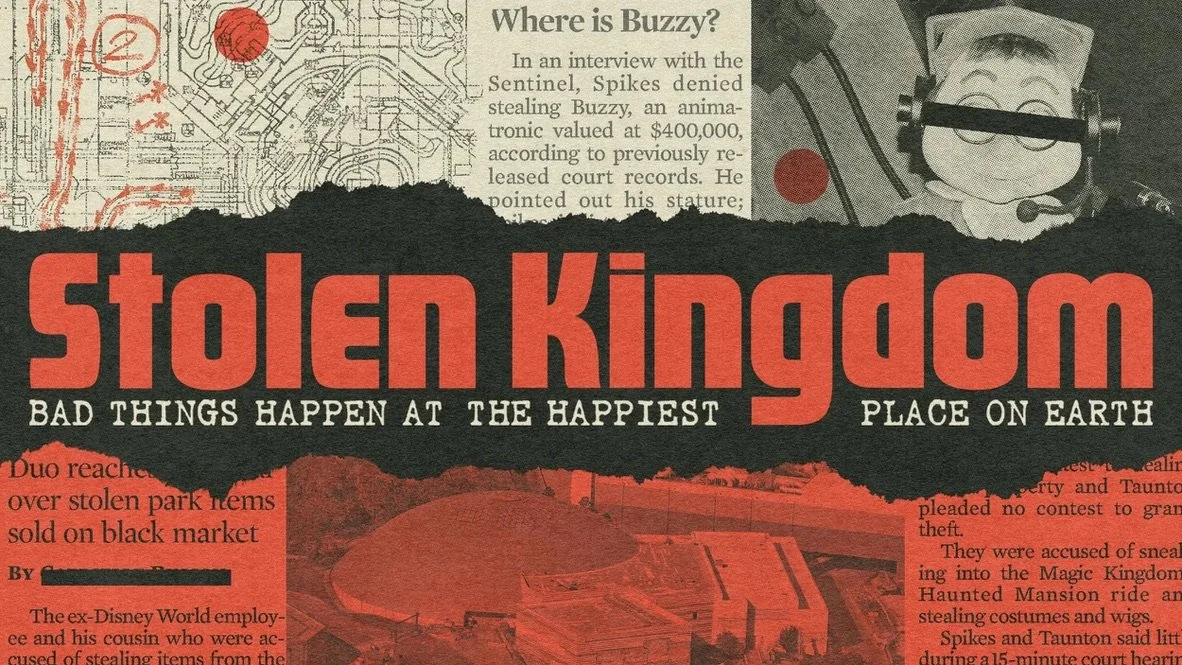
Stolen Kingdom, a documentary directed by Joshua Bailey, will be Antenna’s first release.
But what's worse is it's not only that. Because after all those theatrical, VOD, and streaming options are exhausted, yeah, you probably won't have made $350,000. You'll likely still be left with a huge chunk that you're in the hole, but the thing that most people don't realize is in these contracts, there are fees getting charged to filmmakers that you would never imagine, and it’s essentially a given that they're going to happen. I'm talking about for big films that many of us have seen over the last couple years.
Very independent filmmakers will get a contract, and after a couple months, the distributor will say, “Okay, we're starting to get working on your film. In the contract, you agreed to pay us $50,000 to market your film.” You've already paid the $350,000 to make the movie, and they've agreed to put your film out there for you, they've paid you $10,000, but now they're going to charge you $50,000 to make a poster, to make a trailer, and to send a few emails hoping that they can get it mentioned in Variety and a couple of the other trades.
To us, you should not be paying marketing fees whatsoever. Why is there a distributor there to take your money and charge you way more for something that you could be doing yourself to get it out there? We know a lot of contacts that can do great work for us, that are friends of ours, that will probably charge us less than an independent filmmaker. So, we've already got that in. However, why would we make money doing that for you? We're here to try to take your film to the world.
So, Antenna is going to say, “We're not charging marketing costs to any of these filmmakers ever.” We're going to be internally biting the cost of the poster, the trailer, contacting the trades, and doing whatever we need to do to get it out there, like if we need to hire a PR firm for some movies, which is not uncommon. The biggest example of the last couple years, Hundreds of Beavers, exploded because it hired a great PR firm out of Minnesota. That did wonders for that movie.
With the current way, they're literally taking somebody else's art, charging money to go sell their own art, and then hardly doing any work on it. A lot of them get a terrible designer to barely photoshop together a poster that looks the same as all the other 287 posters that you've seen this year and throw it out there. I could do a much better job with the artists that I know and love. If I spend $1,500 on that art, I'm now incentivized to go make enough money to recoup my money. You spent $350,000 on the film. I can spend $1,500 on art. I don't need to charge you 50 grand. That's a joke.
“We’re just all going out there trying to sell a film, and the reality is if we do a better job, we all make a little bit of money. The pie itself is not that large, but I want to make sure that the filmmaker gets the portion that they deserve.”
We're going to do our best to operate with integrity. We're going to do everything that we can to make sure that people can trust this. And funny enough, I don't even understand how, but after only a couple filmmakers saw our contracts and what we were offering for our films, word genuinely started to travel. Big names that I would have only dreamed about talking to were asking us for meetings. They saw that somebody was coming in and trying to do better in the world.
It's already leaving a mark, and we're not public. We've not even made a dollar yet, and there's hardly been any money transferred for anybody. The filmmakers are not getting the immediate bonus of $10,000, sure, but I'm not charging them $50,000. We're just all going out there trying to sell a film, and the reality is if we do a better job, we all make a little bit of money. The pie itself is not that large, but I want to make sure that the filmmaker gets the portion that they deserve.
From what you’re outlining, it takes so much for new filmmakers to succeed and not get crushed financially, and that’s assuming they get the best-case scenarios of getting theatrical distribution and possibly a physical disc.
What's even bigger about this specifically, most distribution companies nowadays are not operating physical media. The only titles that are getting home video releases are primarily the ones that even saw a theatrical play. There’s a big example from this last year. I normally would not call out and shame immediately like this, but another company I love, Kino Lorber, signed an independent film that came out last year called Love, Brooklyn. I watched the movie in theatres and loved it. I was astonished with how almost Sean Baker-esque it was. It’s basically just a slice of life film but beautifully shot and wonderfully acted. Everything that they could do for this film was poured into it.
Now, Kino Lorber just quietly put it out on DVD without advertising it. Hardly anybody that loves home video is going to buy it simply because it's a DVD, and it'll look 10 times worse than it would renting it on iTunes in HD, which is already going to look worse than it would even if you just shat out a Blu-ray, because any poor quality Blu-ray is going to look better than an iTunes stream.
And then where does this movie go after that? Kino Lorber will sell it on DVD for five years. By then, maybe it's had some time on Tubi. You'll be able to rent the DVD from libraries for years, but are everyday people going to stumble upon Love, Brooklyn? Not nearly in the numbers that they should be, because this movie is incredible.
“Within our first couple of months, you're going to be able to schedule titles from all over, from all the genres that you could possibly imagine, and titles that I have loved and have championed on home video for years.”
Releasing it on DVD feels disrespectful at this point, but this not great sounding scenario is still a good scenario compared to most. They can give a copy of their movie to their family and prove it’s real. But you can also see all the reasons why it’s problematic. The transparency you’re offering will hopefully at least make people aware of issues like the problem of marketing fees being charged, which strikes me as being kind of monstrous.
Right? The distribution companies themselves are run by essentially giant corporate suits sitting at a table not loving films. Billy Ray was telling me he was at a festival one time talking to some filmmakers, and a distributor approached them because they wanted to acquire their film. They then had to step away to take a phone call, and in the middle of this conversation where they were considering distributing this film, their company got bought by another company, and it wasn't the first time in the last handful of months. It's literally just there for these giant suits to make money.
When you're charging $50,000 to a small-town filmmaker who's now locked into a contract who said she was going to pay you $50,000 in the hopes that the right person sees this film and funds her next one, everybody but the suits get screwed. This is a tale as old as time. We hear this literally daily, and it does not get enough focus and attention in this industry, so we want to do our best to try to make it stop. If people want something that they can trust, they know that they can get that from us.
What's the origin of the name Antenna?
Ryan: Me and Francis have both over the years been a big fan of Mondo. Mondo was a company that, way back in the heyday of 2014 or 2015, you could get an email from them saying “we're releasing X” and it could be anything from a vinyl toy figure to an obscure remake of a Swedish '70s film poster to “we're getting into home video ourselves, and we're sponsoring this release from Arrow Video,” and all those things would make sense.
We wanted a big umbrella term to cover the entire company. That led to Antenna, because we are trying to get these films transmitted to the world. We're trying to send a message by being people that are stepping in and changing things but also sending films to the furthest corners of the world. We are a US-based company, but we're taking world cinema to other doors. We are taking US films to international markets. We are operating literally on a worldwide scale. And with that, you need a very large antenna to transmit it. It seemed like an apt name.
We are going to have, specifically on the home video side of things, a couple style-based names to differentiate some of our offerings. We are also going to be dabbling in some things that are very off-the-wall. I know for some people that's not going to be something they're interested in. I'm a collector just like many people reading your column, which means I love spine numbers. I love uniformity. I love similar art styles when it's across a wide collection. We're going to have a couple different collections under the name Antenna. You can count on very specific stylized curation to be on home video, so we'll have a couple different pieces of branding that we'll talk about later.
That concludes the first part of our conversation about Antenna Releasing. In part two, we focus on the work Antenna has done to launch the company and discuss the plans for physical media.
In part three, we look at their plans for theatrical distribution, including a deep look at how Stolen Kingdom became their first announced title.
Learn more about Antenna Releasing.
Make sure to follow Ryan Verrill on Instagram as well as Antenna Releasing on Instagram or your social media of choice. You can watch Ryan live every Thursday on Re-Connected.
More interviews are available here.
The interview was recorded using Google Meet in December 2025.
The transcript was edited by Matt Long of What’s the Idea Professional Editing.
All photos are the property of Ryan Verrill unless otherwise noted.