“Man, should we start a Blu-ray company?”: Ryan Verrill shares the origin story of Antenna Releasing (part three)
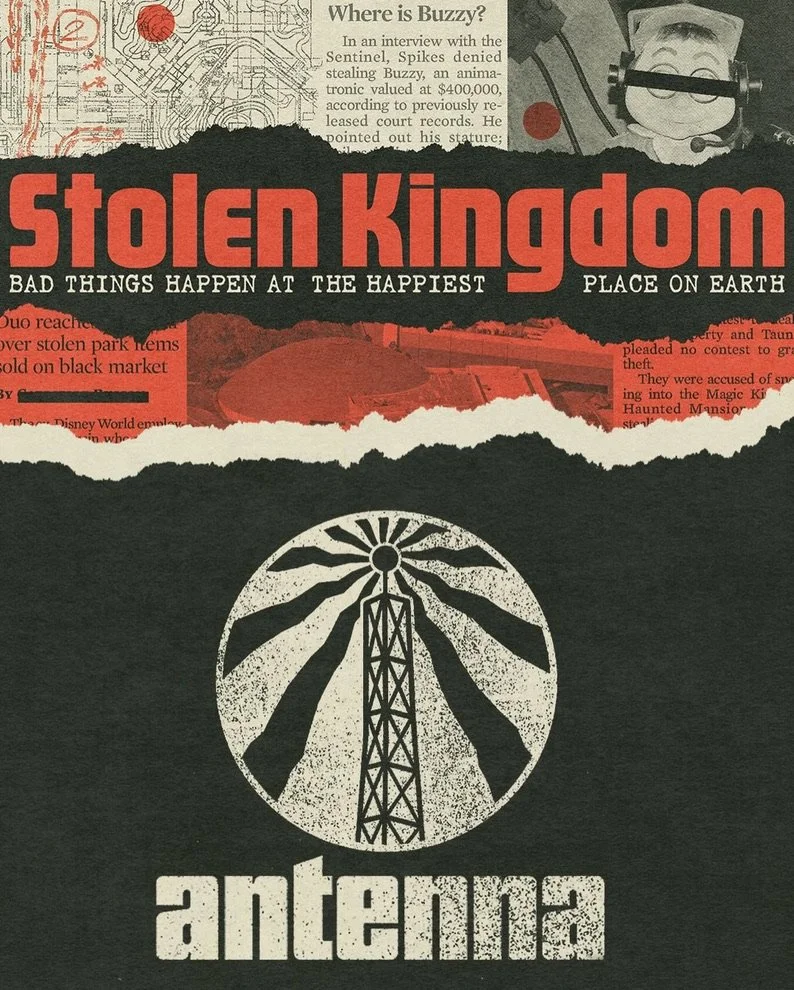
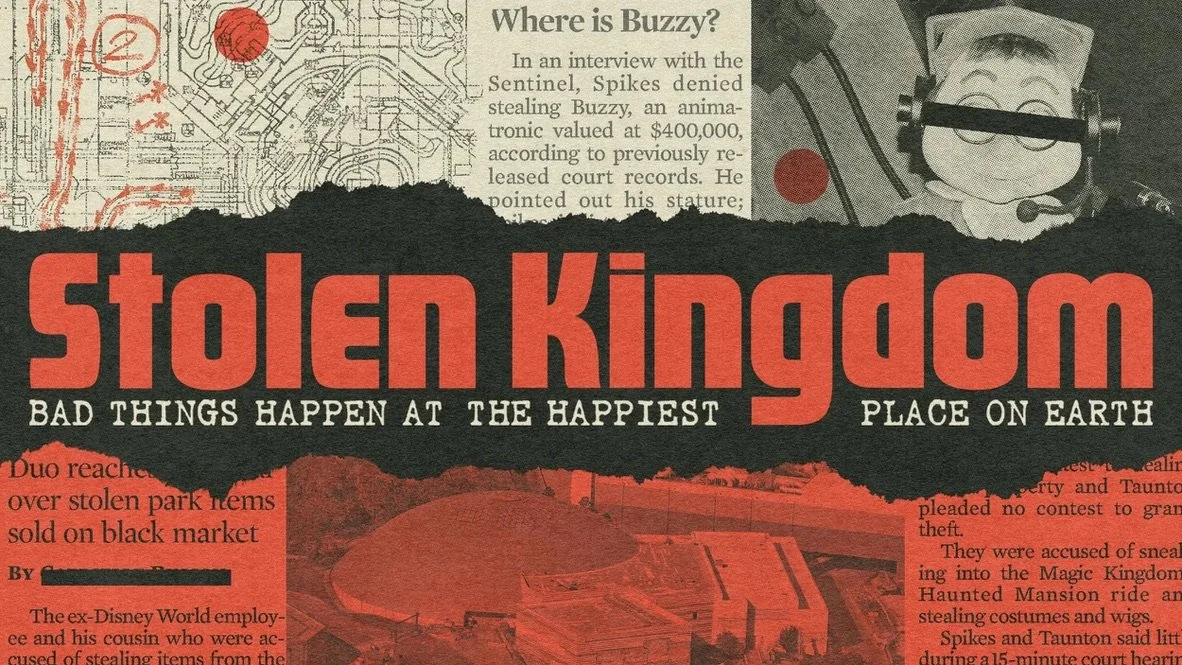
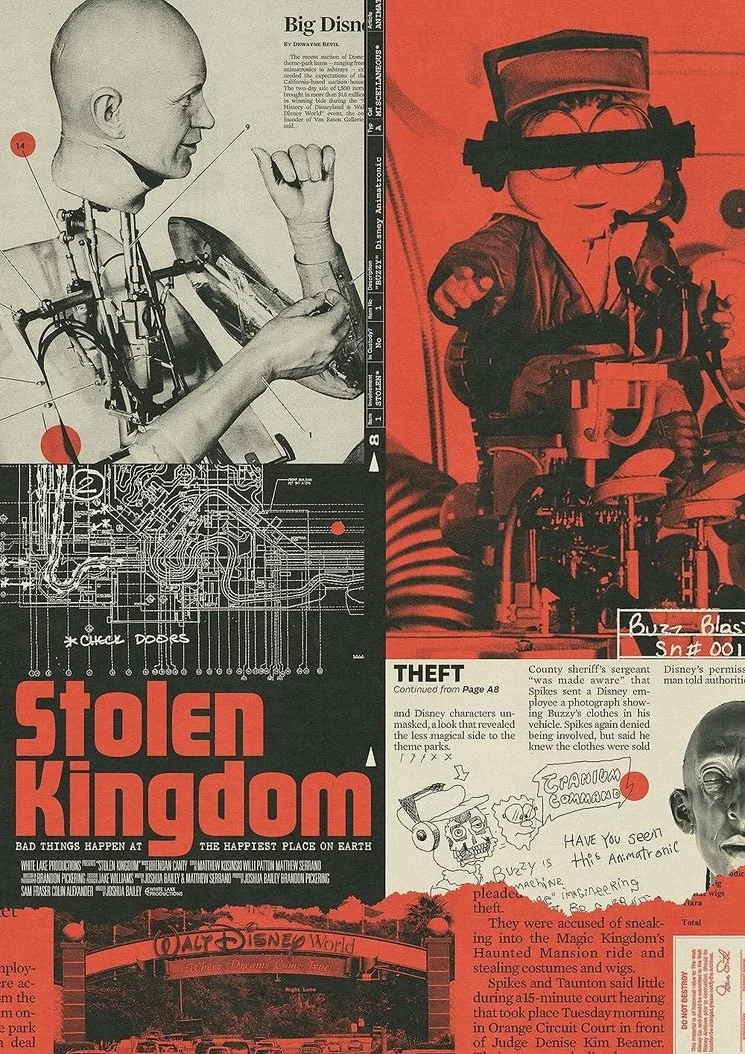
Stolen Kingdom, a documentary about Disney Land and urban exploring (among many other things) is the first film being distributed by Antenna Releasing.
Ryan Verrill, the founder of The Disc-Connected and Someone’s Favorite Productions, has launched Antenna Releasing, which is “a full service boutique distribution company specializing in curated theatrical engagements, and robust, filmmaker-forward physical media releases.”
In part three of the conversation, we discuss their theatrical plans with a focus on their first release, the documentary Stolen Kingdom.
Are there any titles for either theatrical or the physical media side that you can talk about?
The big one that we're announcing is a title called Stolen Kingdom. It premiered at Slamdance in 2025, and it took the house down. It was incredible. People were thrilled to see it. Stolen Kingdom is a brand-new documentary that is intriguing to so many different micro-fandoms. It goes into the history of scandal and theft and true crimes surrounding Walt Disney World.
“It’s crazy. But the story itself is magnetic. You are immediately roped in. I cannot wait for people to see it, because it’s the perfect crossover of people that love so much of this.”
Actually, for people that are fans of urban exploring, this is the story about the early blogging days where people used to go to Walt Disney World, hop off of the rides where they weren't supposed to, and access portions of the theme park that were off limits. They went behind the scenes and messed around with certain things, and eventually there was an animatronic out of Epcot that was stolen called Buzzy. The whole online community surrounding this urban exploring was, pardon the pun, abuzz with what happened here.
This documentary is the perfect mishmash of giant Disney fans and those that love urban exploring like I did growing up. When I was a kid, I used to go out into the desert that I grew up in and go looking at old silver mines and dream of coming around a corner and finding they just left this entire intact silver mine. We’d go “Let's see what we can explore,” and many times it was dangerous situations I never should have been in, but I love that sort of thing.
And then on top of that, about two-thirds of the way through, this documentary turns into a modern true crime documentary. We're talking police footage, interviews, people in interrogation rooms, everything. It's crazy. But the story itself is magnetic. You are immediately roped in. I cannot wait for people to see it, because it's the perfect crossover of people that love so much of this.
For many of us, the big company when we were growing up was Disney. You knew the animated films, you knew the Sunday night movies on ABC when you'd tune in to watch Disney family films. All of this was a big deal. So many of us dreamed of going to Walt Disney World or Disneyland or whatever, and many of us that got to do that when we were younger were just enamored with the animatronics, the showmanship, the idea of this magical place.
Stolen Kingdom shows the beauty of the Magic Kingdom and then the dark side of it. There are so many characters involved in this that are just a blast to see on screen. We are taking this to the theatres across the country. We are taking this to VOD. We are taking this to streaming, and I can guarantee now, we will be the best people to put this out on home video. The whole team is beyond thrilled to be pitching ideas for what to include on the disc, for what to include as tributes, for what to use as marketing, or other gimmicks that we can have so people say, “Man, I have to own that now” when it’s released later this year.
“It was just a natural fit for us to do it. When it came along, we just said, ‘Listen, if you haven’t gotten a deal yet, there’s not really a reason. You deserve to be distributed. You deserve to have a huge deal. Your movie is incredible. Let us invest in you the way you’ve invested in this film.’”
It's just my dream. Every single day, I make spreadsheets of things that I'm dying to see as part of a release. So, it's a big deal for me. And funny enough, I think specifically these three fandoms of true crime, Disneyland and Disney lore, and urban exploring are specifically three very physical focused communities. Even true crime, a lot of people that listen to true crime podcasts like My Favorite Murder go and buy merch from it or go to live shows for it.
The movie has played only at festivals so far?
Billy Ray Brewton is huge into the Slamdance Film Festival. He was on the board this year for the documentary side. His film that he produced called Coroner to the Stars played Slamdance Film Festival in 2025 alongside Silent Kingdom. It was something that he saw in the theatre and loved and went, “This is going to get distribution immediately,” and then it didn't. He was very confused all year why it hadn't, so he stayed in contact with the guys. It was just a natural fit for us to do it. When it came along, we just said, “Listen, if you haven't gotten a deal yet, there's not really a reason. You deserve to be distributed. You deserve to have a huge deal. Your movie is incredible. Let us invest in you the way you've invested in this film. This is a film that we're passionate about.”
Since the first moment I saw this movie, I've been quietly, again, pardon the pun, buzzing inside to tell people about it because it's so good. It's just impossible to see right now. It played festivals and a handful of theatres, like some in Florida and a couple in Texas, but we are doing a theatrical roll out that we could be proud of. It'll play at least 10 or 15 cities, if not more, and see what we can do after that. It'll then get a full VOD release. After a little bit of exclusivity there, it'll likely go to streaming. And then once all of that is done, we will put it on home video. It might be late in 2026 or early 2027. If it does well on streaming and VOD, we might hold it a little bit longer to keep it going, but it will get an incredible home video release. I have literally multiple pages of notes already for this title that I cannot wait to implement.
What does it look like to book a theatrical run for this movie?
I'll share behind the scenes of a different film that we signed that we're planning on releasing in theatres probably just after Silent Kingdom. We're planning a 10-city road show for that film. The end of that will be a week-long qualifying run in New York City. The first nine stops before that, including in New York, the director will be in person at every single one of these theatres for the screening. Based on the content of the documentary itself, we are going to be getting something local from the area that will be a part of this Q&A afterwards, because this film needs contextualizing.
Billy Ray Brewton, the theatrical acquisitions specialist for Antenna Releasing, saw Stolen Kingdom at Slamdance 2025 and thought it would get distribution immediately. When that didn’t happen, he knew it was the perfect movie for Antenna.
This film has done gangbusters at some other film festivals, and distributors are telling them, “We loved your movie. We just can't release it.” Billy Ray and I watched it, and we said, "We love this movie, and we're the only ones that will ever put their hearts behind this release, so we have to do it.” With this type of film, it's not as easy as just wanting to contact 10 theatres and throwing it out there. I think we very strategically have to choose our cities based on what the documentary is about, and then from there, craft something that will make sense and do well, and hopefully the word of mouth will spread from there. But the reality is that it's mostly strategy and having a finger to the pulse on every aspect of this.
“You find out not only is this film going to be playing at this small theatre near me... but the director will be there in a town that you never imagined a director would ever come to. Not only that, somebody pretty big from your state is going to be there in-person to discuss the context behind this. For me, that’s suddenly an event.”
In 2025, I spent more than half of the weekends literally in movie theatres watching films. I’m that guy that if I'm in a room with four other people and we get done and they don't all walk out as soon as the credits start, I might ask people what they thought, what they were looking for, what they missed in it. There was one screening I went to—I think it might have been Sentimental Value—the film got done and the couple next to me said, “This is better than the theatrical screenings that we normally go to up north.”
I live in a metro area that's full of two million people. It's a pretty big metro area, and we have many large theatre chains. We have a handful of small theatres to choose, and these people drove 40 minutes because their theatrical experience was awful. People up there were talking and using cellphones during every film, a lot of complaints that we've all heard. And when they came down here, everybody was respectful, so they said, “We're going to start coming to this theatre probably every single weekend.” People are falling in love with the theatrical experience again. The hard part is getting those people to the theatre for the first time.
If you hear about us and you find out not only is this film going to be playing at this small theatre near me which only sits, we'll say 75 people, but the director will be there in a town that you never imagined a director would ever come to. Not only that, somebody pretty big from your state is going to be there in-person to discuss the context behind this. For me, that's suddenly an event.
If that is in Oklahoma City, I know that that's not a common thing. I know that's something that will get me to the theatre on a Tuesday night that normally wouldn't. If I'm sitting in Little Rock, Arkansas, I don't always get examples like that because people are always going to New York or Chicago. But now I get this to show up at my front door because they want to talk about this thing and not just say, “Here's a movie. Enjoy.” That's a big deal. We're looking at ways to interrupt and disrupt the industry that way, too. We’re really trying to craft events.
You see people like Kevin Smith doing something similar to what you’re describing, and it totally makes it an event.
One of the things that we've referred to especially in our conversations with filmmakers is that we're trying to mimic what John Waters did way back in the day. John Waters is one of those filmmakers that you love or hate that never would have gotten mainstream theatrical play from a studio or anything like that. He'd play a film in New York City or Jersey or Baltimore, usually, and get a small screening going, and let it percolate. People would be like, “Man, this is fucking weird. This is the filthiest film I've ever seen," and they would tell people. The newspapers would write about this event that happened, and then a month later, he scheduled four more screenings 50 miles away from home. He would start to go in a circle there, and the radius would expand and expand.
Some of these are going to be looking at regional film making too. If a film was shot in Philadelphia with a filmmaker that was born and raised in Philly, you could see the skyline in the background, that sort of film, what better area to play that film in the theatre than in Philadelphia? So, we're going to take it to Philadelphia and try to book it in two or three theatres. If it does well, maybe a month from now, we move out 50 or 100 miles. We get the word of mouth going and say, “Listen, we've got 85 reviews on Letterboxd now that have rated four stars or higher. You get a chance to see it before the rest of the world sees it on VOD and streaming. We're playing in New York City. We're playing in Connecticut. If you come out and see it, you will be one of the first people to experience this amazing thing. And that radius can just keep growing. And that can be true of something shot in Seattle, or Oklahoma City, or of something shot here in my hometown now of Kansas City. There are local filmmakers here that struggle to make a name for themselves that make films in Kansas City, Missouri.
A few years ago, during the height of COVID-19, Jill Gervargizian put out The Stylist. It kind of landed with a very dull thud, which I hate because the movie is great, Arrow released it on home video, but it still doesn't have that caché that it should. It's this great female directed slasher about a hair stylist that kills people. It's amazing. In that film, you see local landmarks. You see the inside of nightclubs that many of us have gone to. There’s a couple of guys that host a local horror podcast called Nightmare Junkhead, and they're there. You mentioned Kevin Smith. They were there the night that Kevin Smith brought a film to Screenland Armour here in Kansas City, and they're in The Stylist.
This is a genuine community. If you show that film here first, people fall in love and post that on social media. Then all of their friends hear about it and are going, “God, I want to see it.” Then you might get an opportunity if you live 100 miles away. Couple months later, maybe a little further. And eventually, you'll see it on streaming and VOD, and if it does well, maybe home video.
To make that happen, does it basically involve contacting the theatres?
With the theatrical booking, we already have a list of more than 350 theatres that we are going to for scheduling screenings, for scheduling film festivals, for scheduling one-off shows, and for renting for screenings for filmmakers. One of my big things is a lot of these lower budget filmmakers have never received not even just recognition, but they poured half of their life's work into their first feature film. Why don't we give then an actual premiere at a local theatre in their hometown? If I can arrange that, I'm going to get it done for them. I want to make this special, so we're doing that for some of these filmmakers. We're giving them a large scale event at a local theatre if we can. We’ll talk about some of our other films. We're going to do an intro. We’re going to talk to the filmmaker on stage. We're going to do everything we can to make it special. That sort of thing just isn't given to most people, and the reality is most of these films deserve that sort of treatment. There are hundreds of films made every year, and most of them aren't atrocious.
“The whole team is beyond thrilled to be pitching ideas for what to include on the disc, for what to include as tributes, for what to use as marketing, or other gimmicks that we can have so people say, ‘Man, I have to own that now’ when it’s released later this year.”
There’s something of a self-fulfilling prophecy aspect. If a movie is legitimate enough to have a premiere, it must be at least worth checking out because someone chose to make this happen. But after you’re done with theatrical booking, how does the shift to VOD and streaming work?
There are a few different ways to go about it. Aggregators will push you on every platform, but the reality is any filmmaker could do that themselves. Most of the people that we're working with are already pitching ideas for the next film, so they don't have time to manage getting stuff onto VOD and fighting for proper placement on the websites. We are working on their behalf or going through an aggregator to get proper placement because we have contacts that help us get these out in a way that might actually get attention.
The reality of VOD is unless you get that of 1% right person to watch it and their review on Letterboxd takes off, or they watch it and review it in the Chicago Tribune, most people aren't even going to know that your movie exists, let alone that it is available on VOD. You need to get it placed in front of people's eyes, and then people can rent it for 15 or 20 bucks.
You do that for a month, for 3 months if it's doing well, whatever it needs to be, and then shortly after that, we find an exclusive streamer, whether that be Netflix, Hulu, whatever. And after we can't do that anymore, we'll put it out elsewhere. But that whole time, we're still putting it out in theatres. We're still advertising it as available, all leading up to it eventually being on disc someday, most likely. We won't release every single thing on disc, but most of our things will get a disc release because we're already putting so much time and effort into it.
The harsh reality is for many of these films, like there's a documentary that we signed, nobody's going to want to rewatch it. I get it. It's not that sort of thing. But it is an important film that we love, so we want to put our names behind it. We want to put our passion behind it. So yeah, it won't come out on disc, but it could blow us away. If a million people watch it on streaming, yeah, I'll consider putting out a disc.
Having Fran as part of this must be important because you have a filmmaker that’s been affected by these bad deals, so you have someone connected to what the filmmakers need. Then you have the consumer physical media side of things, plus Billy Ray with his immense knowledge of theatrical. It’s a great combo.
We were talking about the marketing fees earlier. Billy Ray Brewton just released this documentary over this last year that we were talking about called Coroner to the Stars, and it is stupendous. One of the best documentaries of the year. More people need to see it. Go check it out. They have other distributions, so I'm not like pitching my own stuff here.
That being said, as part of their distribution deal, they were charged $10,000 for marketing their film. There was exactly one major article in the trades commenting on this documentary. They put a full article on it, and that article did not come from that marketing budget. After paying the marketing fund, Billy Ray Brewton is the one that got that article done himself.
“Over this next year, I am taking the first international trip of my life. I’ve met filmmakers that I never imagined meeting. I’ve gone to film festivals and have been able to hand people my card.”
Why are we exploiting filmmakers when the people behind these things and their work is at the centre of the discussion? We don't need to exploit them. You're not here to make all of the money that you possibly can and bleed them dry. You're there to share their art with the world.
This sounds like an amazing venture.
I am still pinching myself. I don't understand how we are announcing this in January of 2026, and a handful of years ago, I was trying to get therapy for my two special needs kids in the middle of Missouri so I decided to take some time to myself and make a YouTube channel. It led to literally all of this. Without me starting a podcast, I would never have met any of these people, and my life would not have exploded.
Over this next year, I am taking the first international trip of my life. I've met filmmakers that I never imagined meeting. I've gone to film festivals and have been able to hand people my card. That I'm even remotely associated with the scene is mind blowing to me. I will absolutely never take that for granted.
It’s inspiring in that you're talking about wanting to release films to inspire the next generation, so if that plays out as you hope, that's going to have that ripple effect of creating better art and creating more artists. And the movie industry is in a pretty difficult spot right now. It’s important that there is someone new for filmmakers to work with.
Some of the situations that have happened are just insane to me. These are filmmakers that have made films that I've loved in the last six or seven years that I've still not met, but they still sought out my company to meet with us. It's absolutely astonishing that I can't even trace how the steps were taken. I don't even know who talked to them or where they heard about us. It's craziness how this is happening already.
Congratulations.
Thank you.
That concludes my initial conversation with Ryan Verrill. Make sure to follow Ryan on Instagram as well as Antenna Releasing on Instagram or your social media of choice.
Learn more about Antenna Releasing.
Read more interviews.
The interview was recorded using Google Meet in December 2025.
The transcript was edited by Matt Long of What’s the Idea Professional Editing.
All photos are the property of Ryan Verrill.