The story of Septopus: What's the idea with Stephanie Watterson
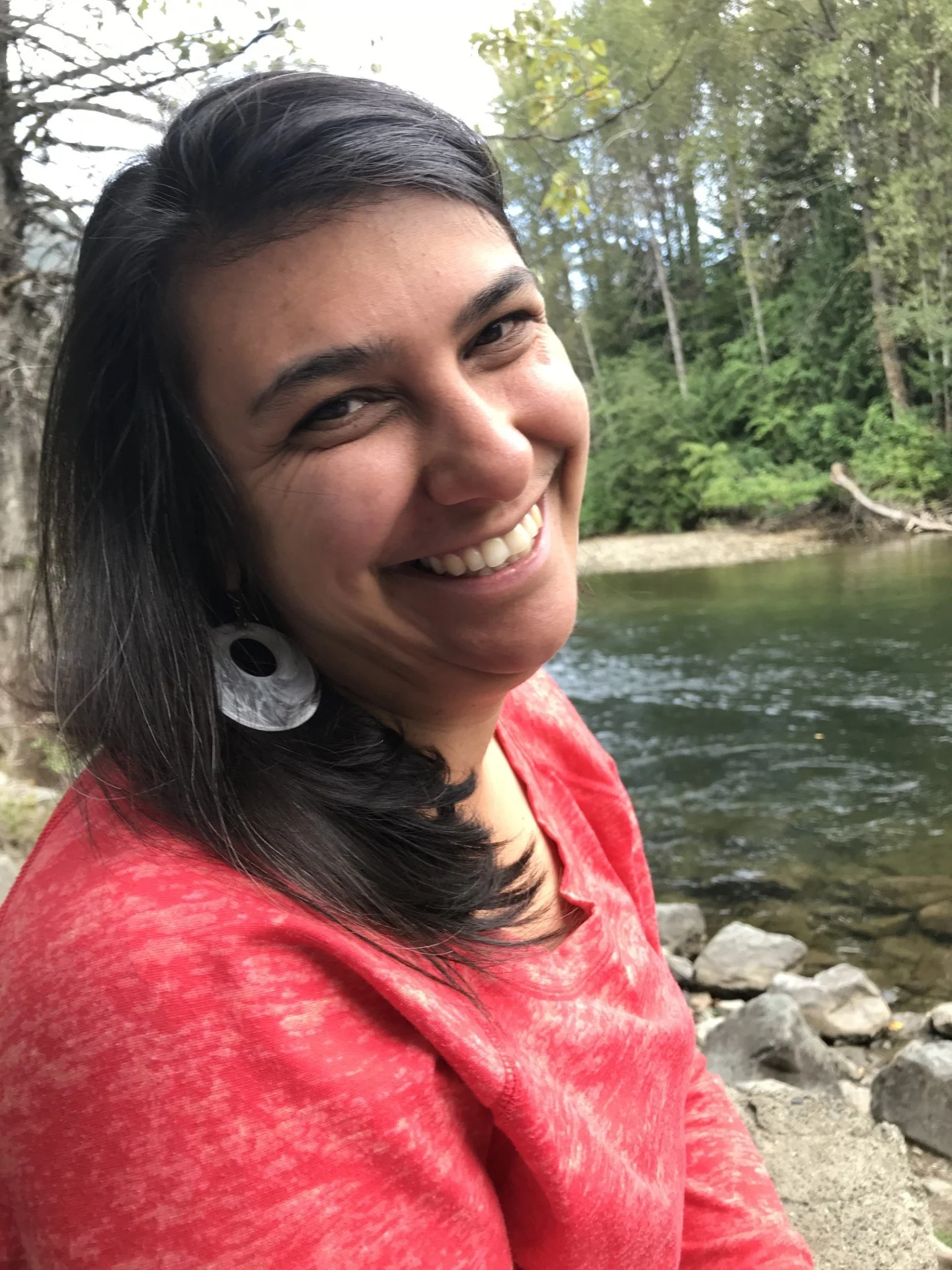
Stephanie Watterson (pictured above), based out of British Columbia, Canada, is an empathetic editor and content writer known for her playful outlook and approach to life.
I met with author and editor Stephanie Watterson to discuss all things related to her children’s book Septopus, including the writing and publishing process, the importance of representation, and real-life septopuses.
Thank you for meeting to talk about your book, Septopus. What's your relationship like with children's book? What made you want to write a children's book?
This is kind of strange to share, but I don't have a relationship with children's book. They have a relationship with me.
I've been reading since the tender age of three. Books have always been a part of my life. I can't remember who the first person was to put a book in my hands. Probably my parents. Hi, Mom and Dad. I remember going to the library and being unable to reach the shelves and having a tough time, wanting to take all the stuff on the top shelves. The local librarian was really encouraging to read more.
As an adult, I am never away from children's books. I spend some time at the library. We have six local bookstores in Victoria. I consider it research.
Books find me in funny ways. People suggest them, people encourage me to read them, and now Septopus is in the world, so I'm part of that vibrant, ever-changing community.
You mention on the back cover that your dyslexia diagnosis was the inspiration for the book. Can you tell me more about that?
This is a really great question because I think sometimes people don't expect this. They're like, “You have dyslexia, but you can read and write.” The thing that really makes me laugh is the physician's name who diagnosed me was Dr. Reid. If you know me, I love irony. Story of my life.
I think children's books are so open and forgiving and non-judgmental. You have the chance to play and try. Not knowing I had dyslexia really prevented that, but it also give me the chance to tap in and to grow and to try something new.
“Representation is really hard... There were very few characters I could relate to. More importantly, characters that I could relate to and say, this is the person I want to be when I grow up.”
Now that I know that I have dyslexia, it hasn't really changed a lot of things. It is just something that I like to preface with people because they don't expect a writer to have dyslexia.
For you, part of writing the book was you learning about dyslexia and processing that information?
That, and it was also recognizing that there's not a lot of stories that have dyslexia as the central point. It's getting better now, but at least when I was growing up as a child of the ’90s, I didn't really have any. The most common books were Goosebumps, The Babysitters Club, and those characters didn't really have a student or a person who had an invisible superhero power, or invisible learning difference, or a learning disability. I think this is why Septopus kept coming up in my life. I was like, “Girl, you’ve got to do something with this. If nobody else is, you should do this.”
In your interview with Editors Canada, you mentioned the importance of representation both for people with a disability and adopted biracial children. Can you tell me more about why that was important, and how that lack of representation has impacted you?
Representation is really hard. I think it comes back to the answer I gave you about how there were very few characters I could relate to. More importantly, characters that I could relate to and say, this is the person I want to be when I grow up. Don't take me wrong. I had lots of great examples in my life, but I didn't really feel just one person embodied everything that I wanted to be.
I think representation is especially important because for myself, I'm BIPOC. I'm one of the Black Indigenous Person of Colour demographic. I'm neither white nor the other nationality of what I am. I think part of it is finding the representation in the community that you keep. But also not being afraid to say that is a role model in itself, and growing within that. I think that's really hard.
I was adopted, so as a child, I didn't look anything like my family. My adopted family is Caucasian. I don't look anything like my biological family either. It’s made for a very interesting lens on the world and finding ways to relate. Kids are pretty good about understanding where they come from. But if you have that big question of “Where am I from? Why doesn't anyone look like me?” That stays with you the older you get.
Did your community growing up look like you at all?
I didn't look anything like anybody. In the school in the town that I grew up in, which was maybe 10,000 people, including the cattle, there was one person in my grade that looked kind of like me, and then there was one person that my sister befriended that looked kind of like me. Beyond that, there was not anybody of biracial or mixed race or visible minority like I was.
I thought that was really confusing, because it was like, I'm not white. I tan great, but I'm more white because I really don't know how to handle spicy food. There’s a challenge there. Growing up, there weren't a lot of biracial people. There are now in the town that I grew up in, but I think that's partially because society has evolved and people have come forward to say, look, I'm this nationality, or I'm both of these vibrant cultures.
It’s normal for people to want to figure out who they are and understand themselves better. When I spoke with Hollay Ghaddery, she talked about being of mixed race and the difficulty that comes with it. To then also be adopted adds an extra layer of possible confusion because you can’t talk to anyone about your specific cultural history. That’s where representation could have helped.
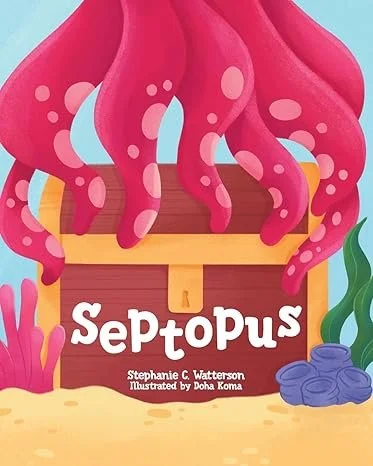
The cover of Septopus, Stephanie’s children’s book, was published in 2024.
Not only confusion, but the thing that was kind of funny for me is—this is kind of a strange example to share—when I was in grade six, our teacher had us talk about our cultures. I was very proud of myself because even though I talk with a Canadian voice, my family is through and through Irish. They talk very quickly, and they talk with accents, and sometimes when I speak, it comes out. So for me, when this instructor asked us to present our culture, I was like, “Of course I'm Irish. I love river dance. I know how to dance.” And she was like, “Where's the samosas, Stephanie?” And I was like, “What are you talking about?” And she's like, “What are you talking about? You're not Irish.” It was just that awkward realization of I really don't know anything about the South Asian part of me, or the Sikh part of me. I really don't. Even now as an adult, I have so much to learn. I still find it really confusing and concerning, especially because kids want to know where am I from.
Was understanding and exploring your Black and South Asian roots something that you focused on?
When I left my parents' place at 17, I tried really hard to learn the South Asian culture. I have so much to learn, but I now know what Diwali is. I now know there’s South Asian food that isn't just curry. I'm actually vegetarian, so there's a lot of food and growth that comes with that.
It's also recognizing that there's such a vibrant culture there. I'm a very colourful person. I'm a very vibrant person. I think the older and the wiser I become, I want to learn even more. So if there's any mama G's out there that are willing to take me, please teach me how to make a proper samosa.
You get the Irish culture from your parents, you’re living on the island, so you get that Vancouver Island culture, and then you still have your other cultural backgrounds to learn about, which you can learn about from people around that you can talk to in order to understand and grow.
It's a nice mix. I can't complain. I feel lucky to be a product of love. That’s a lot more than most people can say, so I feel lucky for that.
How did you go about writing Septopus? And when did you start writing the book and get the idea for it?
This is an interesting question because I had a writing event back in 2010. When I worked in the Olympics, I worked at a hotel. I was one of their front desk clerks, and in that contract, they gave us 10 days off that we could do whatever we wanted with. We could take them all at once, or we could take them over the year. With the Olympics being in town, we just had to be available whenever they needed us.
If all these cultures were coming to Vancouver, I wanted to spin the globe and pick somewhere just to say I've done it. I spun the globe, and I ended up in Cuba. In Cuba, I had gone to the beach, but island girl does not go to the beach. Let's be reasonable. I went to the beach and sat there, and there was this huge pelican that came down in front of me, and I was just like, “I’ve got to write.” I grabbed my journal and wrote out the first draft. Septopus was published in 2024, so that's 14 years of either revisions, additions, editing, proofreading, changing, and reconfiguring.
It came out when it needed to. I think Maya Angelou talks a lot about when she's writing that it's kind of like a thunderclap of lightning that comes through her fingers and onto the page. I really relate to that sentiment. It's almost like some other power, or some other creator, is coming through you.
I write a lot of short stories right now. I wrote a lot of poetry for friends and family just as jokes and stuff. For my sister's wedding, I wrote her a poem that said, “Nothing rhymes with Rachel,” and she was just on the floor, which is great because it's true. Nothing rhymes with Rachel.
Short stories have been fun. I try and have some sort of animal that comes into play. I actually wrote about an unlikely encounter with a chicken when I was in Costa Rica living there for a little bit. The pen says, “Okay, it's time to write,” instead of being, “Okay, I need to plan this all out.”
I noticed the rhyming scheme in Septopus. Was that an especially fun or difficult part of the writing process? Did your poetry background help?
I hated writing the rhyming scheme. I felt like it was really contrived. Thesaurus became my best friend. But also, I wasn't afraid to play around and try different things. I think the cadence of language is a pretty big part of my family's heritage.
“What kind of legacy do we want to leave for people when all things are said and done? For me, children’s books, like I said, have always been a big part of my life. So, what better community to break into?”
The highlight of all the preparing and the planning was always the character development. There were some characters that were so much fun to research, and also awkward in my search browser. It was really fun to research what kind of temperaments these characters would have
Was Septopus your favourite character? Was there a character you identified with the most?
My favorite character, if I had to pick, would be Crab because I'm not a crabby person unless I'm hungry. I think Crab was the impetus for that. It was one of the more fun characters to write. The character Turtle is based on a mentor that I've known for over a decade. She's helped me figure things out, and when I told her that, she was stunned, wiped away a couple tears, and was like, “You did it.” They're sometimes based on people that I know or interactions or emotions that I feel kids need to be experiencing, or they have an experience but don't have the word or don't have the personification to understand them.
Were there many distinct drafts or distinct periods when you wrote it?
I wrote it back in 2010, and then I left it and came back to it. A boyfriend was like, “You really need to do something to leave your mark. If you're going to leave your mark in this world, what are you going to be known for?” And I was like, “I don't know, being awesome?” As he said that, I was like, “Right, I’ve got to do something with this children's book.” Full disclosure, that boyfriend at the time is now my husband. That is part of the bigger conversations we always have with each other. I think sometimes it takes somebody from the outside to give you that push to be like, “Hey, this is the right time. Do this now. If you don't do this now, when will you?”
What kind of legacy do we want to leave for people when all things are said and done? For me, children's books, like I said, have always been a big part of my life. So, what better community to break into? I was just surprised that it took me so long, because once it came out and once the drafts were on the page, I was like, “This feels really real.”
If I have any advice for other authors, be part of that one percent. Don't fall victim to the 99 percent of other people that don't write or publish. The people who love you and adore you will stand behind you. And that pays dividends. Not financially, but emotionally and the experience.
How did it feel to finally hold your book?
I don't know if other people know this or not, but publishers send an author's copy to the author. When you receive your author's copy, do what you can to slow down. I'm very easily excitable when things are really fascinating. I'm the kind of person that just wants to get into it. But when I slowed down to savor it, it made me really realize this is the first copy. This is real. This is actually gonna happen. And I just kept saying, “Wow. It's here.” It was the same thing seeing her last year at the Greater Victoria Public Library when she was on the shelf.
“I’m so in awe of the ocean. It is such a majestic space in our world, and it’s just so curious and so ever changing. That’s where I most felt at home. Now that I’m living on the island, I’m like, this makes sense. The universe is still putting water into my life.”
I think it just really helped make me feel like, I've done the right thing here. Other neurodivergent, other BIPOC children really need this voice, and they are lucky to have somebody that I didn't have, and they can just pay it forward,
As you were writing it, was the character Septopus always an octopus, or was there another version of her?
Septopus is not an octopus. She's a septopus. Truth be told, I was laughing about this the other day, because I was preparing for our interview, and I was like, Septopus would not be a dinosaur. It just doesn't make sense. Septopus would not be another sea creature. I just can't see it. Then I was like, Septopus could be a tree, but she probably would get bored standing in one spot. No, she's always going to be a seven-tentacled octopus. CBC had a whole article where they found a septopus on the beaches in Victoria. I was like, we do exist!
When I was little, my parents lived in the middle of nowhere in a small country town. You could walk everywhere, which was great. But the big formative memory of me as a teenager after a very crummy year at school, my parents said to my sister and I that we could go to Disneyland, or we could do something completely different. They didn't say what. I was like, okay, let's do something completely different. Everybody goes to Disneyland.
The surprise was being able to take us to the ocean. That was a fantastic experience as a little girl. As an adult and even as a teenager, it has such a profound leveling effect. Even now, I'm so in awe of the ocean. It is such a majestic space in our world, and it's just so curious and so ever changing. That’s where I most felt at home. Now that I'm living on the island, I'm like, this makes sense. The universe is still putting water into my life.
One of my favorite parts of being on the island is experiencing the Pacific Ocean. It's amazing.
A friend of mine when she went, she said, “All I could do was just stare.” I was like, “That's such a good way of describing it.” You just wander and take it all in.
How did you end up getting it published? What made them the right partner for you?
At first, I pitched it to a local publisher in Victoria and they said, “We love your story, we love your writing, but we're just not taking this type of story right now.” That is a great rejection. That is more than most people get, so I will take that with grace and humility.
I then pitched it to Tellwell Publishing. They read the story, said this is great, and their publishing consultant got back to me and said that they'd like to take it. That's when the whole thing started.
They're fantastic. They have their finger on the pulse. They're collaborative, they're cooperative, they're clever with the way they present what they're doing, and they're approachable. I have so many times reached out to my publisher on a first name basis. I don't feel like I can't ask him anything, and I feel really lucky that he makes these beautiful spaces with authors and never gives himself credit. He’s always like, “This author did this, the author did this, the author does this.” He lets the author shine, and I think that speaks volumes as a publisher. Plus, his team is great. I can't say enough good things about Tellwell.
It sounds like a great partnership. Did they have open submissions?
I reached out to them asking if I could meet with one of their consultants, just to ask if I had chance at this. That was the start of it. Then it became, “First, finish your manuscript. Get it in a place where you feel comfortable.” I was like, “Wow, I say that to all my clients.” They said that when I finished the manuscript, I could reach out.
It only took from January to August for the book to be published. Seven months is not long, considering illustrations, proof reading, copy editing, all of that happened in under a year. That's pretty quick, because most publishers will take at least two, three years to put together something that the author is okay with.
Was there something in their catalog that called out to you and made you want to be part of it?
I wanted to start with something local and something that was Canadian. They work with a lot of overseas talent, which is great, but a lot of their work is with Canadian authors. You’ve got to start here. I like supporting the community that I keep because I know that if I support them, they'll support me. I think it’s island living. We look out for each other, we hold doors open for each other, we take care of each other, we say good morning to each other. It's just the island beat of things.
You collaborated with Doha Koma on the illustrations. How did she become involved with the project?
Doha is awesome. I adore her. She’s a gem. At first, I was so nervous. Tellwell gives you eight or nine different illustrators to pick from. Originally with Septopus, we were going to have my dad illustrate, but my dad's arthritis hasn't been very good. He's even had to pause playing his mandolin and the guitar. We looked at all the portfolios, and he said, “You pick what makes your heart sing best. I can't tell you what to do.”
Doha was so aware of the sensitivity behind the story, and she really tapped into her inner child, I think. And anytime that I look at her illustrations, I get all the feels. I remember—I'm going to try not to choke up when I talk about this—when we were looking at the illustration she had made, there's this spread in the book where whales are coming up and Septopus is looking out, and I froze when I saw these preliminary sketches. I was like, “Wow. Holy cow, it's real.” I emailed our project manager, and I was like, “I just have to say, this is just such a great, great moment.”
It's just so refreshing to work with Canadian talent and someone who plays to their inner child and somebody who gets the impact of the words on the page instead of having to explain it or infer it. She just gets it, and she's so much fun, and she's easy to find. She's done other books, too. She's well versed in multiculturalism. I would love to do more stuff with Doha. She's just so much fun.
It’s an amazing moment for any writer when they get their manuscript back or when they start to see their book come together. But I can imagine that must be a special extra moment to see your ideas illustrated into reality.
I didn't open the PDF roughs until my parents came to visit. I held out because I really wanted them to see what I've done. I had held out telling them that I had gone ahead and found this hybrid publisher and this is what I was going to do. I sat them down and I said, “By the way, there's something I want you to see on my laptop.” My mom is not very technological, so she's just, “Is it a movie? Is it YouTube?” She didn't really see the big fuss.
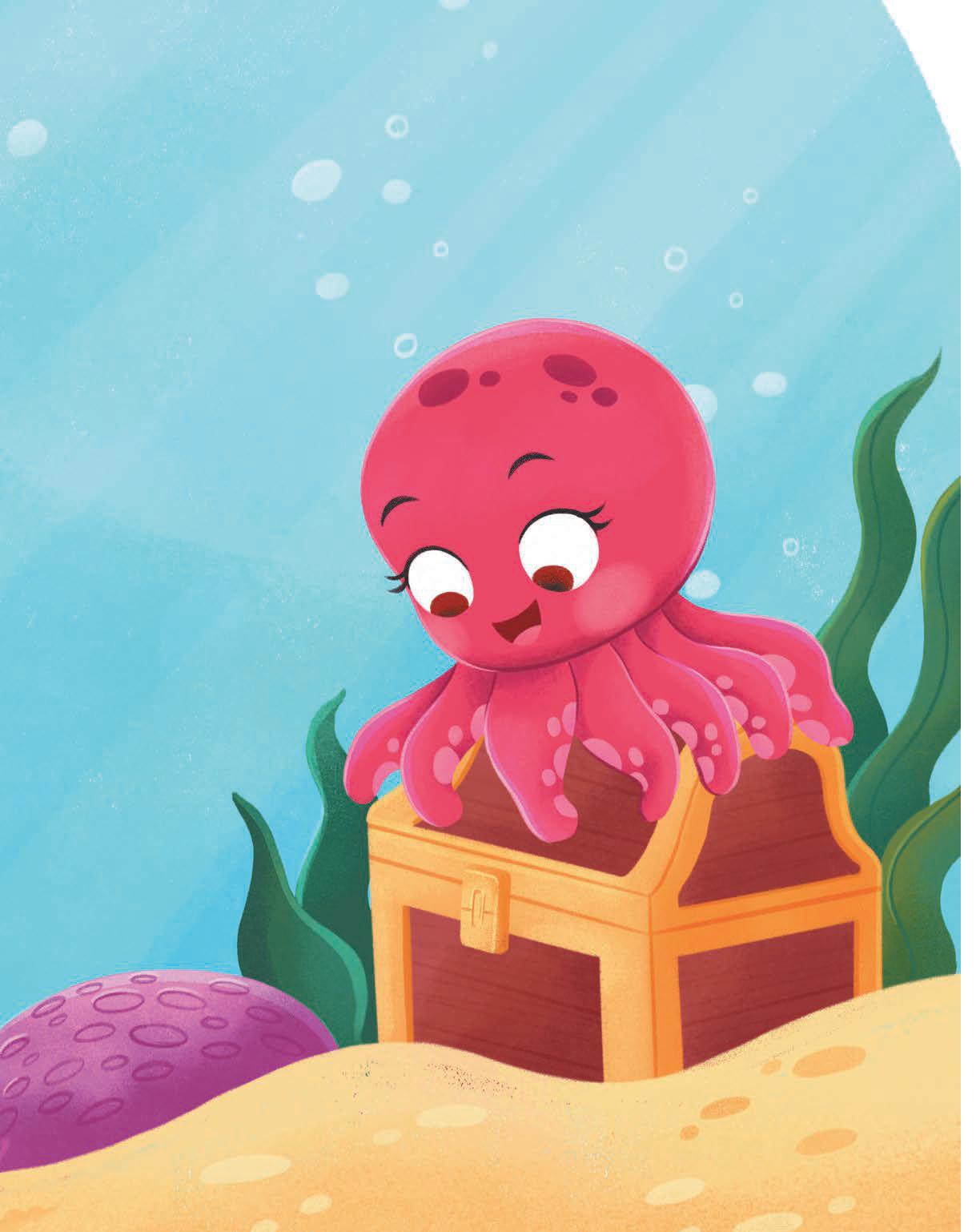
A colourful illustration from the book by the very talented Doha Koma.
Then my dad said, “I think I know what she's trying to tell us.” He picked up right away. He's like, “There's something she hasn't told us here.” I said, “So tell me, what do you think it is?” He said, “I remember you were telling me about the book. Have you found an illustrator?” I said, “Actually, the illustrator sent her roughs,” which is the preliminary sketches for the book. “Do you want to take a look?”
My dad and I both had the same feeling of okay, here we go. It had all those feelings that came with reading the story along and seeing it all in full form. I think it stunned them, but also, they were like, that's my oldest girl.
In the book's dedication, you mentioned the influence of being adopted on the book. How did your parents react?
My mom was so sneaky when she received it. My mom is captain resourceful. Where there's resources, she can find them. “Recipes are just guidelines” is her mantra. She said, “I don't want to buy the books from you. That's cheating.” I said, “Okay.” She said, “Where can I buy a copy?” I said, “Some of them are at Indigo.”
She gave me a call after and said, “I ordered three copies of Septopus at the local Indigo. One will go to the church that you grew up in. One will go to the cousin that's just had her second little human, and one will go on our shelf. When your nephew comes to visit, we can read it with him.” She had it planned.
With Dad, his reaction was, much like me, very quiet when he's truly happy, when he's really comfortable. He's the strong, silent type, a lot like my husband in that regard. And he just looked at me and was like, “Yeah, you did it.” He just gave silent approval. I thought it was so interesting how they had very different approaches. But I think that's why I did the dedication to them because when I was a little girl, my dad wouldn't read us stories unless we wanted to be read to. He would invent stories, and he always started off by saying, “A long, long, long, long, time ago…” So that's why that dedication is “a long, long, long, time ago.”
You mentioned that your dad originally planned to illustrate the book. Is he an illustrator by trade?
He's a very creative person. He's picked up music again. He went to school for graphic design and journalism when he was younger, so I thought that it might be kind of fun for him to do the illustrations. He was really supportive. He gave me cover ideas. It was great to bounce industry talk back and forth with family, which is a rare treat as a publishing person.
He probably also wanted me to feel like this was Stephanie's coming out into the world, instead of Stephanie and her dad, which is fair.
It’s fantastic that you were still able to collaborate with him.
Yeah, it was fun. It was interesting to see his thoughts on cover designs. We had four different designs we were looking at, and all of us without thinking came to it in different ways.
Was there anything specific about the cover art that you wanted to convey?
I really liked how it gave a bit of mystery but also had a lot of play. As soon as I saw that cover, I was like, that's the one. There was one where she was coming out of the box. There was one where she was embracing the box, and then there was one that was just her tentacles, and I was like, “Yeah, that's the one. Kids are gonna be curious.”
Do you have any plans for a Septopus sequel or any other books?
There will be no sequel of Septopus. It’s just one and done. I'd really like to tell my adoption story, but it's such a big story, and it has so many curves and turns and stalling moments, so I really need to just figure out the best way to tell it. I don't know if I want to write trade fiction. I look at some of the trade fiction stories out there that have left a mark on me, and I just don't know if I could do that justice. But I could see myself eventually getting there.
Thank you so much for sharing the story of Septopus, and thank you for your time.
No problem. Take good care.
Thank you for reading this interview with Stephanie Watterson! Connect with her on LinkedIn and buy a copy of Septopus (please support your local bookstore.)
Check out more interviews from the what’s the idea series.
The interview was recorded using Google Meet in January 2026.
The transcript was edited by Matt Long.
All photos are the property of Stephanie Watterson.