Delivering movie supplements with a healthy love of puns: What’s the idea with Will Dodson (part one)
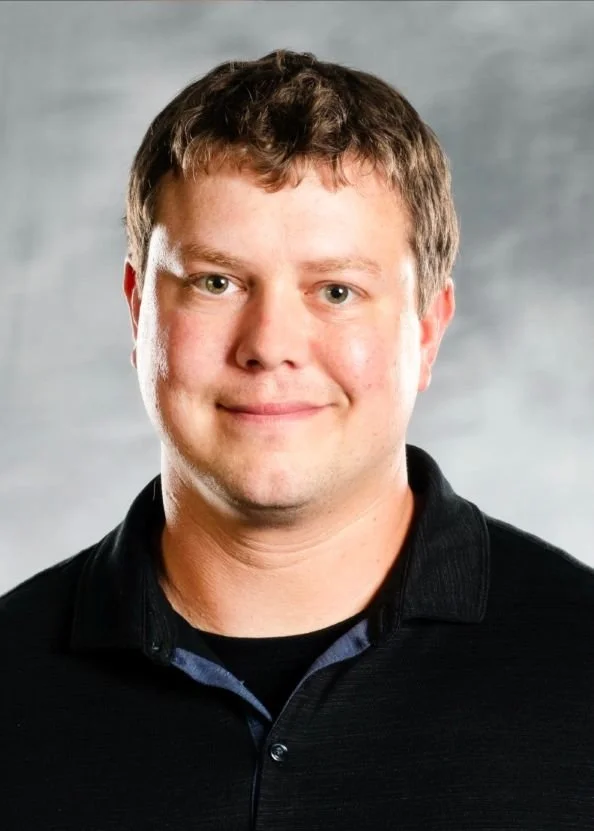
Will Dodson (pictured above) is a film, rhetoric, and literature professor and an audio commentary and visual essay producer for an amazing variety of movies.
In part one of my conversation with Dr. Will Dodson, film professor and Blu-ray supplements producer, we talk about his path to becoming a movie fan and collector, how his work on Tobe Hooper got him involved with Blu-rays supplements, and the responsibility involved with discussing lesser-known movies.
Good evening. Thanks so much for meeting with me.
Thank you for having me.
You do a lot of different work with movies and Blu-rays making bonus features. Is “bonus features” how you refer to them?
For my own sense of dignity, I like “supplements.” “Bonus” and “extra” make it feel tacked on and devalues the amount of work that goes into it. And if you're someone like me, the supplemental features are one of the reasons you get the discs. I find myself getting really excited when there's great supplemental features and really angry when the supplemental features are lacking.
What's your history with film collecting, and when did you take notice of supplements as a component of physical media?
“I wasn’t a serious film student at that point, but when DVD came out, I realized, geeze, I’ve been watching Suspiria and I’ve only seen half the picture.”
Growing up, my dad had a pretty good record collection and collected books, so I always had that gene for amassing those kinds of things. I like to call books and music and movies my emotional prosthetics. I got into movies when I started college around 1996, working at a video store and collecting VHS. The shift to DVD was around 2000, and I've spent the past 25 years upgrading my VHS collection. Now I'm just waiting for the 4K editions of Fred Olen Ray’sThe Alien Dead and stuff like that. My last VHS hold outs.
Were there any standout discs from early on that really wowed you?
I think the first DVD I ever got was Starship Troopers. Having only seen Starship Troopers on VHS up until then, I could immediately tell the difference in the format. I wasn't a serious film student at that point, but when DVD came out, I realized, geeze, I've been watching Suspiria and I’ve only seen half the picture. There were some VHS movies that had the letter boxed framing, but not like this.
DVD was when I unlocked a latent obsession with movies. When I first went to grad school, the first place I went while I was getting my master's degree—my graduate study was in English and rhetoric, philosophy, that kind of stuff, so cinema was still something on the side—was the university library. My film school was just checking out the limit of two movies every day. It had a benevolent acquisitions agent who got the up-to-that-point complete Criterion Collection, so I just started at Grand Illusion and went as far as the spine numbers would take me back then.
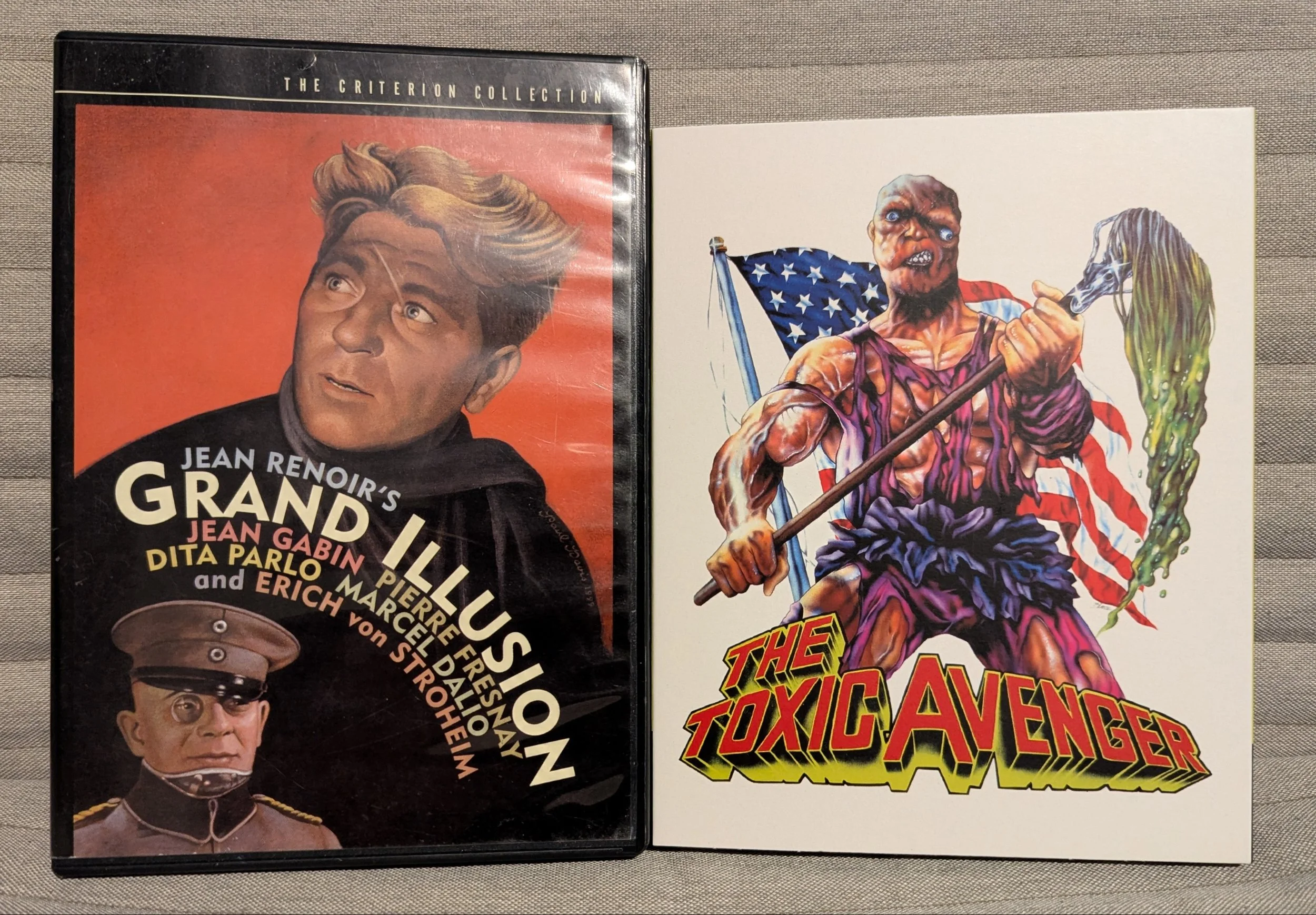
Will’s cinephile journey quickly moved from Criterion’s like Le Grand Illusion (1937) to the likes of Troma’s The Toxic Avenger (1984).
I became a Troma person and a Full Moon person. Full Moon Features and Troma were, in the VHS days, the first companies to exploit supplemental features. You had Full Moon's VideoZone, which had trailers and behind the scenes footage and interviews with the actors and directors and Charles Band, and Troma had all their comedy pieces and interviews with Lloyd Kaufman and things like that, so I was conscious as I got into Criterion that the supplemental features I was watching, the documentaries and the audio commentaries, were pioneered by these schlock peddlers.
Slowly, any divide between high and low art disappeared for me. Thank goodness. I just got into movies in general, but particularly movies that were lower budget and harder to make. Not that giant budget movies are not hard to make in their own way, but it became for me, as a rule of thumb, the higher the budget, the less likely I would get into it over time.
Somewhere along the way, you were inspired to add about 100 Jess Franco movies in your collection, right?
I've got everything that's available. When I was really getting into films and when I was living in a place where watching a lot of movies by myself was on the docket, I got obsessed with Franco. When you find out somebody has that many films, it becomes a journey. I don't think anybody really knows how they become obsessed with Franco when they do become obsessed, but it happens. I think it is how Tim Lucas says, “the more of his films you see, the more you kind of fall into this world.”
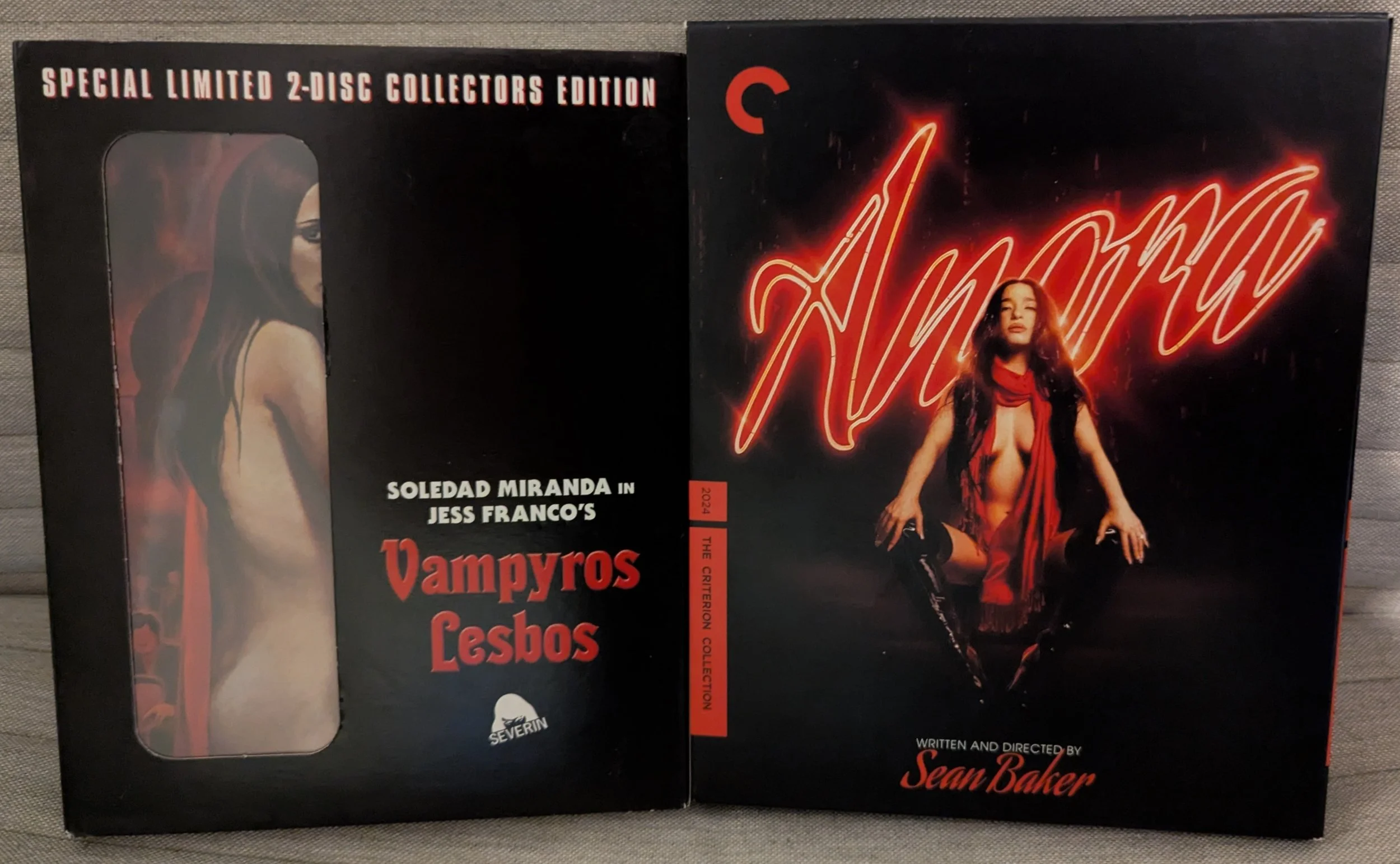
“One of the first things I ever saw Sean Baker shoot was an interview with Herschell Gordon Lewis, and the Criterion cover for Anorais a reference to a Jess Franco poster, so I liked that.” - Will Dodson
I hope companies know that for the next 100 or so releases, I'm available. If you can't get Stephen Thrower, I'm around. I've got all of Stephen Thrower's books, I can tell you what he said. And it just so happened that I lived in Eastern Kentucky right when Netflix mailers started, and they had dozens of Jess Franco movies in their DVD catalog. They were from Image and maybe Anchor Bay.
But the point is the research, the curation, the discovery. With music, it’s bootlegs and archives; with film, it’s finding alternate cuts. I'm about to get my third edition of The Diabolical Dr. Z just so I can have all the different extras. I got two editions because they're in different aspect ratios. It makes no material difference on my viewing, but it also sort of does. I have got to have them both so I can compare them.
It seems like the path from Criterion high art toward shlock is a rite of passage.
I'm so grateful for people like Sean Baker and James Gunn. There are different poles now. James Gunn's become a blockbuster director of superhero movies and Sean Baker is the arthouse Oscar winner. But one of the first things I ever saw Sean Baker shoot was an interview with Herschell Gordon Lewis, and the Criterion cover for Anora is a reference to a Jess Franco poster, so I liked that.
Supplements made by the studios can be very surface level, but I imagine those early Full Moon and Troma supplements were not like that.
Yeah. I particularly liked filmmakers at first. Stuart Gordon, Brian Yuzna, David Cronenberg, all those guys give these incredible commentary tracks. Those were gold standards for me.
I then started to notice commentaries from scholars like Dana Polan, people that I had read when I took film courses, and I would listen to them and crack what worked and what didn’t. Some academics get a little too esoteric, and others focus on production notes, things like that. This isn't very original, but I really like a balance between background production stuff and theoretical analysis and historical context, like what was going on in the world while this movie was being made. What were the filmmakers engaging with? You can tell when somebody's not really prepared and they're just describing what's on screen. Those are so annoying.
I didn't really see myself as producing stuff like that until I got to graduate school. I started doing my PhD work and I thought, I'd love to do a commentary one of these days, having no idea how hard they are actually to do. In the early days of DVD, we didn't really have visual essays. They just appeared one day in the Blu-ray format. I don't know when they started. Do you know?
“What I came to find was that visual essays were filmmaking... If you do it the way I think you should do it, you are carefully matching the feeling and subject and theme of the images that you are arranging from the film.”
No, that was going to be my next question. I would guess it's in the last 10 years with the rise of the boutique Blu-ray companies.
WVisual essays, like commentaries, vary wildly in quality, but I have come around to them. Ryan [Verrill] will tell you I was very resistant to doing it at first. I have no idea if there's any truth to this at all, but I always saw the commentary as being the authoritative statement. Not that it was the only authoritative statement, but if you were doing a commentary, you were the expert that they wanted for the movie, so I thought it had a certain status. Not that I was grasping for that status, but if I had a choice, do you want to do a visual essay or do you want to do a commentary, I would always assume commentary because you had more time, so you got to talk about so many more things.
Whereas a visual essay, you have to define your terms. It's a lot looser than writing an academic essay. You get to be a lot more intuitive about it, a lot more suggestive, but my initial thought was I'm talking about this movie, that's my research.
What I came to find was that visual essays were filmmaking because you're carefully selecting the imagery.If you do it the way I think you should do it, you are carefully matching the feeling and subject and theme of the images that you are arranging from the film. In a way, you’re remixing to illustrate the point you want to make in your essay. What I like about that format is that it gives artists and academics and scholars and people in between, writers, this unique opportunity to make a short film that says something about the film that it supplements.
Do you remember what commentaries you first recorded?
The very first commentary I did was in 2010, and it was for a student slasher film. Some students had made a full-length slasher movie, and they asked me to do a commentary for a homemade DVD. I think the writer of the movie had taken a course with me and based the beats of the movie on what he'd learned about slashers and cult cinema and my class. It was a meta slasher movie, and I really enjoyed it. I made jokes but also analyzed the movie.
About 10 years later, I edited this book, American Twilight: The Cinema of Tobe Hooper, with my friend and partner, Kris Woofter,and Kino Lorber was doing a Blu-ray of I'm Dangerous Tonight, the made-for-TV movie that Hooper did in 1990. Michael Felsher of Red Shirt Pictures reached out to Kris over social media and invited us to do a commentary. Michael Varrati had already done a commentary as well, so we were like, “Cool, we get to be on a disc with Michael Varrati. That's kind of neat.” Kris lives in Montreal, so we ended up going to a conference together in Chicago and let Michael know, hey, we're together in Chicago if you wanted to record us. He put us up in a studio, and it’s like, what a first time deal, going to a professional studio in Chicago, sitting down, watching the movie. I haven't had it that good since.
We still have good technical stuff, but we're doing everything remotely, working from home and using software and stuff. It's amazing. It's like the revolution in home music recording software. You don't need to go to a studio, you can do the whole thing on Pro Tools or whatever the current thing is. It really democratizes the process.
So before meeting Ryan, I had had a little bit of experience doing audio commentaries,and then it was in the process of promoting the Tobe Hooper book that I came across Ryan and fell into his orbit.
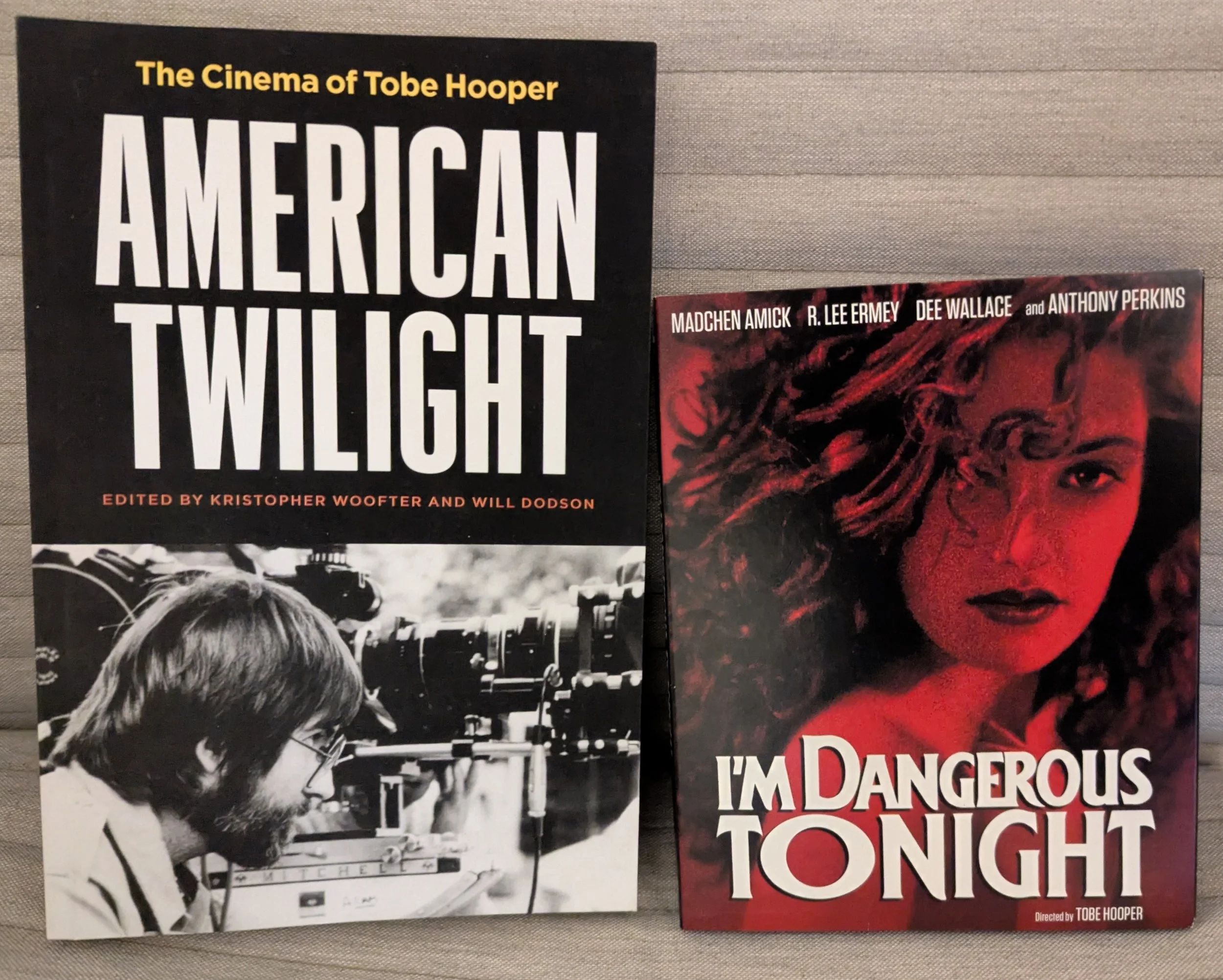
Writing the book American Twilight with Kristopher Woofter led to the two of them recording an audio commentary for Tobe Hooper’s I’m Dangerous Tonight (1990), which was the start of Will’s career in Blu-ray supplements production.
I listened to your commentary of I’m Dangerous Tonight.
You did? My mom hasn't even done that.
When you recorded that, were you aware at all of what Michael Varrati had recorded?
Varrati’s done tons of stuff. He's not an academic, but he's a writer and producer and filmmaker. No, I didn't get to listen to his until I purchased my copy, so I didn't have Michael’s to compare it to,but thankfully we didn't overlap too much when we talked about the same things.
It was the first one, so of course as soon as I got it, I was like, I want to listen to what we sound like and then compare it to Michael and see if ours is better. I was pretty happy how they complemented one another.
How did you and Kris prepare for the commentary? Were you both pretty well-prepared or was it more impromptu?
It was very different from the way I do it now because we had lived with Tobe Hooper for four years. We worked on that book from idea to publication, so by the time we sat down to record it, we had spent time reading the source material that the movie was based on and familiarizing ourselves with the careers of many of the cast and crew. We wrote an outline and prepped the night before, but when we sat down to do it, we just kind of talked. I thought it was good because it was very natural sounding, very conversational, and comprehensive, but we did leave out a couple of important details that I wish we hadn't. Of course, Michael covered most of the ones that we left out, and hopefully vice versa, so it worked out.
It was uncomfortable until the moment we started talking. It's a really artificial situation. We're talking through the screen, right? We have our headphones on and it's not the same as a face to face conversation, but if we also have a movie playing silently on the screen and we’re trying to pay attention to our notes, pay attention to each other, and pay attention to the movie; that's where it gets really complicated.It's a lot harder than I thought it was going to be, but at the same time, I was pleased that we did it and felt good about it. I felt like I could do this.
Do you record yours in one take? I believe some people, like Frank Djeng, will record multiple takes if they didn’t think they got it exactly right.
Yeah, we didn't even mess up. That was different because the stakes were high, you know what I mean? I was like, we're in a studio, there's an engineer, Michael Felsher was on a screen monitoring us, so we were on point. It's like, we're not at practice anymore: This is the game.
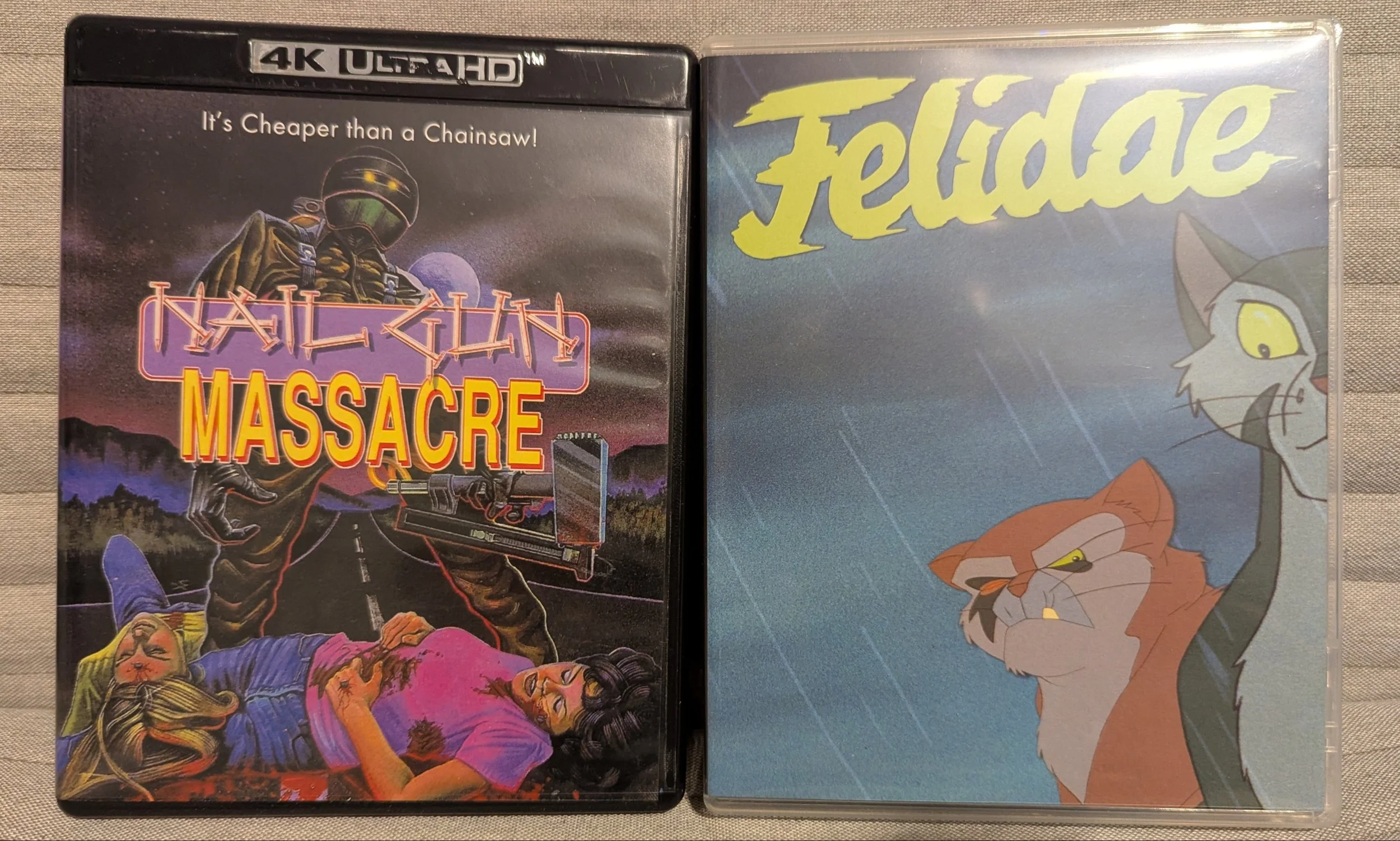
“It's a real honour every time we get asked to do anything, whether it's The Nail Gun Massacre for Terror Vision or Felidae for Deaf Crocodile. The range of things that we’re asked to do is vast, and that's a huge compliment to me.” - Will Dodson
When I do them with Ryan, I know we can just hit the pause button, and I can say, I didn't say that right, let's edit that out and do a pickup or something. Obviously there's a lot of advantages to that, especially if you do a commentary where you're moderating a conversation with a filmmaker, which I just did several of those for the first time, and those require some editing. Thankfully, all the filmmakers I've worked with so far have been happy to do pickups where I say, “Hey, this section here, I didn't quite articulate. Could I ask you a follow-up question and record that part?” There's advantages and disadvantages to both, but I'm glad we have more control over the recording and production now than I did with that first one. It went great, but if it had messed up, I wouldn't have had as much say over what happened.
“I’m happy to have the chance to fill in the gaps, talk about films that are so independent and obscure that few people have seen them... Those are really gratifying to do and yeah, you get to be the voice for that movie. It’s an awesome responsibility.”
With a movie like I'm Dangerous Tonight, it has nowhere near as much writing or research done on it as something like The Texas Chain Saw Massacre. Do you feel pressure from being possibly one of the primary voices speaking about a movie?
It's a real honour every time we get asked to do anything, whether it's The Nail Gun Massacre for Terror Vision or Felidae for Deaf Crocodile. The range of things that we’re asked to do is vast, and that's a huge compliment to me. I don't know if the boutiques see it that way or care at all—they have more important things to worry about, like the movie—but it's a real honour. I like getting a chance to do films that are obscure. I mean, sure, at some point I'd love to get a chance to do a Kurosawa or something, but there's a legacy of film scholarship that's already been done on a lot of the canonized filmmakers.
It's always valuable to go back to those higher profile films, but there's a pretty nice bullpen of scholars available for those, at least until they move on, so I'm happy to have the chance to fill in the gaps, talk about films that are so independent and obscure that few people have seen them, but they have these small cult followings or they did something really technically interesting or they were a step in a filmmaker's career that led somewhere. Those are really gratifying to do and yeah, you get to be the voice for that movie. It's an awesome responsibility.
I will admit, I get really irritated by podcasters, bloggers, or writers who are perfectly capable of speaking intelligently and knowledgeably about a film, but for whatever reason, they sit down to do it and think that they're Mystery Science Theater 3000 or something, and they just want to make fun of the movie and punch down on it. I really despise that. A lot of movies have technical deficiencies and, let's say, narrative leaps of faith that require a suspension of disbelief,so it's perfectly fine to laugh with the movie, but to just make fun of it and trash it and not like it, why are you doing a commentary?
I like a chance to look at an obscure movie, a movie that maybe doesn't have the technical proficiency of slick Hollywood production, and point out the conditions under which the movie was made, and how amazing it is that the movie got made at all given the technical limitations that they were dealing with, and what can we make of the fact that this movie was made, these people wanted to tell a story, and they managed to do it? What kind of significance does it have?
“Doing more classic Hollywood stuff and more 1940s, ’50s, and ’60s movies from around the world is a personal goal. Give me some Warner Brothers gangster movies, some westerns, and I’ll be really happy.”
It’s always nice to get a chance to produce supplements and commentaries for higher profile movies just because those are fun to talk about as well,and it's always nice when you can offer a fresh take, a different perspective on something, and it's validating to be asked to be on something that's higher profile because that's probably going to be more commercially impactful for the company, so if they put your name on it as well, then that says something about your work. But if you were to ask me, “Hey, you can do a commentary on some Christopher Nolan movie or something or you can do a commentary on a Doris Wishman movie,” I'm probably going with Doris Wishman.
If we could get you to record commentaries for The Dark Knight trilogy, it might be an incredible audio feature.
If whatever company owns them asked me to, I would do it, and I would treat them with respect and I would not shit on them the way I do in the live stream, which I do just to get people mad. There are things I like about the films. Some of the things about those movies are majestic and are definitive for the character, but then other things, I'm just like, come on, what a missed opportunity. I feel like everybody's got their own Batman, right? I think so far my favorite Batman media of the last 20 years is the Harley Quinn cartoon. I think that's great. It's closest to Adam West.
I want to will into existence for you a John Ford box set from Criterion or even direct from the studio. Somebody has to do it, and you could tackle both the bigger titles as well as the lesser-known ’30s movies, like what you’ve been discussing on Tumbleweeds and TV Cowboys this year.
My first project was with Kino Lorber, and I've been trying to get back there ever since. Doing more classic Hollywood stuff and more 1940s, ’50s, and ’60s movies from around the world is a personal goal. Give me some Warner Brothers gangster movies, some westerns, and I'll be really happy.
I feel like we've done a pretty good job of not pigeonholing ourselves in horror, which would be really easy to do since most of my published work is in horror and other genre stuff. I have no problem preferring horror over pretty much any other genre, but I definitely want to be seen as someone who can credibly write and research about anything.
The interview was recorded using Google Zoom in September 2025.
The transcript was edited by Matt Long, with additional copy editing by Anthony Nijssen of APT Editing.