The A24 New Wave is here: What’s the idea with Aaron West (Part Three)
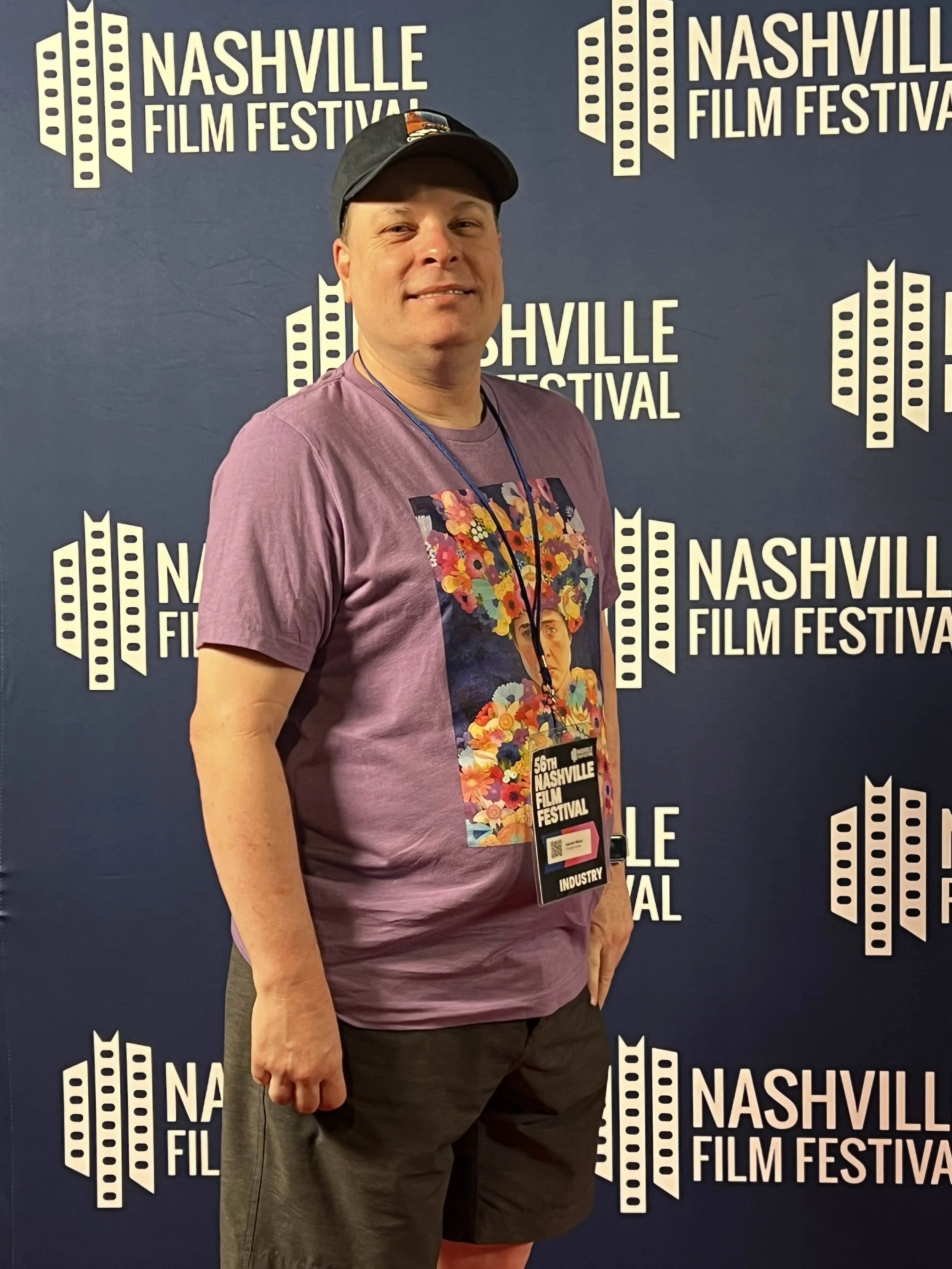
Aaron West (pictured above at the Nashville Film Festival) is the author of the upcoming book The A24 New Wave (published May 2026).
In the third (and last) part of my conversation with Aaron West (author of the upcoming book The A24 New Wave and co-owner of CineJourneys, an online film club), we discuss the launch of CineJourneys Press, how readers should read this ambitious work, and the books that inspired his dedication to both thoroughness and readability.
What was Jill Blake’s role in this book?
Originally, she was the editor. In fact, if you look at the Kickstarter, it will say that, but she's not the final editor. She’s the developmental editor. I had some experience with one of the big publishing houses earlier in my career, so I had already worked with a development editor.
Jill is kind of like a one-person steering committee. She's been my sounding board. But I've written so much and she's not really the target market for A24 as a company and modern cinema. She loves a lot of modern cinema, but she's very much in the classic cinema realm. Jill is extremely active with the business and launching CineJourneys Press. She reads chapters here and there, and she absolutely adores the Nathaniel Hornblower chapter.
If you are a fan of these filmmakers, not A24 specifically, is this a book to seek out to learn about them?
I've learned so much and have discovered a ton. In fact, I can't mention the name, but I'll say that one of the chapters has been read by a filmmaking team that is close to the filmmaker, and they found stuff they didn't know. Them liking it was the best compliment.
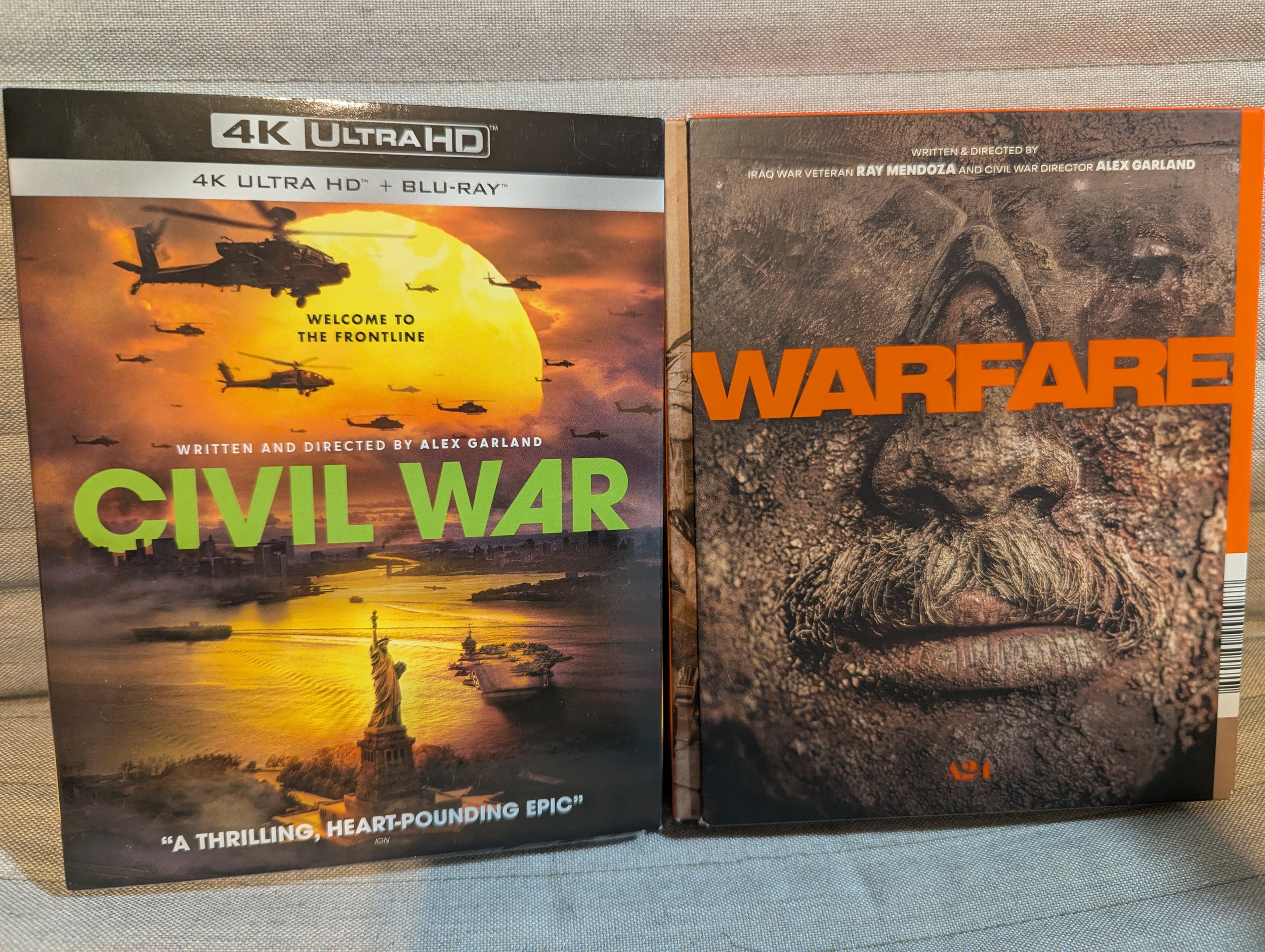
A24 has continued producing important and challenging works of art, including Civil War (2024) and Warfare (2025), Alex Garland’s recent examinations of modern war. (photo by Matt Long)
Have A24 or any of the filmmakers been involved with the project?
No and no. A24 has a publishing unit. Being divorced from corporate America, I think that if somebody writes a book about a company, like if you’re writing a book about Ford, for example, it shouldn't be Ford writing it. It should be somebody detached from it doing research without bias.
There has been some correspondence with A24. I haven't talked to the founders, David Fenkel, Daniel Katz, and John Hodges, or any of the key players, but I think that's a good thing because I have a layer of journalistic integrity. I think the book would suffer if it was an authorized book about A24. That said, I’d like to talk with some of them before publishing the next volume or future editions.
I don't think the filmmakers should be involved with telling their own story, either. I think it's up to an outside party to interpret how their careers have resonated with the public. That includes the press and user reviews. I read user reviews for a lot of these, and I cite a few of them, plus of course professional reviewers. It feels difficult for a filmmaker or someone part of an organization being able to read criticism objectively.
As films age, for example, for Civil War, Alex Garland said a lot of things about his film that I did use, but there's so much that can just be said in hindsight, even though it's only been a couple years now. It has become part of the popular consciousness and discourse outside of film circles.
How did this get to a publisher, and how is it getting out to readers?
“In keeping with the ‘build what we want to exist’ mantra, we are building a publishing company. Both books will be released under CineJourneys Press.”
In keeping with the “build what we want to exist” mantra, we are building a publishing company. Both books will be released under CineJourneys Press. There’s another book that is in the early stages of planning that'll be part of that.
There are some other people involved with our platform that we will publish, and there's some other ideas too, to get good film writing from different voices to people. We are following a well-trodden path that self-publishers have used, but we're using that as a path to get to a point where we can release a few books a year.
We do it a little differently than others, though, because we have this website. As I mentioned, it's very flexible, so we have that digital access. There are excerpts that'll go up. There's a ton of material for me to choose from, but there are some things I'm going to have to cut out. There’s an expression in writing called kill your darlings. It's not going to be Kevin Smith or Sofia Coppola, but there are a few that are going to just have online publications. As we prepare for The A24 New Normal, we'll probably put some excerpts from that up right away.
The book will be on Amazon and Barnes & Noble, along with other retailers. There'll be digital versions, of course. We also sell them ourselves. We have a storefront, and when people purchase direct or from partner retailers, we can give them digital access to the website. When they log into our website, they will have a little box on their membership dashboard where they can launch the A24 hub.
In fact, that's also where we're going to go with the sources. We can't fit thousands of sources into the book, but we have infinite web pages to put them on. There'll also be media. We can record podcasts, share interviews, and make it far more than the book. My hope is we'll get some directors to talk about the book. I'd love to ask some of these directors what they thought of their chapters. They might not like them. That's okay, but I have a feeling it will at least start a conversation.
That's the type of platform we think will benefit any publisher. Since we have a learning management system, we can have a film club on Ari Aster. It will be a deep dive into his work with friends that are part of the community. I'm also going to teach a class about A24 that goes beyond the book. I will use the book as a textbook, but I’ll make it more interactive, and then people can watch those classes. There will probably be some sort of discussion component. There are a lot of plans, and we're just going to build on it as we release this book and the next one.
How much do you expect people to watch the movies before they're reading the book? How should they do that to get the best experience?
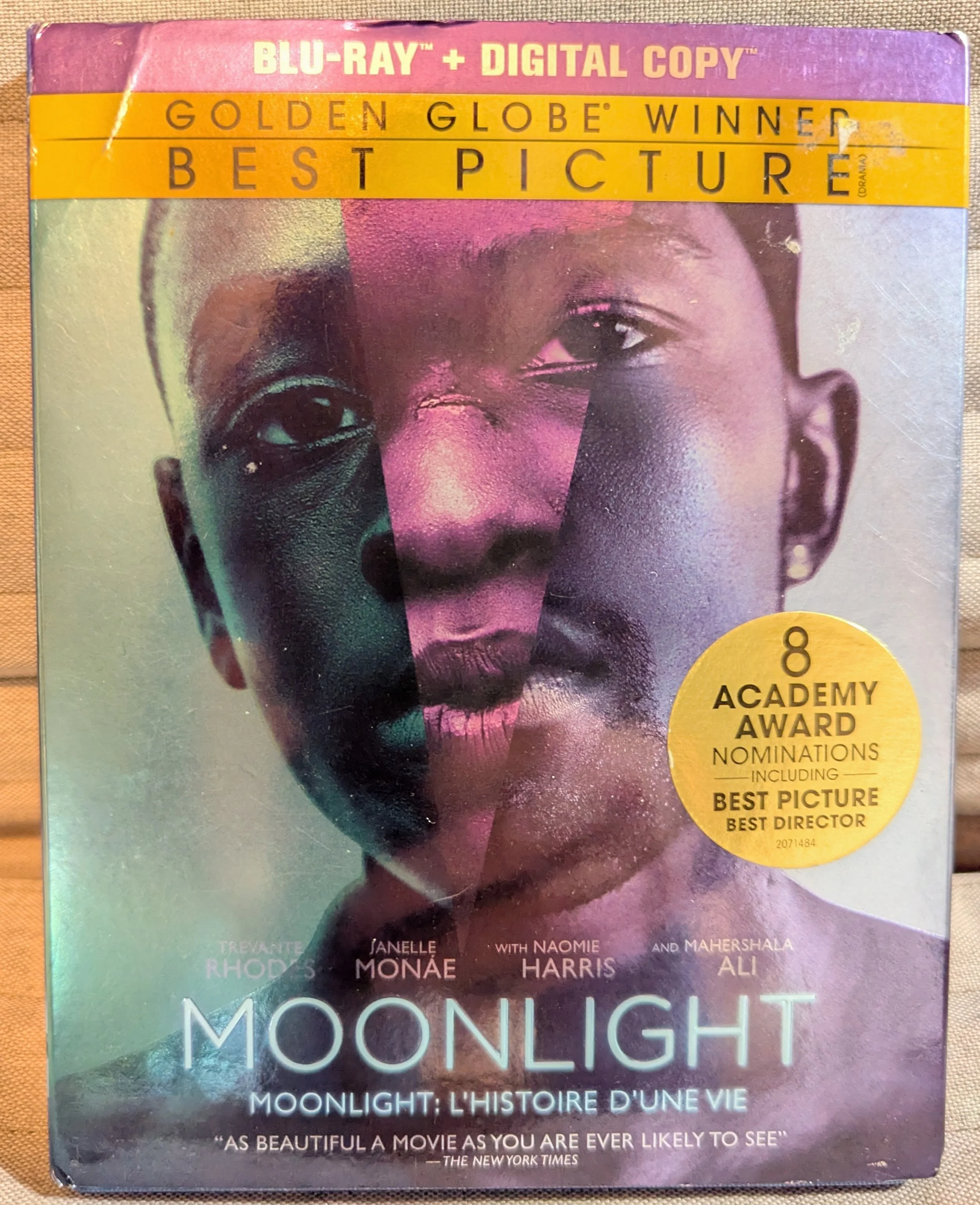
“We get into why Moonlight meant something to the [playwright/screenwriter Tarell Alvin] McCraney and to [Barry] Jenkins, and we have to talk about the ending for that.” (Photo by Matt Long)
Great question. So, first off, I don't expect people to watch all the movies. The book is written with the intention of being read cover to cover. Of course, there are some films that you can't really talk about without getting into spoiler territory. To really talk about Spring Breakers properly, you need to get into that ending. There are a couple pivotal scenes where things change from the party element to a more criminal element.
But there are a few movies that would suffer from being spoiled. We don't interrupt the entire book by saying “spoiler” there. It's kind of go at your own risk. I don't think a lot of people that haven't seen Moonlight are going to read a Moonlight chapter, but we get into why Moonlight meant something to the [playwright/screenwriter Tarell Alvin] McCraney and to [Barry]Jenkins, and we have to talk about the ending for that.
The only times we really give warnings are when it would really, really compromise the viewing experience. Even mentioning the title might be a spoiler, but I have a feeling most people have seen Hereditary, for instance. We do have a “read at your own risk beyond a certain point” warning in that chapter. There are maybe one or two others like that. But it's also written so people can jump around. While I think it's a better experience reading from cover to cover, not everybody has time to read a book with 500 pages. The same will be the case with the following book.
If somebody just wants to learn about Barry Jenkins and the Oscars situation, that’s all in there.Robert Eggers and Ari Aster are both very substantial and robust chapters. I’m sure a lot of people have seen those four films, those early two from Eggers and Aster, and that would be very satisfactory.
I commend you for observing that this subject deserves the attention you are giving it. In the future, the topics for every chapter of your book will eventually have their own books. There will be, if there aren’t already, Greta Gerwig and Yorgos Lanthimos books, and so on. These are such comprehensive books.
There are some, and there will definitely be more. AI is already a factor, and I’m getting questions because this is such a voluminous work. I get it. Nobody wants slop. I wonder what the future of film publishing will look like.
I'll use the example of Bugonia. It just came out, and I was looking for a couple sources. I found a lot of “books” that I have a feeling are probably AI summaries. You can search for them on Amazon and the covers all have that AI look. I haven’t checked on directors or films that I wrote about a year ago, but eventually there could be a library of slop books. I'm also environmentally conscious. I don't want my book to cost a small village their water supply, so I am very intentional on how I use it. But that's the world we're living in. I personally value human art and human expression, and the AI style is becoming more widespread. There’s a sterility to it. I’m not a fan.
I think there could be a time in which AI could write a book of this caliber, maybe, but I don't think it would really have a voice. There's something innately human about the writing and reading experience that I don't think a machine can ever really translate. So that's something we're going to have to navigate going forward.
At least for now, we have great artists making interesting art that is being acknowledged. The fact that Lanthimos regularly directs Oscar nominated movies is not what I expected when I watched The Lobster a decade ago.
I think that we're more amenable to consuming that type of film than we were 10 years ago. I think that there's more appetite for a little bit of experimentation with the general public. I don't like the word mainstream, but Poor Things is a film that was embraced by audiences as far as box office and reach, yet it's inspired by The Cremator with the fisheye lenses. Maybe Lanthimos’ films are getting less weird, or maybe we’ve learned how to watch and appreciate his work. Bugonia doesn’t feel as weird, but it’s not exactly Titanic.
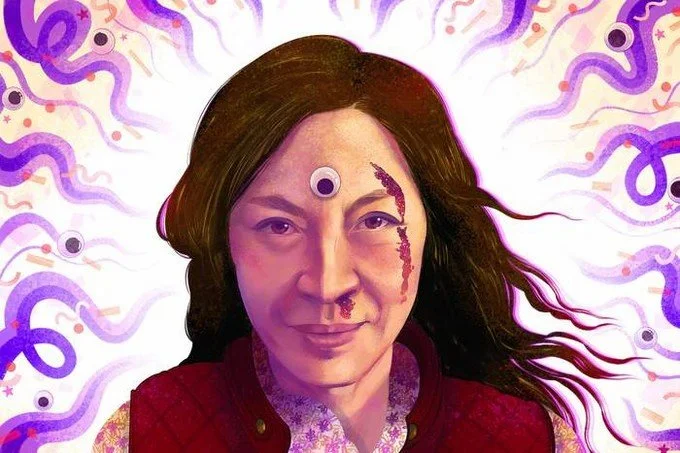
“Everything Everywhere All at Once is a huge, huge part of the new normal. I think that's where representation and audience satisfaction coalesced.” (Image property of Aaron West)
Everything Everywhere All at Once is the kind of movie where it is kind of undeniable, but I doubt it would have won the Academy Award for Best Picture ten years ago, before the new normal that you’re describing.
Everything Everywhere All at Once is a huge, huge part of the new normal. I think that's where representation and audience satisfaction coalesced. It’s really a zany film when you think about it, but it blends martial arts, action/superhero blockbuster, and human story. And the premise is about how doing taxes sucks. I love that the film has succeeded.
What kind of books influenced you when writing these books?
There’s a lot of film studies in this book, a lot of history, and there is the narrative of the history of A24 as told through a filmmaker’s career, their films, and the film's lifespan on its own. I love film books. There are endless, fascinating stories. In fact, one thing we want to do eventually with our website is have an online film-oriented book club.
I'm going to mention an author that I don't know if a lot of people are aware of named Robert Caro, who wrote a group of books about Lyndon Johnson. I’m guessing there were five years between each volume, and eventually, he had a masterpiece in terms of capturing the story of one single person, in a life’s work. And to the point of kill your darlings, there's not a weak moment in thousands of pages of great reading. He also wrote about Robert Moses, who was a real estate mogul in New York. That was also a long book too.
I'm not Robert Caro. He has a lot more initials after his name than I do. But I did approach the research and the investigation exhaustively. I tried to read as many articles as I could. I listened to podcasts, watched interviews, and found everything I could to get an understanding of these films. Ultimately, I'm not going to say it's a Caro-style book, but I think I got to, as far as the comprehensive nature, something that would fit in his legacy. That's a big aspiration, but also a personal road map. I’d like to continue writing about modern film, and that means more A24 books
When I spoke to Will Dodson, he made a point of highlighting Samm Deighan and the importance of getting rid of gatekeeping. Sure, Robert Caro and others have a bunch of letters after their names, but you did the work and you have the passion. You don't need to be a scholar to write about this stuff.
“Hopefully it plants the seed of discovery for modern and classic film. That’s all you can hope for.”
To your point about Samm and gatekeeping, I agree 100%. You shouldn't have to read a book with hundreds of hours of life experience necessary to understand anything. I wanted to write it for a general audience that could use it as a way to appreciate and understand the films.
I’ll add two other authors that wrote about film history, and that's Peter Biskind and Mark Harris. I am a big fan of Mark Harris. Biskind wrote Down and Dirty Pictures and Easy Riders, Raging Bulls. They talk about film history in a readable way. I tried to make it interesting throughout so if people read it from cover to cover, whether they've seen the films or not, they will enjoy that narrative thread. There are connections between the chapters that people will pick up if they read all the way through. The chapters build upon each other. I think that's what Mark Harris and Peter Biskind did. Caro did it to a degree.
I feel like your books will contextualize this decade the way Harris’ books, including Pictures at a Revolution, did. Reading your books and thinking about them should bring people back to explore these great movies of the last 15 years.
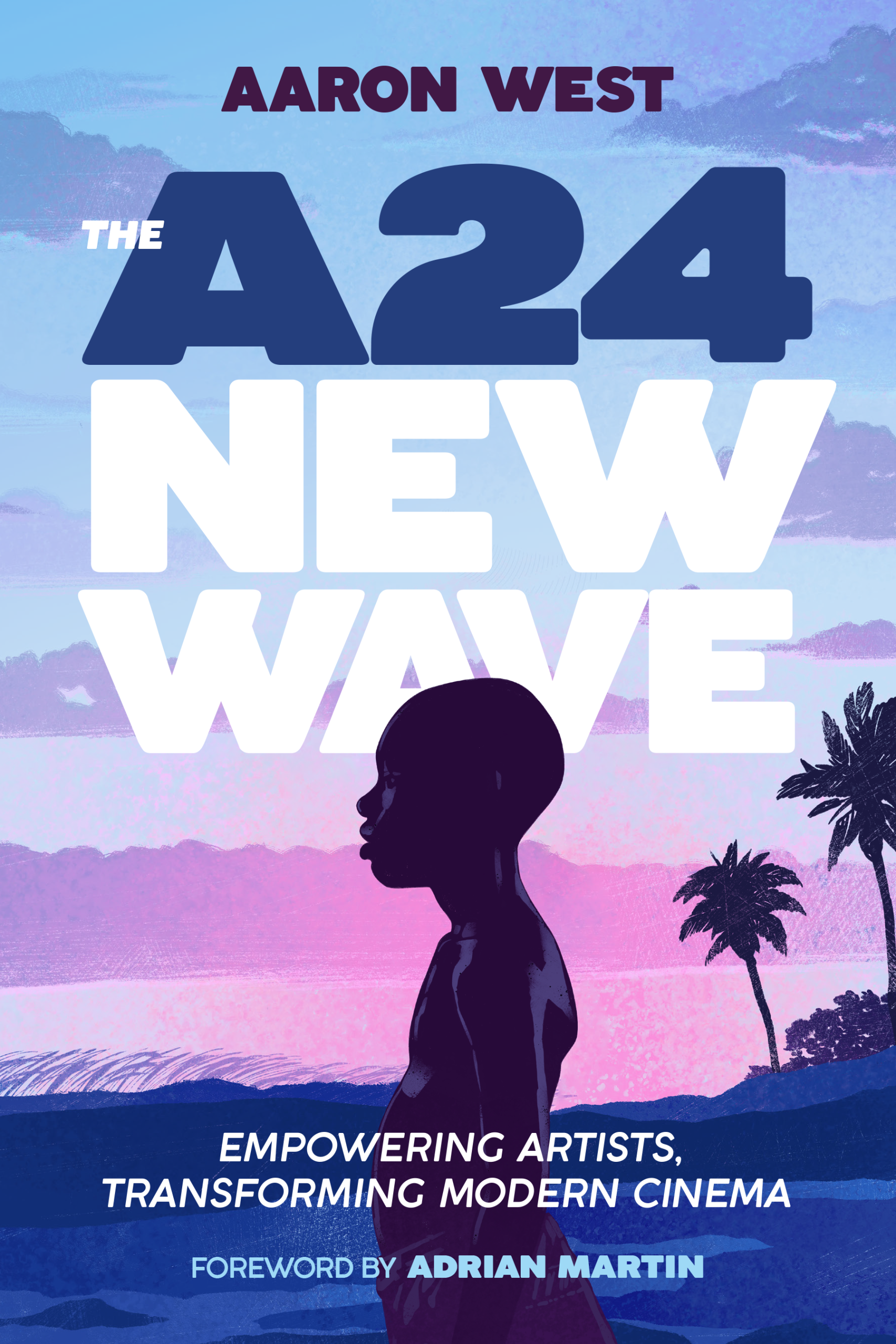
That's part of the fun. I know a friend said that they're going to start watching the movies now. I'm like, “The book will definitely be better if you watch the movies,” but I'm not going to say it's going to be a bad reading experience. I think it's going to be enjoyable whether you have or not. I'm very happy with the book. So far, the people that have read it seem to enjoy it as well, and not all of them have seen the films. Hopefully it plants the seed of discovery for modern and classic film. That's all you can hope for.
Thank you so much for sharing the story of what turns out to be your two A24 books. We can expect part one to be published in May 2026. Any idea for the second book?
Probably about the same time next year. Spring 2027 is the target to publish the second book. New Wave will be published in May. We're accepting pre-orders now. We’re updating links on the landing page at cinejourneys.com/a24book. We’ve added a Kindle pre-order, and an online physical media shop has picked it up. There’ll be more, and we’ll keep updating that page. Buying direct from us just helps give people the digital experience. Probably a very small portion will take us up on that, but if they go in and enter their email, they'll find their access.
What are the next steps for the book?
After it’s published, we have plans. I mentioned film festivals and that sort of thing. Those are more fall plans like film festivals such as TIFF. In the winter months, I'll revisit those other chapters. I need a little time between now and Marty Supreme to really cover it properly. I'll probably finish that manuscript in those three months and then get it edited.
Thank you so much for meeting.
Pre-order The A24 New Wave. This will be available wherever you buy books. Support your local bookstore!
Join CineJourneys, Aaron’s online film club, and follow Aaron on Instagram to keep up with his latest work.
Read more interviews from the What’s your idea interview series
The interview was recorded using Google Meet in January 2026.
The transcript was edited by Matt Long, with additional copy editing by Anthony Nijssen of APT Editing.