The A24 New Wave is here: What’s the idea with Aaron West (Part Two)
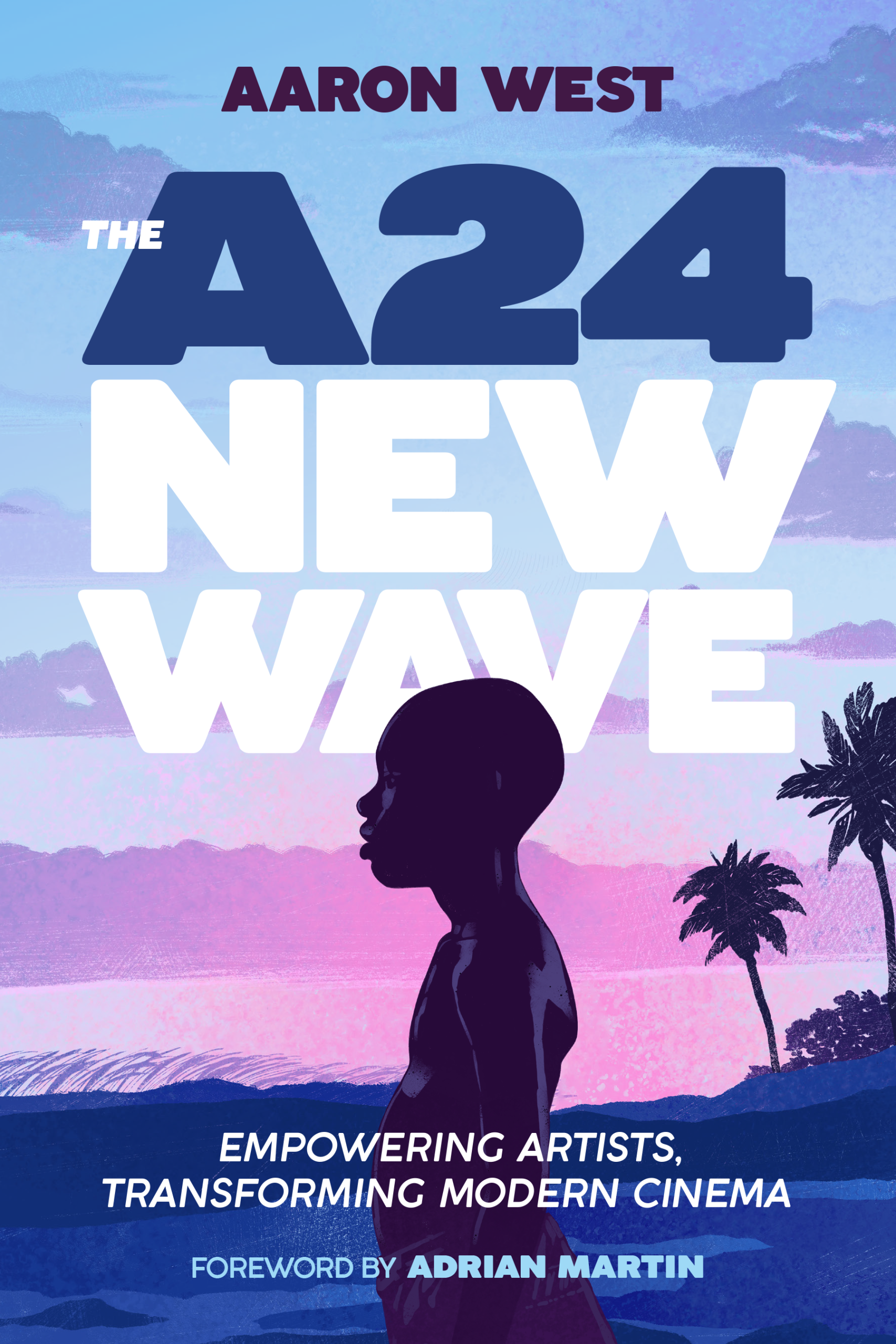
Aaron West is the author of the upcoming book The A24 New Wave, set to be published May 2026. Pictured above is the cover art for the book, designed by “the amazingly talented Caitlin Kuhwald.”
In the second part (of three) of my conversation with Aaron West (author of the upcoming book The A24 New Wave and co-owner of CineJourneys, an online film club), we discuss why Aaron started an A24 project, his process for researching and writing, and what he needed to do to be able to publish everything he wrote.
Writing a book onA24 is a big subject, and a big jump from your studies in French resistance and war films. What attracted you to this project?
“I was seeing trends. It really looked like we were in a modern New Wave moment, and I thought that it was unfortunate that it wasn’t being captured and documented somewhere.”
The resistance stuff was a college study I did. It was history, but I used film to explore French resistance as a part of World War. That ended up being a very large and very fulfilling project. With college, you get what you put into it. You can easily just write a 5-page essay and get a B+ and move on, but I really leaned into my learning.
I've been a writer since I was a child. I was surprised there wasn't an A24 book, and also, from a classic film perspective, I was seeing trends. It really looked like we were in a modern New Wave moment, and I thought that it was unfortunate that it wasn't being captured and documented somewhere. It was being missed.
I conceived of the idea and started writing. As I got a larger page count, we did a Kickstarter, and it turned out people were engaged and supported us, so I kept writing.
Around the time you were inspired and started writing, do you remember what A24 movies were coming out?
It was a couple years ago, maybe just shy of that. I saw things along the way that reinforced the theme, but I was seeing mainstream films. I'll mention Dune: Part One. I remember seeing that in IMAX and just being blown away that this looked like a David Lean epic, maybe even Tarkovsky, but it had some of the thrilling sensibilities of, say, a James Cameron. It stood out, and I was like, there's more to some mainstream blockbuster cinema. This is something special.
And then seeing The Substance, for example—I know neither of those are A24, but they have some shared DNA with A24 filmmakers; for example, Denis Villeneuve made a 2013 film called Enemy, which uses filmic elements to create unease. This film provides insight into his later work that is, of course, very celebrated—I saw that there was something in the water, so I recorded two YouTube videos with friends just as sounding boards. They're still out there. I don't hide anything. Basically, I was like, “Hey, I think we're in a New Wave movement,” and gave my reasons, and they were like, “Yeah, I think you're on to something.” As these ideas and observations percolated, eventually I started to make sense of that.
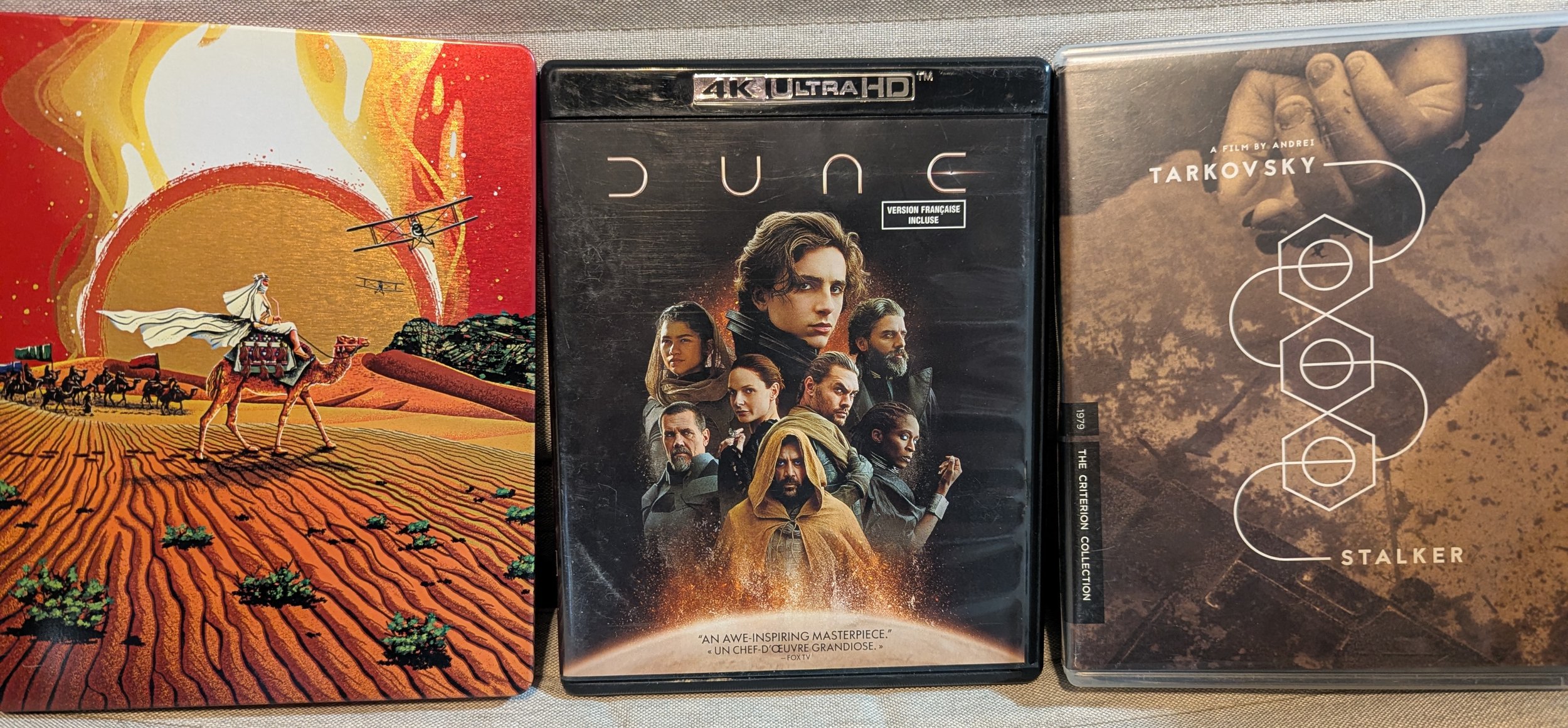
“I remember seeing Dune: Part One in IMAX and just being blown away that this looked like a David Lean epic, maybe even Tarkovsky…” (Photo by Matt Long)
There’s also just not much written about modern cinema. It's sad that there's so little. I was looking for something to read, so again, in that “build what you want to exist” mantra, I wrote what I wanted to exist, which were stories of all these filmmakers that shared some time at A24, but they went on to a lot bigger and brighter things in many cases.
I think it speaks to your book’s thesis that you aren’t referencing A24 movies when you're talking about what inspired you to write it, in that their style and curation have transcended their own brand. It's almost like how every animated kids’ movie is called a Disney movie. A24 has a strong enough brand that you think movies are from A24, even if they aren’t.
I get that many people don't really know A24. Weapons is a very fun film. It's a very mainstream film, but it is more in the Blumhouse kind of tradition. But a lot of people are like, “Man, I love that A24 movie Weapons.” The Substance seems more like an A24 film especially because it has the sound effects, the cinematography, and I think Coralie Fargeat is very much a part of this New Wave. Even if she hasn't made a film with A24, that's kind of immaterial.
Besides just being a distribution company, what is A24’s style like?
I do get into that, and even the business because there are commonalities, but mostly, they just bet on certain types of talent. They're very particular about who they bring on to their company. If you read the auteur theory, the textbooks have a different definition than how A24 sees auteurs, but they do look at some filmmaker’s sensibilities and approach to storytelling.
“At their base, many of the movies are just great human dramas... A lot of people have an idea of the components that make an A24 film, and that’s just the strength of their branding.”
To be more specific, these are oftentimes hazy films with bombastic scores. That’s something that somebody described as an A24: “They have weird lighting.” But that’s kind of a misnomer. A lot of times, they are human stories. Even if it's a genre film, there's a human drama at the centre of it. Their horror line has been called elevated horror. It’s the same case with a lot of other genres.
At their base, many of the movies are just great human dramas, like Lady Bird, for example. A lot of people have an idea of the components that make an A24 film, and that's just the strength of their branding. They've created a brand that rewards what people like. It's very subjective, but quality cinema, for the most part, is how people see their films.
There are numerous audiences out there, and they're curating for different ones. I guess it takes time to be able to reflect on what is happening, but it is confounding that people weren't paying attention to what was happening there. As I look at the movies and filmmakers that you're analyzing,Greta Gerwig, Barry Jenkins, Sean Baker, and so on, they're the top directors. Whether it's your taste or not, there's something significant happening here with all this work.
That's a good point. These are world class, highly successful filmmakers that are at the top of the industry. I'm very careful not to inject my taste, because there are some A24 movies I don't like, and I hope that not everybody likes every single one. Some of the films are not my taste. You probably can tell when reading [the book] which ones I like more than others, but I tried to keep that journalistic integrity and keep my editorialization out of it.
There are also some obscure films that just haven't bubbled up. They aren’t all masterpieces, but their track record is pretty excellent. And when they really hit on a film, they really hit.
What was your original idea for the book, or the idea that you used to guide you through the writing process?
It was the idea that A24 is a driver of this New Wave. I just started writing and explored that topic further. I really think that the time behind the keyboard is precious. It's not going to result in the most fine-tuned manuscript in the world initially, but it’s sometimes just about getting your ideas down and see where the discovery takes you.
I started writing, reading sources, and some of it was coming out okay. A lot of that early writing is in the finished book. I had the idea about the New Wave thesis but it wasn’t fleshed out until I'd written a good bit. I decided these filmmakers haven't been written about, so I'll use A24 as both an idea and also as a bookend, a container to discuss a lot of this great cinema. That's when I started seeing all these different influences, and that's where the New Wave thesis became developed.
What I found when researching these filmmakers is that the canonized filmmakers that you and I know, like John Ford and Howard Hawks, are part of a classic tradition of great film, but they are not the common influences that inform modern cinema. Sean Baker is proud of his influences like John Cassavetes, British Social Realism, and genre ‘70s Italian movies. That's just the tip of the iceberg. Barry Jenkins and Josh and Benny Safdie basically just consume cinema, but certain names kept coming up more and more.
In the book, connected to some of the chapters, I have what's called historical interludes. They’re not very lengthy, just a few pages to give a little bit of context at a high level about what these filmmakers were thinking about, along with highlighting the cinema that inspired this New Wave modern group of filmmakers. As it turns out, there is enough commonality that they build upon each other, so I've tried to place those strategically throughout the book.
For example, British Social Realism is everywhere. Mike Leigh is one of the biggest names to show up in the book, so that builds into, say, when Sean Baker talks about Cassavetes. At that point, you get a more well-rounded picture of what went into his filmmaking choices.
In the chapter that you shared with CineJourneys members on Harmony Korine, the structure I saw was the historical interlude of Dogme 95, then Harmony's pre-A24 work, and then going into the A24 work itself, in this case Spring Breakers. How did you decide on that structure?
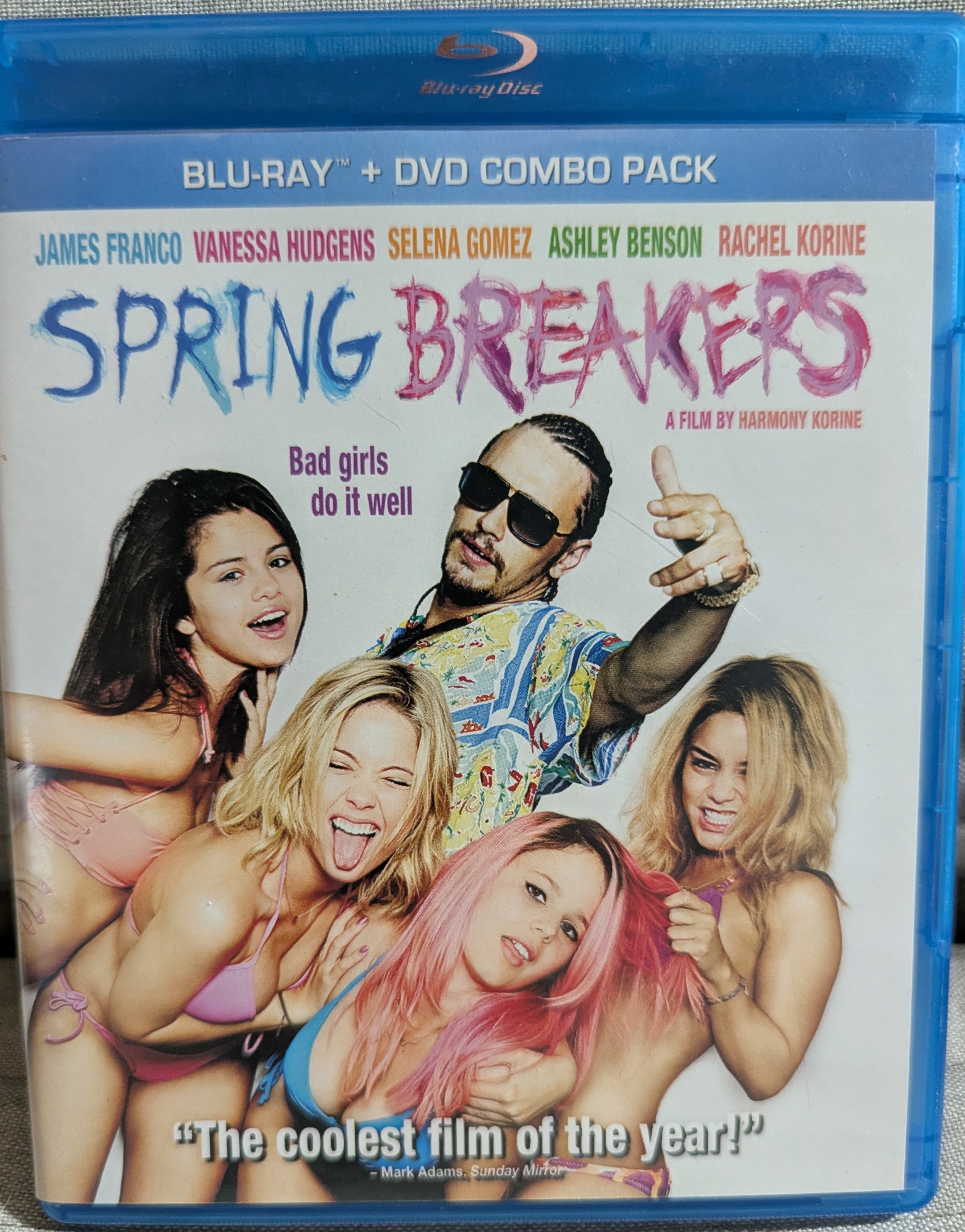
Spring Breakers was the first major release from A24, immediately confounding, and exciting, audiences and critics. (Photo by Matt Long)
It's not the structure for every single chapter. It depends on the filmmakers and what they've done. So, for example, Harmony was not new to cinema in 2012 when Spring Breakers came out. He's a colourful personality. I talk about his appearances on David Letterman, which he was eventually banned from. Though he's not for everybody, his is a story that I think deserves to be told in a book like this.
Because he has such a rich, colourful history and he had already made quite a few films before A24, I wanted to get into the historical context that he’s part of. Same with Yorgos Lanthimos as part of the Greek Weird Wave. I wanted to capture the environment in which they started honing their craft.
And then of course there’s Spring Breakers. That's when I get into A24 because I talk about how they marketed Spring Breakers, which was marketed with a gun bong. Their marketing strategy is how they got this film into theatres. This is really an arthouse film, but they used the tradition of spring break, which, at that time, was found in MTV Spring Breakers and Girls Gone Wild.
In that chapter I get into what he's doing lately. With some filmmakers, I have the road to their big film. For example, Yorgos Lanthimos had already put together quite a résumé of films that he completed prior to A24. There was an auction where they got The Lobster, and then he made The Killing of a Sacred Deer. Those are very much Czech New Wave, Peter Greenaway-influenced films. He's one of the top directors—he went on to do, of course, Poor Things, The Favorite, and Bugonia, which is in the awards season conversation—but he still has that influence. For Robert Eggers, I have the road to Nosferatu [2024], which is very much a part of his early cinema upbringing.
How did you go about researching and writing the book?
There are too many sources to fit in the book. I have documented them but it’s like guessing the number of jelly beans in a jar. We've assumed between 2,000–3,000, and it’ll be hard work organizing them. What’s great about a lot of modern cinema and these modern filmmakers is they talk about their films so much. I watched all the films, and usually rewatched a few times, including the filmmaker’s catalogue of films. So, for example, I watched all of Harmony Korine's films. He showed up as my top director on Letterboxd because I watched all the short films and then some. I watched all of Sean Baker films and commentaries. Barry Jenkins is really such a generous person with his commentaries, and commentaries are very valuable. If only we had commentaries for Cassavetes…
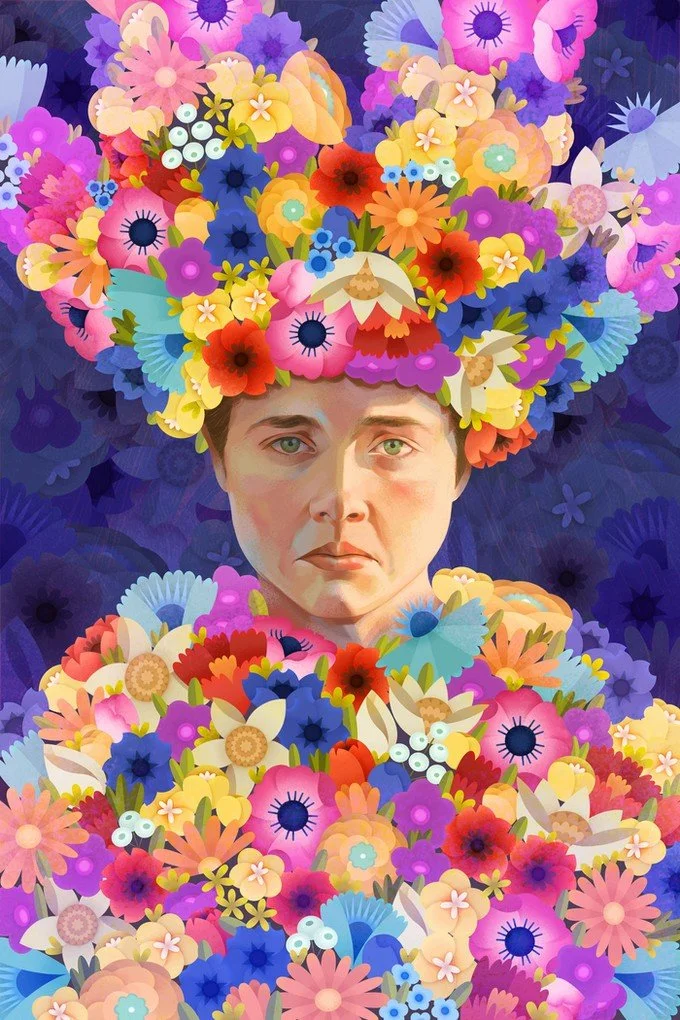
This is one of the images available with merch add-ons to the book, featuring an iconic image from Midsommar (2019).
It really is a treasure, but that's just a very small part. They do a lot of interviews, film festivals, and a lot of private interviews, so there are a lot of databases that have interviews. I read some books. For the main films that I cover, I read just about every screenplay. When there’s a source novel, for example José Saramago'sThe Double that became Enemy, I read that and other source films.Jenny Slate is quite a unique writer. I read her work, too, and that's cited in the book.
Then there's just a lot of trade publications, especially for the press releases, and a lot of reviews, too. I put in the acknowledgement section that this book is a credit to all the great film journalism. People say that film journalism is a dying art. I disagree after seeing everything. Maybe it’s just the playing field has been levelled so it’s not all newspaper pieces like it used to be. There’s a lot of great writing on film that I used.
Was the goal of the research to understand the historical context for the filmmaker’s A24 output?
I wanted to understand what the directors were sharing as much as possible from their perspective. It's interesting where you find the gems. For example, a lot of directors, even though they do a lot of press, will often say the same things because they have rehearsed these answers that they're repeating. I probably saw somebody like Sean Baker, who does a lot of press, say the same thing many times. I tend to not use much of that. In some chapters, people might think I overuse a certain source because I use what’s most interesting.
Speaking of Sean Baker, he has a phrase “got gold.” When he gets a good take, he'll say he “got gold.” Oftentimes when I see just an amazing conversation, I use that phrase, “got gold”.
For example, for The Lighthouse, Robert Eggers talked to Tom Power with the CBC. He knew the Maritimes and Halifax where they shot. Sometimes that's where you find them. Another example is Ellar Coltrane talking to Trey Edward Shults. Both young artists, it’s a great conversation. Lanthimos talking to Peter Strickland for Bomb Magazine. Such great stuff. It was whatever served the story and my understanding the film, but also, I thought what interested me would also interest audiences.
“There are a lot of movies like that. “Ex Machina” with the depiction of AI... That movie is more relevant than ever. They couldn’t predict the rise of AI at the time.”
There are a lot of movies like that. Ex Machina with the depiction of AI. I got into the author Murray Shanahan—he's a professor at Imperial College of London and the guy that wrote the book that Alex Garland took inspiration from, a book about consciousness—and he is an AI expert. Basically, he spends his time talking to ChatGPT now. That movie is more relevant than ever. They couldn't predict the rise of AI at the time.
How do you fit so much scope into one book? I read the Korine chapter, and it's not short.
I want to say that's about 8,000 words. I felt it was a pretty comprehensive chapter. They're not all that long. For example, there's one about Kevin Smith that's a shorter than that because he had one movie at A24. He has gone on to do very interesting things, I think, but maybe not as part of a New Wave movement. He's part of the tradition that A24 benefited from. I get into all that, the film landscape of the Miramax era and the post Miramax era.
I probably should share that I wrote a long book, too long to publish. At the time we recorded this, I haven't shared this publicly, but it's actually two books. And it should be two books. This is why you can't just get an idea and go write it, especially a historical book that covers 10 years, because things change. Of course, the pandemic dramatically changed everything, but there have been all sorts of notable changes with film distribution. This was on the heels of “#OscarsSoWhite,” which was drastic, and there have been a lot of new voices.
For example, just talking about CineJourneys programming, we're trying to explore more female filmmakers. It's not easy because until recently, there haven't been a whole lot of them except for maybe little pockets in world cinema. Now they're everywhere fortunately, and they are a large part of the evolving canon. Things like that made me find that the New Wave thesis only really holds up through the first part of A24’s story, so I closed that thesis as the last chapter in the first book.
I’m calling it the first book, but I'm really looking at these as two separate books. The A24 New Wave covers, for the most part, a lot of the filmmakers you mentioned. It’s those that debuted their first film with A24 by 2018 or so. Midsommar is the last movie that is discussed. It came out in 2019, but it was right on the heels of the Hereditary release. That's an interesting story.
Both volumes total approximately 1,000 pages; we’ll see when they come out, but the final page count for The A24 New Wave will probably be about 500 pages. It is still a little long, but I wouldn't cut Barry Jenkins or even Kevin Smith. I think they're all notable.
That’s incredible that you actually wrote two books at once. Can you tell me more about what changed to make you decide it needed a second book?
I started seeing changes in cinema. I found that A24 actually leaned into this—whether it was a corporate initiative or if it was their act of curation that got them there—but they had a lot more female voices, great female stories, and great queer stories. In fact, they were just recognized by GLAAD in 2025. They have the proper representation in their films, not just of directors, but also characters in their films. That's not easy to get. In fact, I don't know of many distributors that were recognized like that. In the early days, the list of A24 directors, aside from Gerwig, were mostly if not exclusively men. There were female filmmakers in the early days like Sally Potter and Sofia Coppola, but not a lot of them were the emerging auteurs.
Then we start seeing Barry Jenkins championing different voices. We see Lulu Wang as his spouse, yes, but also through his production company. Many of the big auteurs produce films that make their way to A24. Without Barry, Raven Jackson might not have been discovered. Without Martin Scorsese, Joanna Hogg might not have made her Souvenir film. Of course, Kelly Reichardt comes up. She was already established as a huge independent film maker, then she made First Cow, which is one of the best reviewed A24 movies in their history, along with Showing Up.
Sofia Coppola made one of the earlier A24 films, The Bling Ring, On the Rocks in 2020, and then Priscilla in 2024. But still, I was faced with a decision as to whether to cut Sofia Coppola from a book about A24? She absolutely is part of the story, as the New Wave and the New Normal.
The thing is, they have a lot of the same influences, but there's also other historical women filmmakers that are growing in influence, like Barbara Loden and Chantal Akerman, and of course Agnès Varda. We saw this in the Sight and Sound list. There's a changing of the guard happening in terms of classic cinema. This new canon is continually changing, with more representation, and that is informing what’s a more diverse industry. A24 is at the heart of that
The working title of the second book is The A24 New Normal because that captures the representation at the core of the second book. So again, “#OscarsSoWhite” was part of these origins, but they were already making, for lack of a better word, diverse films at the time. They'd also gotten to what I'll call a steady state as far as their operations were concerned.
What’s the Idea: That feels right from my viewpoint as an audience member. At the time of recording, Marty Supreme is in theatres, and it feels expected that there’s an interesting A24 movie in theatres.
Aaron:Yes. They have a lot of products, and their projects aren’t always micro-budget indie. Marty Supreme had a large budget. I want to say reported in the vicinity of $70 million [USD]. That additional money and taking on larger productions is a story that I get into in The A24 New Normal. It's a very different company, and it's a very different zeitgeist.
In the concluding part of our conversation, Aaron West and I discuss the publication of The A24 New Wave, his influences, and his plans for 2026.
Pre-order The A24 New Wave. This will be available wherever you buy books. Support your local bookstore!
Join CineJourneys, Aaron’s online film club, and follow Aaron on Instagram to keep up with his latest work.
The interview was recorded using Google Meet in January 2026.
The transcript was edited by Matt Long, with additional copy editing by Anthony Nijssen of APT Editing.
All photos are the property of Aaron West unless otherwise noted.