The A24 New Wave: What’s the idea with Aaron West (Part One)
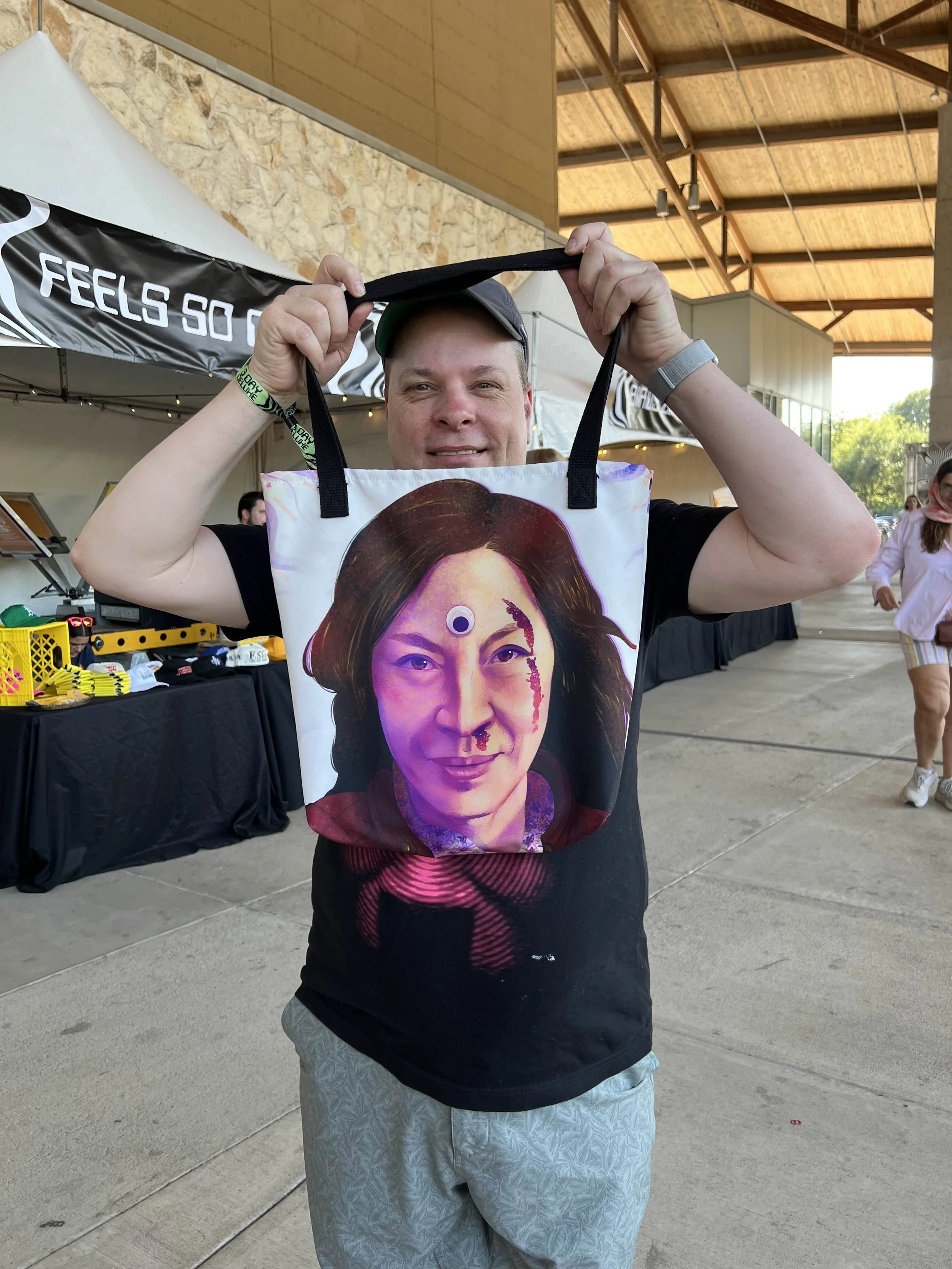
Aaron West (pictured above) is the author of the upcoming book The A24 New Wave, in which he discusses the film distributor’s origins and analyzes their core films and filmmakers and their lingering effects on culture and film making.
In the first part (of three) of my conversation with Aaron West (author of the upcoming book The A24 New Wave and co-owner of CineJourneys, an online film club), we discuss the path that brought him to writing the book, including the game show win that led him to starting several Criterion podcasts and launching CineJourneys with Jill Blake.
Thank you for meeting today. I'm excited to talk about your various projects including, of course, your upcoming book The A24 New Wave.
Thanks, Matt. Excited to talk to you.
Your history is quite varied. Can you share the story behind starting the Criterion Now podcast and your connection to Criterion?
“I was like, ‘Can I buy the entire Criterion Collection?’ She was caught off guard, thought about it, and said, ‘Yes.’”
Sure. It started when my wife won Jeopardy!, the game show with Canadian Alex Trebek, in June 2014. Great experience. At that point, I was a big film buff that had studied history film studies in college, and I had written reviews, all that stuff.
Just like anybody getting into film, you start seeing the wacky “C” alongside a lot of your favourite movies, and you get that wonderful experience that is continually reinforced by these great releases. I probably had about a hundred Criterions or so, I'm guessing, when we flew out and she won Jeopardy!.
I remember seeing an eBay post of somebody selling the entire Criterion Collection. I want to say it was $10,000 [USD], which seemed low. I was like, wow, the entire Criterion Collection, all these great films at my fingertips…
I remember being in the airport and thinking about asking to use her prize money. We had entered a different sense of affordability in terms of luxury spending, so I was like, “Can I buy the entire Criterion Collection?” She was caught off guard, thought about it, and said, “Yes,” because she knew it would make me happy. She's a great wife. That's when I bought the entire Criterion Collection. As far as Criterion is concerned, just because the track record was so good, I became a completionist. At least, I decided to start by collecting the Blu-rays.
You’ve probably seen a lot of haul posts in different corners of social media. Over the following year, I basically had twenty haul posts of massive boxes. I get why it's so fun to share haul posts, because it was so fun to open these boxes and see these lovely discs.
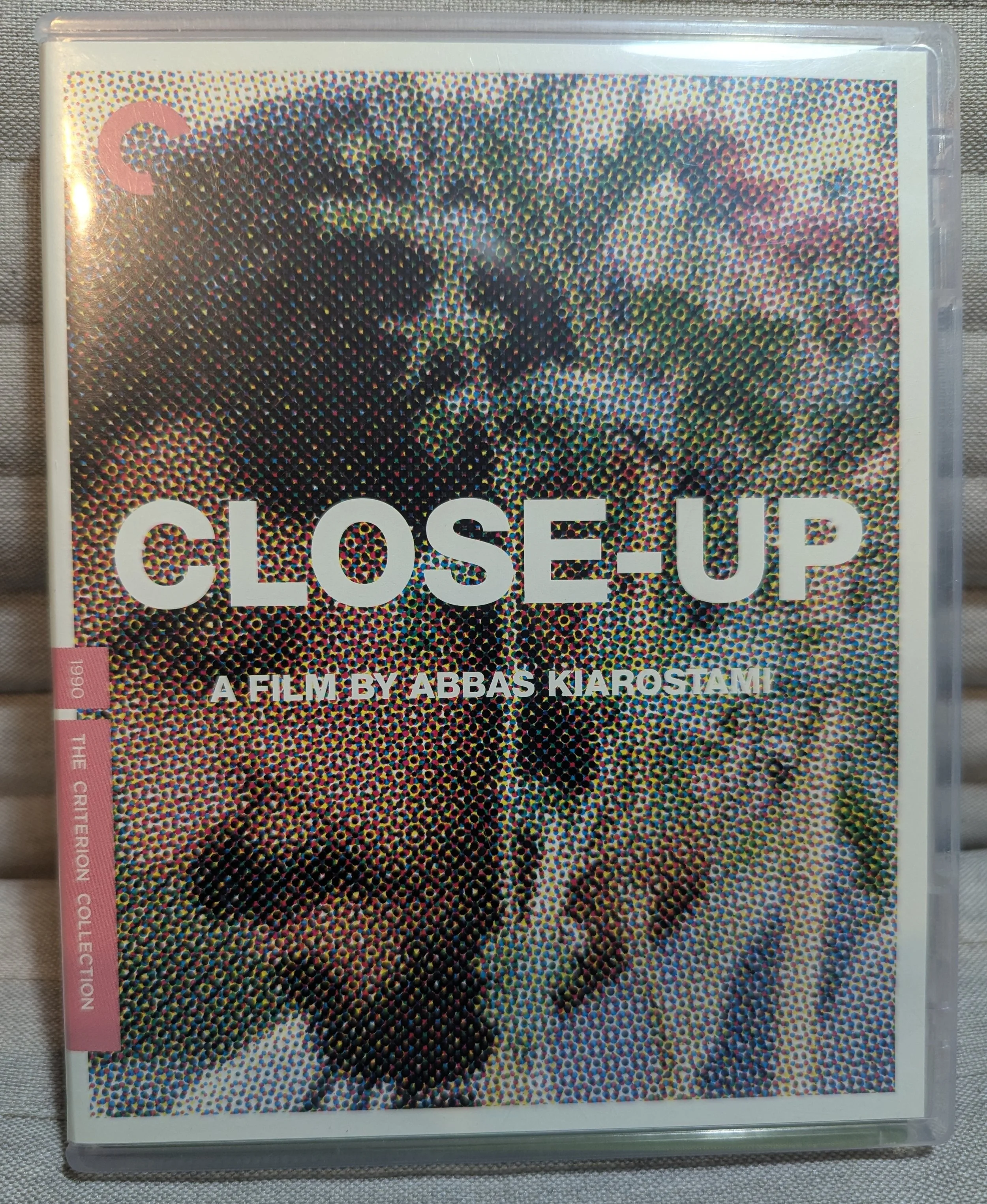
“I eventually started a podcast called Criterion Close-Up, which is what my blog was called, based on the Abbas Kiarostami movie Close-up, which famously I had never watched.” (photo by Matt Long)
As I unpacked, I started blogging and wrote about them. I eventually started a podcast called Criterion Close-Up, which is what my blog was called, based on the Abbas Kiarostami movie Close-up, which famously I had never watched. We decided that when I watched Close-up, that's going to be the last episode because it’s sentimental.
We eventually moved over to CriterionCast as a new show on their network. I had a great host, Mark Hurne, and I had more availability. I also had all these great CriterionCast friends. We had a big social media group. You might know Ryan Gallagher. He'd gotten out of podcasting, so I had conceived a different type of show. I didn't want to replace Ryan because he is amazing, but when he dropped out, I was like, “There's an emptiness, so I'll let the show fill it.”
At first, it was just Criterion news and rumours, the kind of stuff you see out on Reddit, and we did some deep dives. For guests, we sometimes had friends of the show and people from these communities. We sometimes got some higher profile guests and interesting people from different disciplines. We tried to get different angles of filmmaking or Criterion.
That continued, though it has slowed down recently because of these other projects. I still record episodes with Jill Blake as my co-host. She joined in 2021, and I asked her to be an official co-host because she’s great and we had that rapport. When we have the time and we have something to say, we'll put out an episode, so it's maybe three or four times a year now.
How did collecting and watching so much of the Criterion Collection influence your relationship with movies? Were you already familiar with much of the collection?
I already had a strong acumen for film history, and I had already seen enough to establish tastes. I'm an anti-gatekeeper. There is no measurement stick for being a cinephile. When I was 20, I had not seen many films, but I think my tastes were coming together. Everyone starts somewhere.
My tastes informed what I bought, and those just tended to be movies on Criterion, like a lot of world cinema. I think that's still where I gravitate, even though I'm writing—for the most part—about modern independent domestic film releases.
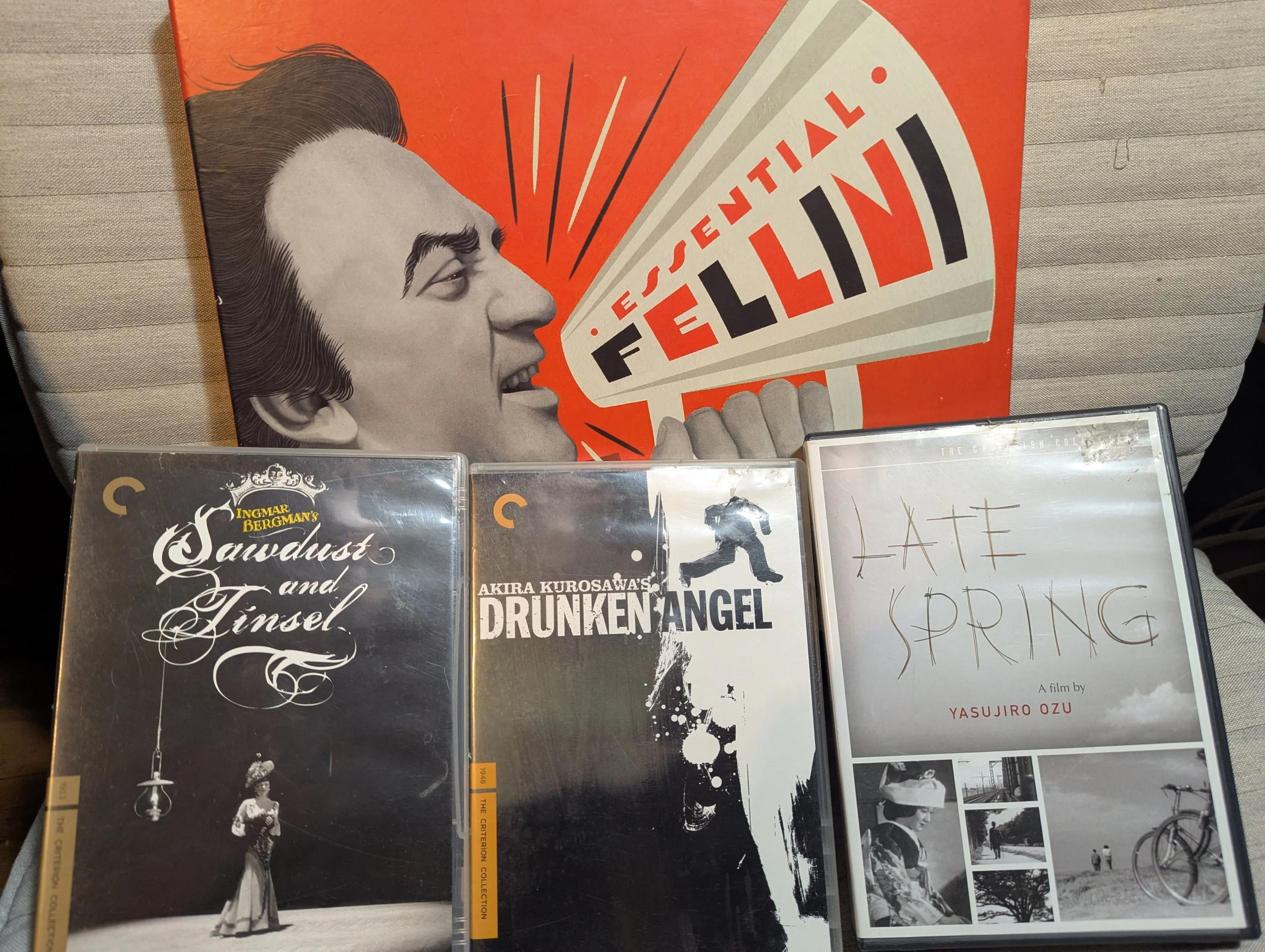
The international masters, like Bergman, Fellini, early Kurosawa, Ozu, are the gold standard. All those really hit my sweet spot. But I just like everything, so it's been a journey of discovery. I keep discovering new things as they keep on putting up different directors. I loved a lot of American cinema too. The Coen brothers were probably my gateway into film.
Now they're getting great Criterion releases, which is exciting.
Barton Fink was really the film when I was young that made me say, “Wow, okay, this is absolute cinema,” as Martin Scorsese would say. That’s a gateway into their influences and their contemporaries.
How did you meet Jill Blake, and what inspired you to start CineJourneys?
We attempted to start a podcast network and succeeded. We had it for about a year, but I had to shut it down. That was a disappointing thing to do, but it was just too time-consuming. I didn't realize all the back end stuff that was required of it. Jill was on that network with one of her shows.
“Around 2021 or so, we wrote a manifesto of something we wanted to do that was outside of film podcasts. This was a response to what we saw in media trends. In fact, our mantra was ‘build what we want to exist.’”
Jill has worked for a number of different film-oriented companies, including Turner Classic Movies (TCM), FilmStruck, Netflix, Kanopy, that sort of thing. We hit it off, and it made sense at the time.
One day, she had not seen any of the Criterion releases in the announcement slate. You can never predict that because you wait for announcement day, you book your guests, you hope that they've seen something, and then she hasn't. I'm thinking, “This is going to be terrible. I'm going to be talking the entire time,” but she was awesome. If you haven't seen a single movie on the discussion agenda and can still make it interesting, then yeah, you're good.
Around 2021 or so, we wrote a manifesto of something we wanted to do that was outside of film podcasts. This was a response to what we saw in media trends. In fact, our mantra was “build what we want to exist.” If you listen to our podcast, we say that probably ad nauseum. We wanted a very inclusive place, a very happy place, which gatekeeping is not part of, and to welcome people that have that interest and thirst for cinema.
It's basically like a college. We built a community and a learning management system. If you go to the website, there are people teaching classes. We've had a number of great film scholars, good friends like Imogen Sara Smith, Adrian Martin, and Matthew Ellis. We have Ty Burr coming on the platform, and there's more to come too.
It's a film club, which is actually what we call it now. We switched to film club partly because of the confusing concept of a journey and how it limited us. We put topics together, sourced from our members’ tastes, and just talk about cinema. We have a reliable great group of people and a Discord server where we have great conversations with a lot of respect and without drama. We love it.
It strikes me that Jill's background with TCM, Kanopy, and FilmStruck is centred around instrumental platforms people use to discover films through. Accessibility must be hugely important to her.
It is, and she's very like-minded in terms of being more inviting and creating an inviting space. She's a great collaborator. Jill comes from a programming background. Early in the days of CineJourneys, when we were plotting out the topics, we approached it like we were programming film curation. We approach it like we have a cinema, and we’re going to put together a series of screenings. I remember sitting down in person and throwing out ideas, and sometimes we would just strike gold. That's where Jill really comes through. She has great ideas.
Some of our best programming is from her right now. She's mostly leading a film club/journey about Katherine Hepburn and Cary Grant called Kate and Cary. It has the four movies they were in together, along with some peripheral movies with them on their own, so we'll get through some big classics.
For somebody joining CineJourneys and the film club, what can they expect? How do the classes work?
We’re still early. We just launched it. Right now, we just have it open to paid subscribers. We'll open it up to others in the future.
We have a call every month, and a lot of the people in our community that take the classes then want to talk about the classes. For example, one of our best classes was when Imogen Sara Smith did five weeks on Powell and Pressburger. Those were amazing with the best presentations. She basically lectured for about an hour and a half, and it was riveting.
But the downside was we all wanted to talk about it with each other, so we will probably use the space to talk about our cinematic experiences, some which will be from classes. Others will be sharing tastes with each other. We have a Monty Python one coming up, and I don't think we need to spend five hours on the hidden depth of Life of Brian. I mean, that sounds fun, too, but it's probably more fun to just laugh about the jokes.
There’s more that we're going to do. We’re going to incorporate an in-person element. I have plans to travel to some film festivals this year. We’ll invite a group and hopefully a few people can come. We'll probably grow because people are interested in going to film festivals with other people.TIFF is on the itinerary this year, so hopefully we'll take a group up there. Ultimately, we want to get to Cannes. That's a bucket list item that would be just a great experience.
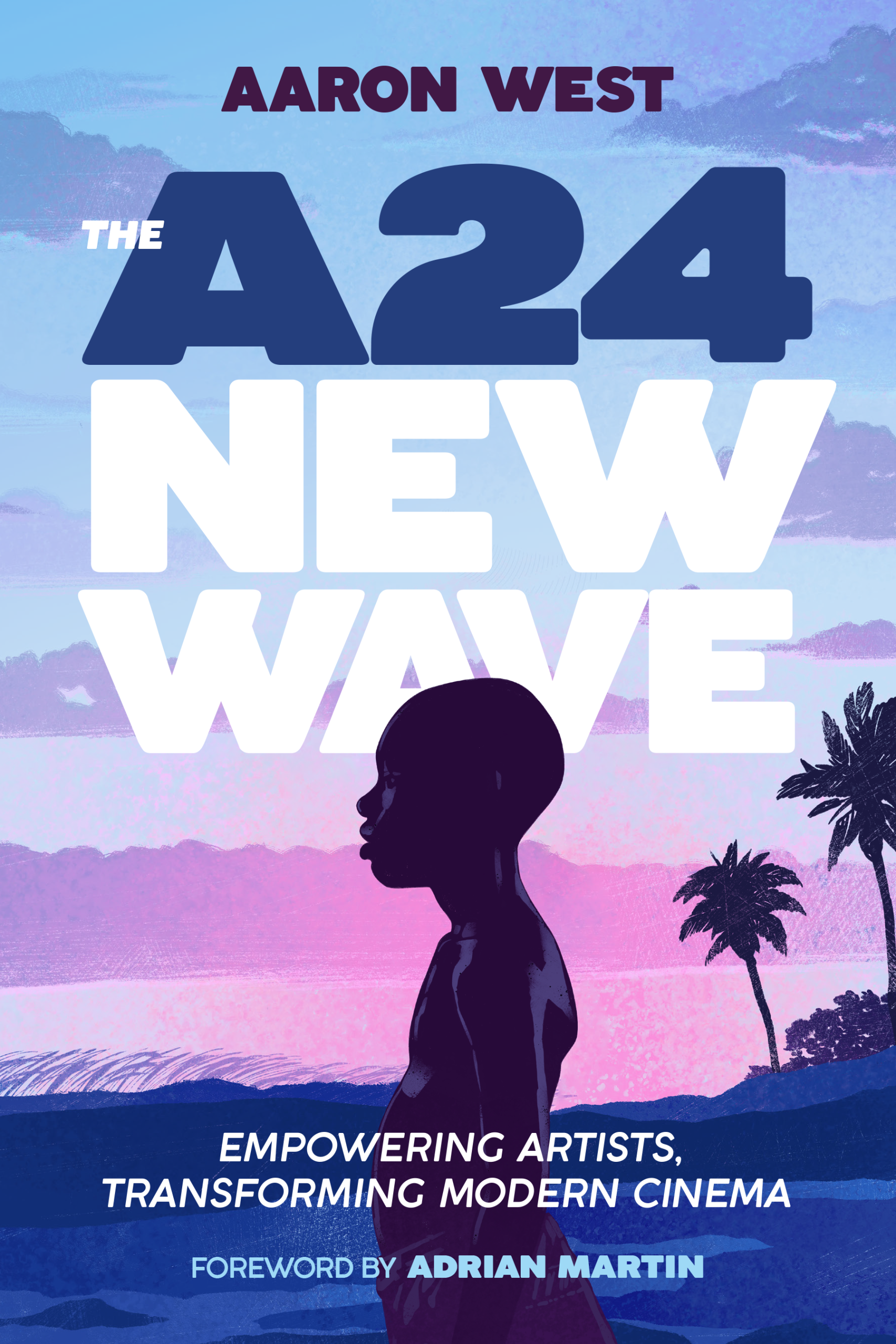
The cover of Aaron’s upcoming book, designed by “the amazingly talented Caitlin Kuhwald.” The image was inspired by Moonlight (2016).
We'll have in-person events where people will travel to a city. Our base is in Atlanta, and that's where we're going to have the big book party, but we'll probably have another one in the Chesapeake, Virginia area, possibly others in Maryland, Philadelphia, New York City, or other places. We'll see. We'll just grow and enjoy these experiences in person as communal viewing experiences.
As for classes, it’s similar to remote film classes. The professor or “guide,” which is what we call them as part of the whole journey concept, typically gives a lecture with some interaction and discussion. They are different depending on the guide.
For example, Imogen’s lectures were fantastic and captivating, and we didn’t want to interrupt her, so we would flag questions from the Zoom chat and asked during breaks. On the other hand, Matthew has a lot of experience interacting with students in the classroom. He watches the chat, encourages people to jump in when they have a thought, and is highly focused on interaction. Adrian pre-recorded his lectures and everyone watched them together, with a brief discussion afterward. His videos were fantastic. Think of it like a Criterion visual essay with clips, and then being able to interact afterward. Online classes have become a special and sacred part of our platform, and it also provides some side employment for experts who aren’t always valued by employers.
What in your background prepared you to create a platform for film classes?
I've always enjoyed building stuff. Professionally, I built a lot of different things. I've worked in enterprise IT, so I have a software developer’s hat. I love academic settings for studying film, and, even more, casual settings for celebrating film. That's where the idea of film club comes from. I wanted to build some sort of space and technology where this community could exist. That's basically what we conceived with CineJourneys. With the learning management system, we can build basically anything we want. We've made it very, very flexible.
“I’ve heard from a lot of subscribers that they really value this in their life and that it’s hard to see their lives without this. I feel that way.”
It has built-in interactivity. Most everything that’s part of a class is within a click or two. Same thing with our film club; people have a dashboard, they see “film club,” click it, and then they can see any sort of programming, find out about the activities, about the calls, those sorts of things.
It's also a place where we can supplement The A24 New Wave with additional materials that a finite page count can't hold. There's already a landing page for it, but we're building that as a digital accompaniment to the book.
This sounds like a great way to bring movie fans together, especially people who are interested in things like Criterion that they can't talk about with more casual movie fans.
Coming out of the [COVID-19] pandemic, I think we really treasure those social connections. I've heard from a lot of subscribers that they really value this in their life and that it's hard to see their lives without this. I feel that way. This is helpful for my mental health. The same is true for the guides. After the calls, they always tell me how fulfilled they feel. I love being able to enjoy communal experiences.
Or like with the loss of Rob Reiner.Of course, this was tragic. We felt a lot of emotions. The community provided a safe, supportive environment to discuss this man who meant a lot to us, and it was helpful to process by exploring the positive impact he's had on our lives. We live for those experiences.
Our conversation continues in part two, focused on the writing of The A24 New Wave, and part three, in which we explore the book’s publication and Aaron’s inspirations, among more.
Pre-order The A24 New Wave. This will be available wherever you buy books. Support your local bookstore!
Join CineJourneys, Aaron’s online film club, and follow Aaron on Instagram to keep up with his latest work.
The interview was recorded using Google Meet in January 2026.
The transcript was edited by Matt Long, with additional copy editing by Anthony Nijssen of APT Editing.
All photos are the property of Aaron West unless otherwise noted.