How he became Disc-Connected: What’s the idea with Ryan Verrill (part one)
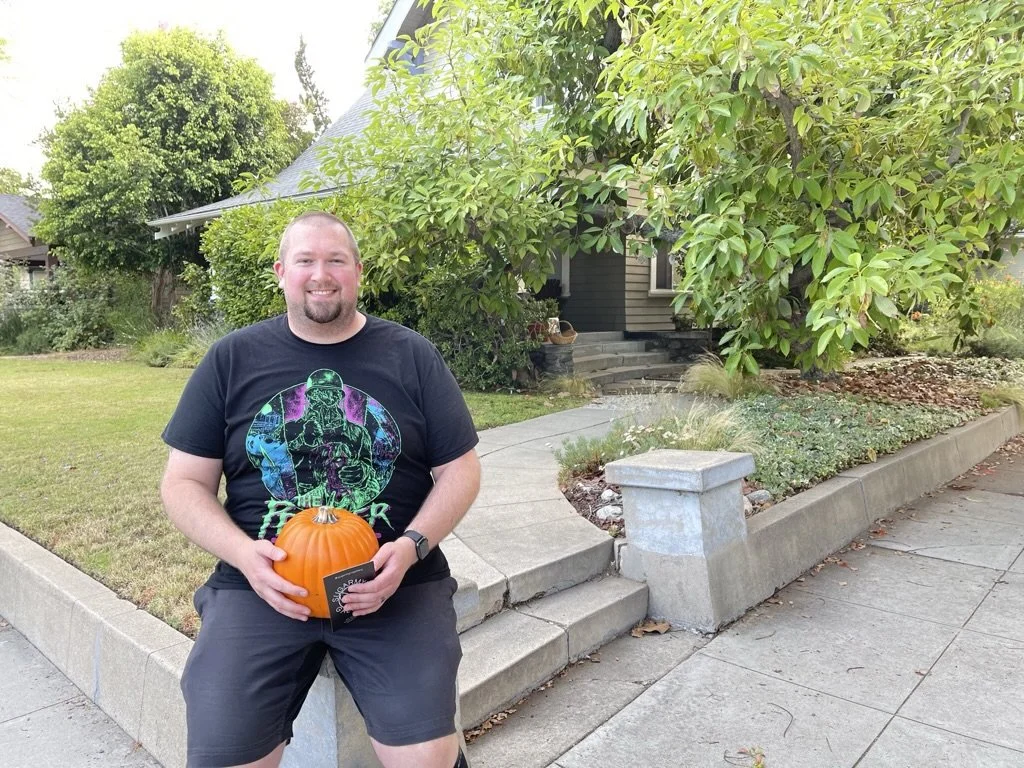
Ryan Verrill (pictured above) launched his channel The Disc-Connected to highlight upcoming physical media releases for movies. From those humble beginnings, Ryan’s influence can now be felt across the boutique Blu-ray industry and beyond.
In this first part of our conversation covering Ryan Verrill’s many ventures and accomplishments, we discuss how Ryan started the social media channel Disc-Connected, along with examining the values and ethos that distinguish his online presence from so much of the rest of the Internet discourse.
Hi Ryan. Thank you very much for meeting tonight to talk about Disc-Connected and all your other ventures.
Always happy to do one of these
You’re an important person within the movie collector and boutique Blu-ray space, so it’s quite an honour.
I appreciate that. It's still surreal to hear someone say that.
“When I moved out, one of the first things that I packed up was a massive CD collection and my small DVD collection... and it has just literally never gone away... It is a deeply rich part of who I am now.”
How far back does your movie fandom go?
I was a very mainstream movie fan as a kid. I came from a movie-enjoying family, but not one that stressed the importance or the need for anything deeper than whatever was the big blockbuster at the time. We always had at least one tall, very cliché ’80s and ’90s media rack of VHS tapes that got burned into my brain for years. Eventually, that started turning to DVDs.
When I moved out, one of the first things that I packed up was a massive CD collection and my small DVD collection that I was proud of, knowing I was going to be making a collection of my own in my new place, and it has just literally never gone away. It followed me through a move across the country, through marriages, and through kids who I've started passing that love on to. It is a deeply rich part of who I am now.
How did your love of movies transition from a hobby into a part of your work life?
I started the social media channels for Disc-Connected back in 2019. At the time, I had a four-year-old and a three-year-old child, and I basically made the worst choice of when to start. Pretty much right after I started the social media channels, I found out both of my kids were autistic. We got them officially diagnosed, and a lot of my time was just immediately sucked away.
We started doing in-home therapies and driving across the Kansas City metro area to take them to multiple doctor's appointments each week to make sure that they had the best care that they possibly could. That was the main focus, so what started in early 2019 with me posting things like, “‘Look at this shelf, what's your favourite movie from these 15 that you can see,” was just gone. I couldn't put any time into it, so I just let it go.
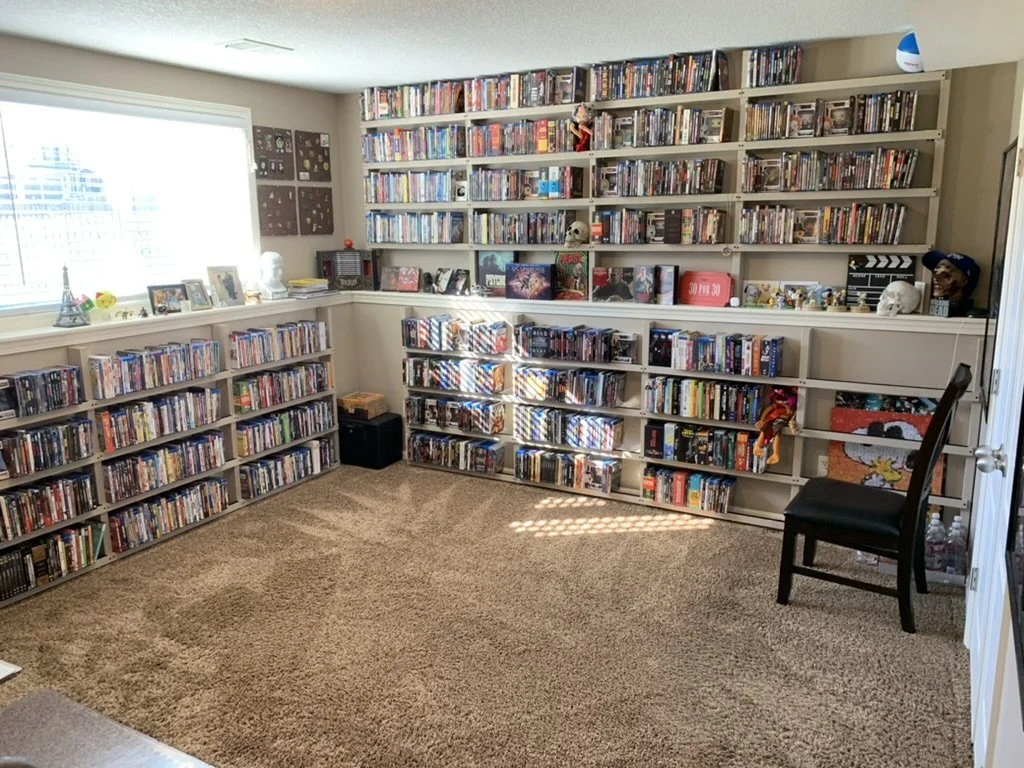
Ryan’s collection (pictured above) might be running low on shelf space, but an avid collector always finds a way.
A year later, suddenly we're stuck at home during a global pandemic. I can't go to doctor's appointments anymore. We can't have in-home therapy. All these things halted, and I suddenly had all the free time in the world outside of my day job. I picked everything back up because I never deleted anything, and I was considering adding the YouTube element to keep this being something that was important to me.
The work aspect of it didn't really come until late 2022 or early 2023. Even then, it wasn't something that I ever thought I'd be making money in. And if you look at what has come into the home, I'm still not making money. I'll probably be in the red for years to come, but it's not just a hobby anymore.
You’ve made amazing connections in this industry. Did you already know anyone when you started?
Technically, I knew a couple of them, but I didn't “know” them. For example, I'm active across all kinds of social media and have been for years. As it turned out, I'd been messaging a couple of these people without even knowing that they worked for these labels. I've known Andrew Furtado from Severin Films for probably seven or eight years at this point. I had messaged Jared Auner from Mondo Macabro a few times, not knowing that he was associated with the label as much as he was.
I've never really exploited those relationships in that way. It's mostly just been like, this is weird. We've been talking for years and now you're hiring me and I like that. This is cool.
“In 2020, I think a lot of us started falling in love again with physical media in a very different way... without being able to be in other people’s rooms or go to a movie theatre, these films on disc that I put in at home mean a lot more to me than I realized.”
So it happened organically from being part of the online community?
I admin a couple of the collectors groups on Facebook, so just based on that, I pretty much interact with everybody that was active in those collectors groups. Eventually, you start realizing that a lot of this community is very emboldened with nepotism in a way. We're all just kind of lifting each other up. And if you start to break down the email addresses or the same names in the comments, you realize a lot of us are just talking to each other on five different platforms. It's not this giant community. It's just the same people saying “hello” politely on Reddit and Facebook and YouTube and via email, all in one day. The world is much smaller than people think.
What was the idea for your YouTube channel and Instagram?
In 2020, I think a lot of us started falling in love again with physical media in a very different way. Before that, a lot of us were like, “Yeah, this is cool. I like buying these things, I like these movies, it’s cool to support.” But in 2020, it was a very personal time of purchasing. People suddenly realized without going to a bar after work on Friday night, without being able to be in other people's rooms or go to a movie theatre, these films on disc that I put in at home mean a lot more to me than I realized.
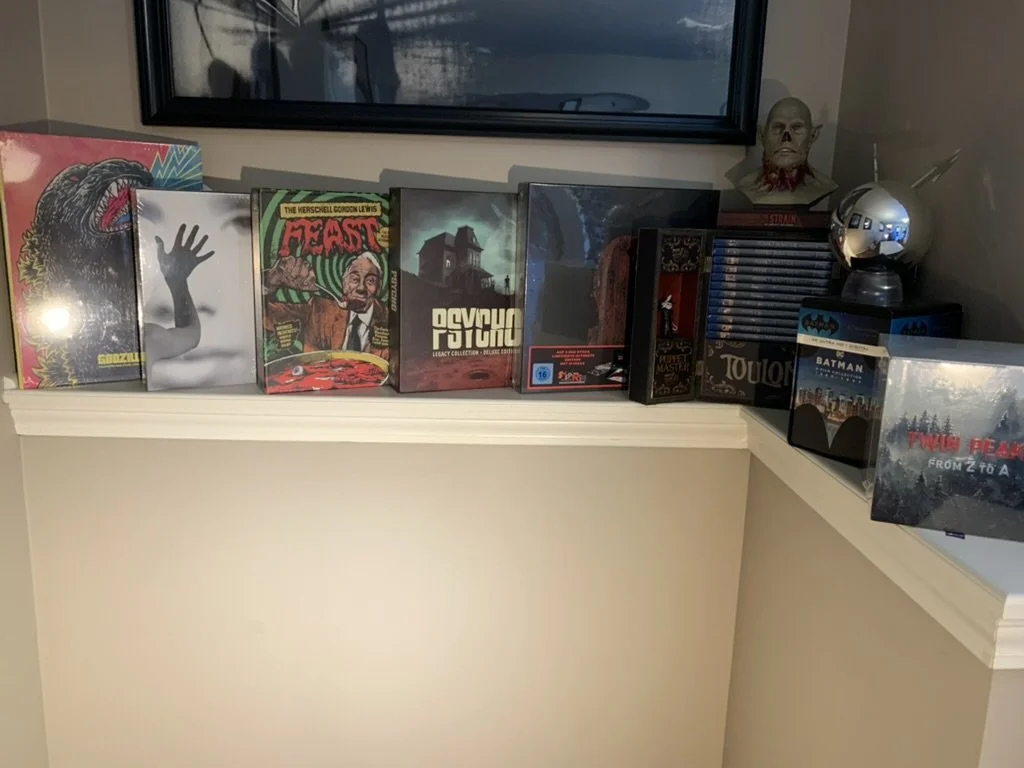
An assortment of some of the biggest boxsets released in recent years highlights the variety of different films and TV being given the deluxe treatment.
Around that time, a lot of us started turning to social media or to YouTube to find out what other people valued in these items and in this hobby. One of the things I found is that on YouTube, the people that talked about physical media, especially at that time, were passionate but also very misinformed. I don't mean to say that from a condescending point of view in any way. Without them, I wouldn't have been inspired to do this, but I saw an opening. I didn’t want to come out here as a teacher, but I wanted to make sure that people had the right information because with a lot of this stuff, it's very important.
For example, there are a lot of movies that I adore that will never, for one reason or another, be released on disc in the United States. And because I live in the United States, I either will never be able to own them, or I can purchase them from another country where the rights are a lot easier to manage because it's just this one producer that owns them over there instead of seven here in the States, or something like that.
For some reason, some of the people that were speaking about discs on YouTube did not understand why rights worked that way, but also that some discs released overseas can be played anywhere in the world, even if region locking is very much a thing. That was the first thing that clued me in that these people were sort of clueless. They did not understand that you could purchase it for $10 from Amazon UK and watch it here in the United States, even if you didn't have a region-free player, and it's fine. This movie that I love, that I've been looking for on disc forever, I can now hold in my hands and cherish.
“I was trying to get people to realize that these people were doing great work and this is why I appreciate them, and if we don’t support them, they’re literally going to disappear.”
I wanted to be entertaining yet informative so people could trust the information. If I make a mistake, because we're all going to do it, I don't ever mind admitting that and saying, “Hey, the information has changed,” or “I learned something different and this is why the information is different, but let's find out why that's important,” and explain it.
I started making these things I was calling guides. I would put out these videos that were somewhere between 20 minutes to an hour long, essentially looking at a small label that people may not have been giving enough attention to, and I would cover every single thing I knew about that label. It would be like, what do their releases look like? I'll show you all of the examples of the different types of releases they do. What kinds of movies do they release? What can you expect to find on the disc? What is the owner's name? What is their history? When did they start? I was trying to get people to realize that these people were doing great work, and if we don't support them, they're literally going to disappear.
One of the big things was a guide to the label Mondo Macabro. And since I discussed a couple things with Jared Auner, I said, “Jared, do you want to come on the video and just answer some questions about Mondo?” I never considered myself somebody that would interview or anything like that. It was just like, hey, I happen to have this minor relationship with somebody that works at the company, so do you want to be there to say, “Yeah, what he's saying is accurate. You can trust what he's saying.” And it worked.
A lot of people really appreciated that Mondo Macabro video, and that led to some of these videos being known. If you wanted to know everything about Severin Films, for example, this one person's video on YouTube will literally tell you every single thing you ever need to know about it.
For the first 6 to 8 months, that was the bulk of what I was doing. I was trying to do a couple videos a week, and looking back, a lot of the other ones are quite full of cringe. Even though the information is accurate, it certainly wasn’t me being a good YouTuber.
“Because I’m here with a sense of integrity and honesty, I don’t ever really discuss rumours or anything. I only talk about things that the company has already had the opportunity to reveal and promote themselves.”
Is there something specific driving you, like a pursuit for honesty?
I think that's probably a part of it. I literally do nothing to create drama or hype up drama. And because I'm here with a sense of integrity and honesty, I don't ever really discuss rumours or anything. I only talk about things that the company has already had the opportunity to reveal and promote themselves.
I don't ever want to take that spotlight away from them because I didn't do that work. I don't deserve to sit here and say, “I just found out this guy posted that he did an audio commentary that Scream Factory is putting this out someday. We don't know when, but hey, they're doing it.” Sure, if I'm the first person on YouTube to talk about that, I'll maybe get a thousand views that day, but that does nothing for me and nobody trusts me more because of it. It's not something that they go, “Damn, I'm going to subscribe to his channel and know that he's going to be respectful and verify the information.” I hate to use this word because I don't have a background in it, but I apply a journalistic approach to it. I want there to be integrity with everything that I'm touching.
When people interact with Disc-Connected, is that all Ryan Verrill?
It’s so funny that you bring this up. Twice in the last week, I've gotten emails that say “Dear Disc-Connected Team” and I laugh so hard because yeah, looking at it from the outside, this looks like it has to be a team. It's not. Literally every single thing that is Disc-Connected on any social media platform is all me. No one else has access to these accounts. No one else has the tenor of communication that I do. Nobody else can quickly answer some of these things that I do.
I understand it is irresponsible. I'm very grateful to have a supportive wife because I am somehow managing. If I get a Facebook comment in one moment that is a very important question, I will pop in and answer it usually within—and this is where it gets stupid— a minute tops. I personally respond to every single DM that I get on every platform. Every single email I get, I personally respond to. I don't really ignore anybody because I don't think there's any stupid questions. Going back to 2020, I started this because I wanted people to be properly informed.
It's gotten to the point where my platform has been shared, so it’s gotten semi-popular on certain platforms. Facebook specifically is my largest platform. I've got something like 30,000 followers on Facebook. They're not engaged like the YouTube platform or Patreon or anything like that, and I get that. There's a lot of these people there that don't understand it. At least once or five times a week, I'll get a comment that says, “Who's still buying discs these days?” And before they get dogpiled on, I'll say, “You've stumbled across a page that is literally here to support physical media. If you want to find out more, stick around. We'd love to have you.”
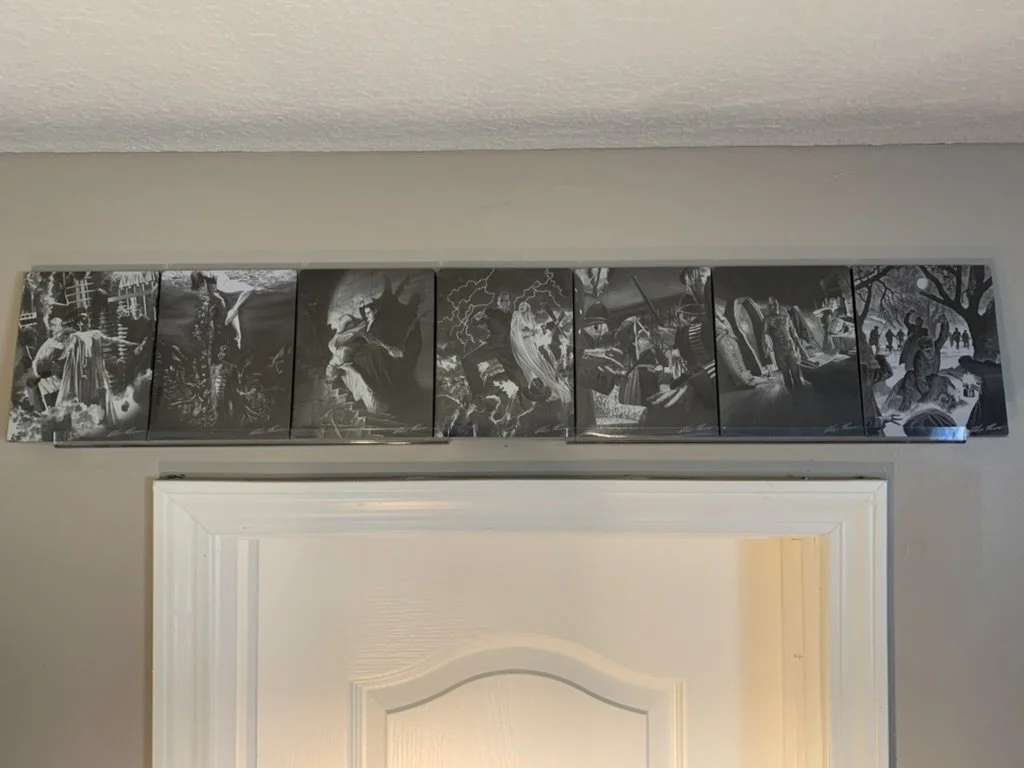
Some films, like the Universal horrors of the 1930 and 1940s, have been released consistently across every format. Pictured above are the main releases from that series, such as Dracula and Frankenstein released in a limited steelbook format. This is in contrast to movies that rarely or never receive releases due to various rights issues.
But I could probably name eight or ten different names or account names on Instagram right now that I'll get a question from every week. They will say, “Hey, are we getting a 4K of this anytime soon?" Most of the time, it's kind of a dumb question because they're like, “David Cronenberg's The Fly?" And you have to say politely, “That’s owned by Disney nowadays. Unfortunately, Disney's not really doing much to promote the Fox catalog, so based on that, it's unlikely that we're going to be seeing a 4K of that anytime soon. However, it's a big title, and if they want to make money, they could put that out at any point. So, my answer is, who knows?” I take the time to type all of that out in a polite way to every single person for every question.
Are you a naturally extroverted person? Are you comfortable with the nature of where this has all gone for you?
This is going to be the part where people start to not believe so much of this interview. I am not a public speaker. I am not somebody that goes out of my way to talk to people. I don't like social parties. I don't like crowded rooms. I'm your classic highly anxious millennial that will cower at the idea of making a phone call rather than texting somebody. And somehow through all of this, because it is such a passion play to get all of this done, it becomes like this dire need for communication. Based on that, it's almost an act of survival rather than a need for attention or a need to just hang out.
“I’ve had to pinch myself so many times and be like, you inspired me for years and I can reject your work on this release if I want to. How weird is this?”
But I'll put my anxiety behind me and talk about a label or a release for an hour on my YouTube channel, and I hope to get them 10 more sales. Sure, that's not going to move the needle, but over the next five years, that might get them 100 more sales. That genuinely can make a release successful or not successful, so I just do my best to make that work. But in all reality, I am very much an introvert. I get my energy from working by myself or from being alone. I just understand that I have to deal with noise and other people.
Being a parent sort of emboldened that, I think, because I've got two kids that want to hang out with me constantly. I know that I have to put on that smiley face and do what I can to give them a good life. That exists through all of this, so I've put my fears behind me, and now I can say that I've had these pretty major filmmakers on my show. I've had people that run these companies on my show. I've talked to people that have inspired me for years, which is insane to me.
But the weirder part is now through just that awkward first interaction, I am now working with these people or hiring these people. That's where I've had to pinch myself so many times and be like, “You inspired me for years and I can reject your work on this release if I want to.” How weird is this? It's incredible working with people like Frank Djeng, who is amazing, for these incredible Hong Kong releases and martial arts releases. I've hired Frank on a release and did quality control (QC) on his commentary and could literally say “Frank, you need to fix this.” That is not something that YouTuber Ryan from 2020 could have ever dreamed.
I think the respect that I've given led to this because the companies know they can trust me. I highly doubt if I had any form of reputation that I would leak something that half of these things that I know would ever have been shared with me. They know that it's never going to be told to anybody.
“That’s what a lot of people don’t understand about these releases. I’ve helped with releases for some of these companies that have literally been in the works—for people not in the know on these things, this is going to sound like it’s exaggerating —for 15 years... By then, it’s not just an acquisition. This is a full chunk of somebody’s life.”
Were these values something that was instilled in you when growing up, or are they something you developed as a reaction to your past?
A lot of my role models growing up were bad role models, and I basically learned how not to act from them. I had lots of times in my life where my privacy was breached. Knowing how crappy that made me feel, I could never do that. Being able to tell my kids “If you're in your room and the door is shut, I will knock on the door and I'm not just going to barge in,” and the fact that they can trust that is such a different life than I was raised in. I can't even imagine running a household in a different way right now because of how much it made me feel small growing up, or how much attending a church that wanted to invade everybody's lives and help dictate certain choices affected me. I could never do that to my children.
I also could never do that to these labels that I work with. Why would I take away somebody's moment that is supposed to be special? That's what a lot of people don't understand about these releases. I've helped with releases for some of these companies that have literally been in the works—for people not in the know on these things, this is going to sound like it's exaggerating—for 15 years.
The first inquiry on a title was done 15 years ago. It took 10 years of persistence for a company to finally be able to get the rights, then another 3 years to get the elements, and then another year to get that scan and see how it looks. Only then can we start looking at what the release is going to be. We can start doing extras, doing QC on the scan, figuring out what needs to be done for the restoration, and all these other things that go into a release, like hiring an artist and all of that.
By then, it's not just an acquisition. This is a full chunk of somebody's life. If I take the wind out of the sail of something that they planned on announcing on Monday by talking about it on a YouTube show the Thursday night a week before, I'm kind of the asshole.
I don't want to put other specific accounts down, but the fact that I've seen that happen for other people so many times just pisses me off because it means you simply don't care. Some of these other accounts that post announcements and stuff have been hit with cease-and-desist letters. They have been mocked behind the scenes from some of these other labels that know they can't do certain things because if this one account finds out, they're going to post about it, or if this YouTuber gets wind that this is happening, it's going to be everywhere, and nothing about it will be a surprise. That sucks so much.
I know that some people think it just builds up hype in your release. It doesn't. It gives more opportunity for the hype to die down. By the time a release comes out, half the people that maybe would have purchased it go, “This YouTuber said he doesn't remember it being good, so I've decided I'm not going to purchase it.” Having that power because you have 60,000 subscribers on YouTube or 130,000 followers on Twitter, whatever it is, can literally tank a release
A company was talking about a certain title, and they were saying it probably won’t be a huge seller, but maybe we'll be able to sell a thousand of these in the first week. Now they're only going to sell a hundred. That has happened, and that can change the outlook for one of these companies. I don't ever want to contribute to that.
It’s so far from the ethos of championing and respect that you’ve been describing. It’s such a shame because it takes so much time and effort to get a movie onto disc, if it's lucky to get one in the first place. A lot of us focus on old movies when thinking about preservation, but the modern era of movies are just as at risk, if not at bigger risk, of becoming lost.
The sad reality is a lot of modern films are not even smelling a disc release. They'll premiere at a festival and literally never see the light of day after that. It'll go up on VOD, 28 people will watch it the next year, and that's it.
I can’t imagine how it feels to be successful enough to have a few movies on a service like Shudder or Netflix, but people don't find it because it's buried by the algorithm. But if you're lucky enough to have a Yellow Veil disc or a Terror Vision release, you can tangibly see that people are buying and hopefully watching your movie.
Yep. It's a big deal.
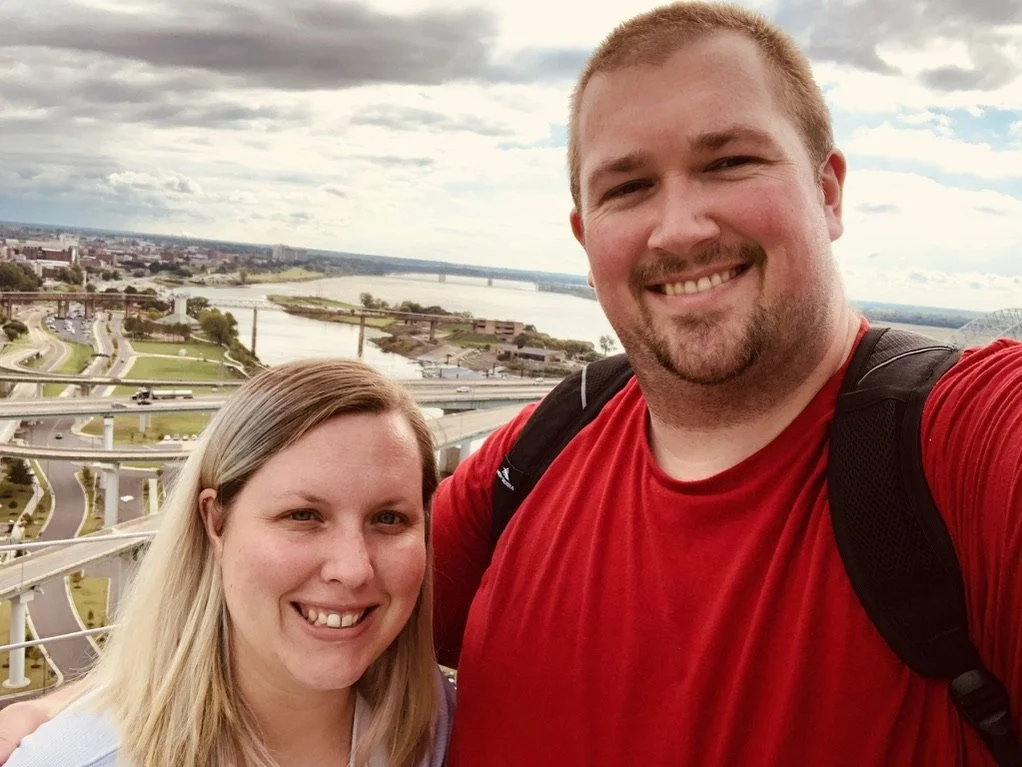
Laura Verrill AKA Miss-Connected (pictured above with Ryan) plays an essential behind-the-scenes role in making everything Ryan does possible.
You mentioned your children’s autism diagnoses, which would have required a lot of learning about how to handle communication differently. Has that played into Disc-Connected?
That's a good question. Probably in some ways, but I've sort of been doing that on my own for years. I got my degree in psychology. I never used it professionally because I realized that to do anything in psychology, you really need at least a master's and usually a doctorate, so I said screw it, I'm not doing anything else, though I've done counselling for others.
Through a lot of what Disc-Connected does, you can see the type of person I am. I am somebody that, if I'm going to do something, I'm going to do it to the max in a way that sometimes is even kind of stupid.
When I was working on my degree, I had to do counselling of some sort. I had to do some volunteer work and essentially treat it as a capstone project. Instead of making it something easy—I could literally go shadow somebody in any sort of mental health, even just a regular therapist setting—I was a grief counsellor for children that had had somebody close to them pass away. It didn't have to be a family member. It could be an acquaintance, a teacher, or anything like that. I sat in multiple situations where I was hearing things from eight-year-olds who on their birthday found that their mom had hanged themselves to something as different as their best friend was killed in a car accident unexpectedly.
That alone instilled in me the importance of the semantics of language to the nth degree because there are certain situations where if you say one word knowing what it means, you could ruin somebody's day and bring them to a crushing halt because they take it a different way or they understand something a different way. The sensitivity of the death aspect combined with the sensitivity of a growing frontal lobe for children really made you stop and pause before saying anything. It made you stop and consider the ramifications of every single decision of what to even say. And the ability to empathize was instilled at certain levels.
I came from the generation of people that were taught to love everyone as you love yourself, and to do that to a fault. I am a people pleaser, and I think that plays a big part in this. But the reality is when I was my kids' age in the '90s, if I was evaluated, I probably would have been diagnosed with autism. If we were diagnosing the way that we are today with better education behind it, I probably would have been given the diagnosis of Aspergers at the time. I've been diagnosed with ADHD as an adult, and I think that has coloured a lot of how I work.
“I still very much deal with impostor syndrome literally every single day of my life. Dealing with that and understanding what doors have been opened to me because of how I treat people is a very awkward tonal shift for me.”
People that only watch my interviews have emailed me to say, “Hey, you're a really great interviewer.” If I'm feeling very adventurous or bold, sometimes I'll ask, “I'm curious. What did you watch, and what made you feel that way?” I've gotten people that say, “I've watched people that have interviewed filmmakers, and a lot of people are asking questions and you can see it in their eyes or how they speak that they're just waiting to get to the next question or anecdote that they can provide because they want to be able to share information with this huge person that they're talking to, and I hate that. And I noticed that when you interview, you don't step on anybody talking at all. You don't stop their questions. You give them room to speak.”
The first time that was told to me, it made me emotional for a long time because I immediately had to think, “I was never trained in this. How did I get that in me?”
I think I started to realize that I was never allowed to talk when I was raised in my home or in the church or even with the situations that I found myself in. I was a sheriff explorer when I was younger. That played a big part in this. I was a boy scout; that played a big part in this. I was in marching band, and that played a big part in it, too. All these places had very, very specific authority figures that, a lot of the time, were assholes. They would cut people off or not allow things. They were very authoritarian, and I knew how that made me feel, so it has become one of my missions to never make anybody feel that way.
It's really this subconscious development that I don't even notice until somebody points it out, but I still very much deal with impostor syndrome literally every single day of my life. Dealing with that and understanding what doors have been opened to me because of how I treat people is a very awkward tonal shift for me. I feel like I can do nothing professionally, but you're asking me to deliver this highly acclaimed film to the world and to provide lots of influence on it? It's a weird juxtaposition of ideas in somebody's head.
So, all that to say, helping people with mental illness has helped, but also, probably some of my own mental illness has probably helped develop that.
One of the things I like about your work is that you still seem to give your honest opinion about releases from companies you're associated with. Your integrity comes across as an important part of what you're building.
Yeah, one hundred percent. That's why I feel even though the channel and the reach is a lot smaller than maybe some people would expect for somebody that is literally integrated with many of these companies now behind the scenes, we’ve developed this community where people can trust that integrity.
It's more of an actual community rather than something that somebody casually watches. A lot of these people are at the live show literally every single time. There are people that craft their week around it. I've literally had people tell me, “I don't make plans for the one night a week that you're live because this is the only thing I look forward to during the week.”
It shows how much the show means to a lot of people, just like it means a lot to me. It's a very give and take relationship. They are literally gaining information and genuine friendships out of it. I’ve met more than 20 people in person that I’ve only known through this, which is mind blowing to me. I've stayed in people's houses, and I've had people stay in my home. Literally, so much has splintered off from that tiny YouTube channel. It is completely mind-blowing to me.
As you make these connections, your ethos is also improving the releases as a ripple effect of you being involved.
I'm literally connecting people that are working on discs. And without some of these relationships, people might not have a way, or an easy way, to make that introduction. I'm greasing a lot of those wheels or literally just sending a warm email to say, “Hey, you should meet this person, because I think they would help you,” and it turns into a working relationship that is changing incredible pieces of history. Some of the things that I know that are coming in the next year from some of these labels because of people I've introduced them to probably never would have happened because they wouldn't have thought of it like that.
That's amazing. You’re really making a difference in history and art history and people's lives and livelihoods.
The conversation with Ryan Verrill continues in parts two through six.
In part two, Ryan and I discuss his weekly live show Re-Connected.
In part three, we discuss his interviews along with how he started the Shelf Shock Rewind Awards.
In part four, we discuss how he started producing on-disc supplements and the boutique Blu-ray industry.
In part five, we discuss his magazine The Physical Media Advocate.
In part six, we discuss Ryan’s podcast network Someone’s Favorite Productions.
Watch Ryan live every Thursday on Re-Connected, and follow him on your social media of choice, including Instagram, to keep up with everything he does.
Ryan is the co-founder of Antenna Releasing, a distribution company “specializing in curated theatrical engagements, and robust, filmmaker-forward physical media releases.” Learn more about them here.
This interview was recorded using Google Meet in August 2025.
The transcript was edited by Matt Long of What’s the Idea Professional Editing, with additional copy editing by Anthony Nijssen of APT Editing.
All pictures are the property of Ryan Verrill.